
Used Tipper Truck for Sale: The Export Buyer’s Guide
A used tipper truck for sale is the same vehicle as a used dump truck. “Tipper” is the term buyers use in South Africa, East Africa, the UK, and other Commonwealth markets. If you are importing from China, the decision is not which local listing is closest. It is which unit, which evidence, and which landed cost you can verify.
In Gauteng, a haulage owner we will call Thabo found a 10-cube tipper listed in rand and a similar unit quoted in dollars from China. He compared the headline numbers, then added freight, duty, VAT, and port charges to the import quote. The gap narrowed. That story is illustrative, not a customer reference.
This guide translates the vocabulary and compares the two routes. If you know your body size and destination port, request a configured quotation and skip ahead.
Key Takeaways
- Tipper and dump truck describe the same vehicle. Use both words when you brief a supplier.
- A 10-cube tipper has about 10 cubic metres of body volume. That is not a 10-tonne payload.
- South Africa’s ITAC guidance requires an import permit for used or second-hand goods. Confirm eligibility before you compare prices.
- Ask for a cold-start video, a full hydraulic lift cycle, frame and body close-ups, and a written report before you pay a deposit.
Tipper or dump truck? The word changes, the vehicle does not
The vehicle is the same: a truck with a hydraulically raised body that hauls sand, gravel, ore, spoil, or construction waste. The label changes with the market, and so does the way sellers describe capacity.
| Market | Term you will see | Capacity often described as | What to confirm |
|---|---|---|---|
| South Africa | tipper, 10-cube, 18-cube | cubic metres of body volume | Struck or heaped volume, axle configuration, import permit |
| Kenya, Tanzania, Uganda | tipper | cubic metres or tonnes | Drive side, destination documents, port of entry |
| Nigeria, Ghana | tipper and dump truck | tonnes or cubic metres | Drive side, destination documents, port of entry |
| UK | tipper, grab tipper, tipper van | cubic metres or payload | Vehicle class; a tipper van is not a heavy tipper |
| US, Gulf, Philippines | dump truck | cubic yards or tonnes | Term only; the buying route is different |
In South Africa, a “10-cube tipper” means a body of about 10 cubic metres; an “18-cube” is about 18. Those labels describe volume, not weight: the legal payload depends on the material, axle ratings, and route load limit.
What a 10-cube tipper actually means
A 10-cube tipper has a body volume of about 10 cubic metres, not a 10-tonne payload. Dense aggregate can weigh well over 10 tonnes in that volume, so the legal payload may be reached before the body is full.
Ask whether the volume is struck or heaped. Struck volume is level with the sides; heaped rises above them. Then check the payload the axle configuration allows. Body volume and payload rating are separate numbers.
Side tipper, twin-steer, and grab tipper are not synonyms
A side tipper is usually a trailer that discharges to the side, pulled by a tractor unit; it is not a rigid tipper. A twin-steer truck has two steering axles, which affects the turning circle and axle load distribution. A grab tipper carries a hydraulic grab for loading.
If you need a rigid tipper for quarry or construction haulage, say so. Send the body volume, drive side, destination port, and whether you need a rigid tipper or a side-tipping trailer. Contact our export team if you want a second opinion before you request prices.
What a used tipper truck for sale listing does not tell you
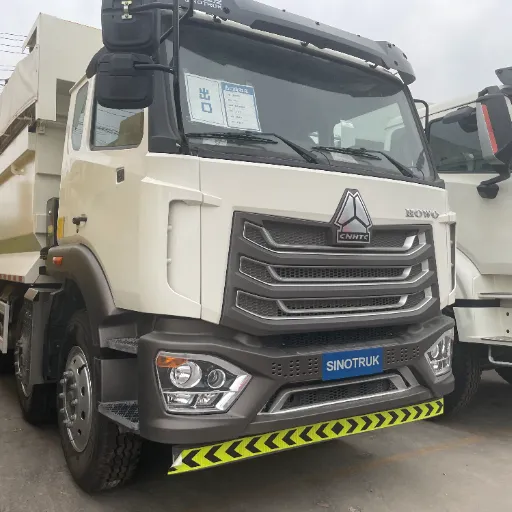
A used tipper truck for sale listing tells you the category and the asking price, not the condition, repair scope, or landed cost. That’s true of a local classified, and more so of a unit in a Chinese yard.
A local listing sells a truck already in the country, cleared, and available to inspect. An import listing sells a truck still abroad. You can’t kick the tyres, so the evidence package has to do more work. The used dump truck for sale pillar covers the wider export process.
Used, refurbished, and “reconditioned”
A second hand tipper has worked. Its condition depends on hours, application, load cycles, maintenance, and storage. A refurbished or reconditioned truck has had specific systems repaired or replaced before sale.
No single standard defines that scope. One seller’s “reconditioned” may mean new tyres, a service, and a respray; another’s may mean an engine rebuild and a new body. Ask what was replaced, which parts were used, and whether there are photos or invoices. Without that record, treat “reconditioned” as a paint job until proven otherwise.
The three things a photo cannot prove
- Frame condition under fresh paint. A repaired rail can look perfect in a photo. Ask for close-ups of the rails and cross-members, and look for overspray on hoses and bolts.
- Engine wear. A warm idle hides a cold-start problem. Ask for a video that starts with the dash visible and the engine cold.
- Hydraulic and hoist condition. A body that lifts once may still weep from a cylinder or drift under load. Ask for a full lift and lower cycle, with the camera on the hoist.
What a pre-shipment inspection adds
Our process covers nine areas, and you receive photos, video, and a written report for the actual unit. New and used trucks follow the same stated standard.
The used dump truck inspection guide sets out the full procedure. Do it before the deposit.
Grace, a buyer in Kenya, asked three suppliers for “a 10-cube tipper.” One quoted a 10 cubic metre body, another a 10-tonne payload, a third a 10-tyre truck. None described the same vehicle. She rewrote the brief with body volume, payload, axle layout, and drive side. That example is illustrative.
Which tipper configuration fits your market
Configuration is where a used tipper truck for sale becomes a purchase. The right answer depends on the material, the road, the site access, and the payload you need per trip.
| Configuration | Typical work | Trade-off | Confirm before quote |
|---|---|---|---|
| 4×2 | Light delivery, small sites, tight access | Lowest payload and simplest driveline | GVW, body volume, drive side |
| 6×4 | General construction, quarry, road haulage | Balance of payload and turning ability | Body volume, axle ratio, tyre size |
| 8×4 | Higher payload, large sites, long haul | Wider access needed, more tyre and brake cost | Bridge and site limits, payload, body volume |
| Side-tipping trailer | Bulk haul with a tractor unit | Not a rigid tipper; needs a compatible tractor | Trailer type, coupling, discharge side |
A 6×4 is the common starting point for general construction and quarry work. It turns tighter and costs less to run than an 8×4. The HOWO 6×4 tipper is a useful reference.
An 8×4 carries more per trip but needs wider access, better roads, and a bigger tyre budget. The 6×4 vs 8×4 dump truck comparison covers that trade-off.
Drive side and emission standard
Drive side cannot be fixed after the truck arrives. Southern and East Africa generally drive on the left and need right-hand drive; West Africa and the Gulf generally need left-hand drive. Confirm the requirement before the unit is selected, and ask for it on the quotation and in the inspection video.
The range includes Euro II, Euro III, Euro V, and above. Your destination market decides which standard you can register and which fuel quality the engine will see. Low-sulphur fuel may not suit a site with uncertain diesel quality. Confirm the registration requirement with your clearing agent.
Body volume, body steel, and hoist type
The body is where a tipper earns or loses money. Ask for the body drawing: volume, floor and side plate specification, hoist arrangement, tailgate type, and reinforcement for rock or heavy aggregate.
The main brands in the used export trade are SINOTRUK HOWO, SHACMAN, FAW, BEIBEN, and XCMG. Parts availability at your destination should shape the shortlist. The SHACMAN F3000 8×4 is a common reference for Africa-focused work.
Comparing a local tipper listing with an import quote
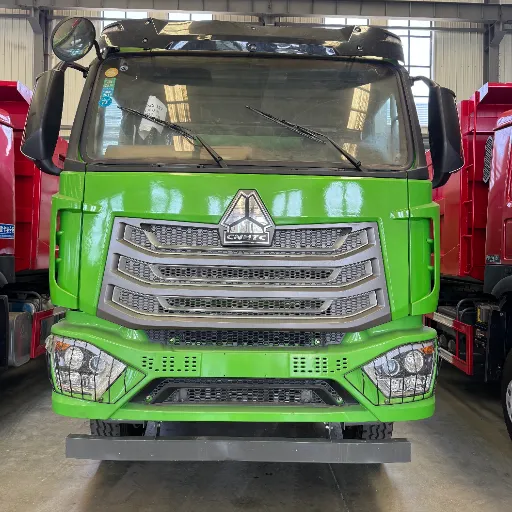
A local listing and an import quote can carry the same model name and still be different purchases. Compare cost lines, not headlines.
| Cost line | Local listing | Import from China | Question to ask |
|---|---|---|---|
| Vehicle | In-country unit, local currency | Unit in China, quoted FOB or CIF | What exactly is included? |
| Preparation | Usually as-is | Tyres, service, body repairs, paint, options | Is the preparation itemized? |
| Freight and insurance | None, or local delivery | Ro-Ro, container, or flat-rack | Which method and which port? |
| Destination charges | Usually already paid or registered | Duty, VAT, port handling, clearance, inland transport | Who estimates these, and on what basis? |
| Lead time | Days | About 45 to 90 days as a planning range | What is the current schedule? |
| Inspection | In person | Remote evidence, with optional third party | What evidence will I receive? |
A used tipper truck for sale quotation should separate the vehicle, preparation, freight, and destination charges. A quote that folds preparation into the vehicle price hides the scope. A quote that stops at the Chinese port is not comparable with one that lands at your harbour.
What the Incoterm tells you
FOB and CIF divide cost and risk differently. Under FOB, the seller’s responsibility ends when the goods are on board at the named port. Under CIF, the seller also pays freight and insurance to the destination port.
The ICC’s Incoterms 2020 rules define what each term covers. Ask every supplier to state the Incoterm and the named port on the quote.
Lead time is part of the cost comparison
An in-country unit can be working next week. An imported unit must be selected, prepared, inspected, loaded, shipped, cleared, and delivered. Our published planning range is 15 to 45 days for preparation and 28 to 35 days at sea, about 45 to 90 days in total. That guidance was published on 17 November 2026 and is indicative.
If the truck is needed for a contract start date, the local premium may be worth paying.
Shipping method affects the quote
Ro-Ro is usually cheapest for a standard tipper; container or flat-rack protects the unit and reaches ports without Ro-Ro.
Our published port-to-port examples are Lagos and Tema at 28 to 38 days, Dar es Salaam and Durban at 30 to 42 days, and Mombasa at 25 to 35 days. Those figures are dated 17 November 2026. They exclude clearance and inland transport. The shipping and delivery page lists what we coordinate.
Can you import a used tipper truck? Check before you compare prices
Eligibility comes before price: if the unit cannot be imported or registered in your market, the cheapest quote is irrelevant.
South Africa: the ITAC permit question
South Africa is the largest search market for “tipper truck for sale,” but a local search does not mean a local import is straightforward. The country’s import-control guidance states that “for the importation of all used or second-hand goods, an import permit is required.”
The ITAC import-control page doesn’t list trucks by name. It tells you to check the controlled-goods list and apply for a permit where the category applies. Confirm the vehicle category and your eligibility with ITAC before you pay a deposit. The South African Revenue Service handles customs and excise, and your clearing agent can confirm duty, VAT, and clearance for your shipment.
East Africa, West Africa, and the document set
Kenya, Tanzania, Uganda, Nigeria, and Ghana use “tipper” and sometimes “dump truck.” Drive side, destination conformity requirements, and port procedures still need confirmation for each shipment. For country-level age limits, emission rules, duty basis, and port of entry, see Importing a Used Dump Truck to Africa.
At minimum, expect a commercial invoice, packing list, bill of lading, and certificate of origin. VIN, engine number, and consignee name on the documents should match the unit, the inspection file, and the import licence.
The HS classification on the invoice should match the declaration. The World Customs Organization publishes the nomenclature your broker will use. A classification mismatch is a paperwork problem in China and an expensive delay at your port.
What evidence to request before you pay
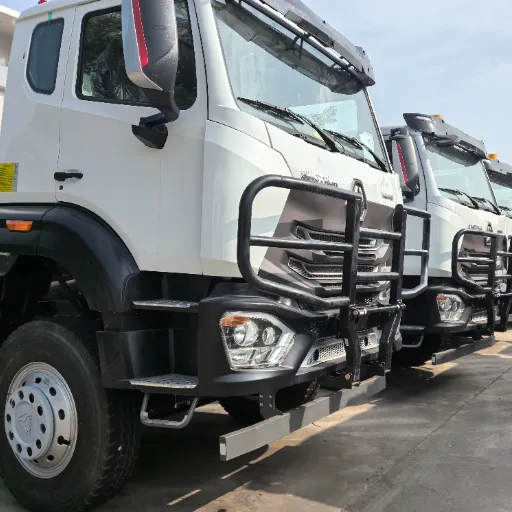
The inspection evidence is the buyer’s main protection in a cross-border purchase. Ask for it before the deposit, and read it against the videos rather than on its own.
Our pre-shipment inspection covers nine areas: engine, transmission, axles, cab, superstructure, brakes, lighting, ordered options, and documentation. For the tipper specifically, the superstructure check covers the body, frame rails, hoist, tailgate, and hinges.
Ask for this evidence set:
- A cold-start video with the dashboard visible before the key turns.
- A timed walkaround with the camera on the frame rails, body floor, and side plates.
- A full hydraulic lift and lower cycle, with the camera on the hoist and body.
- Close-ups of every defect the written report mentions.
- The VIN plate, engine number stamp, and hour meter or odometer reading.
- Tyre date codes, especially if the listing says “new tyres.”
A useful report records condition as found; it lists defects, not just passes. A report that says “no defects” on a used truck is a red flag; every used truck has some.
The report isn’t a warranty. It doesn’t predict reliability or guarantee that your destination market will accept the unit. A video can’t measure internal engine wear, find a crack under fresh paint, or confirm import eligibility.
For fleet orders, a third-party SGS or Bureau Veritas inspection can be arranged. Our published guidance puts the cost at a few hundred US dollars per unit. Confirm the scope and price for your order.
Kojo, a fleet buyer in Ghana, asked for a cold-start video and a full lift cycle on a used tipper. The video showed a weeping hoist cylinder. He negotiated the repair before shipment instead of discovering it at the port. That example is illustrative, but the sequence is the point: evidence first, then negotiation, then payment.
Used tipper truck for sale: frequently asked questions
Is a tipper truck the same as a dump truck?
Yes. A tipper truck and a dump truck are the same vehicle: a truck with a hydraulically raised body for loose material. “Tipper” is common in South Africa, East Africa, the UK, and other Commonwealth markets. “Dump truck” is common in the US, the Philippines, and most of the Gulf.
What is a 10-cube tipper?
A 10-cube tipper has a body volume of about 10 cubic metres. It does not mean a 10-tonne payload. Confirm whether the volume is struck or heaped, and check the payload rating and axle configuration separately.
How much does a used tipper truck cost?
There is no fixed tipper truck price. The number depends on the unit, its year and hours, the preparation included, the freight basis, and the destination charges. Ask for an itemized quote and compare landed cost, not the headline price. We publish quotations rather than a price list.
Can I import a used tipper truck to South Africa?
South Africa’s ITAC guidance states that an import permit is required for used or second-hand goods. Confirm the category and your eligibility with ITAC before paying a deposit, and duty, VAT, and clearance with SARS or your clearing agent.
What should I check before paying a deposit?
Ask for a cold-start video, a timed walkaround, a full hydraulic lift cycle, frame and body close-ups, the VIN and engine number, and a written report. Match the identifiers to the invoice and the export documents. If the seller cannot provide the evidence, stop and ask why.
Next step
If you are comparing a local tipper with an import, send us six things: the application, the body volume and payload you need, the drive side, the destination port, the emission requirement, and whether you want new or used. With those, we can match available units to your operation.
We publish a quotation turnaround of about 24 hours, subject to how complete your requirements are. That is a response target, not a delivery promise.
Request a configured quotation and tell us what the tipper has to do, or contact our export team with a question first.
Conclusion
A used tipper truck for sale is not one market. It is a local classified in Gauteng, a dealer page in the UK, and a China export quote that lands at Mombasa or Lagos. The word “tipper” tells you which market the buyer is searching. It does not tell you whether the truck is sound or the import is eligible.
Start with the vocabulary and the specification. A 10-cube body isn’t a 10-tonne payload. A local listing isn’t an import quote. A refurbished badge isn’t a repair record.
Then check eligibility before price, and ask for inspection evidence before the deposit.
According to the company, AMIGO TRUCK has more than 15 years of vehicle export experience and has served more than 5,000 international customers across 100+ countries. What that means for you is a process: an inspection covering nine named areas, photos and video of the actual unit, and a written report before shipment. Not a promise that the truck will never break, but evidence of what you are buying.