
Bus Brands We Supply
Compare four brands and find a configuration matched to your route, seating, and destination.
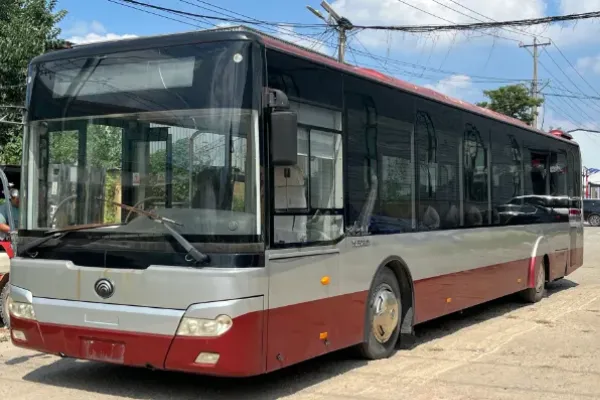
Yutong Buses
The largest bus manufacturer in the world, with the deepest export installed base across Africa, the Middle East, Latin America, and Southeast Asia. Parts are widely stocked and local workshops know the models.
Explore YUTONG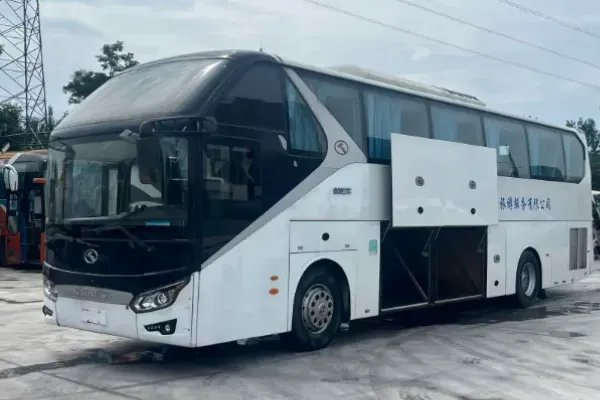
King Long Buses
Close second in export volume, chosen for its broad range — from 16-seat minibuses up to 55-seat coaches — and its value on intercity and tourist routes. Well represented across export markets, keeping routine parts reachable.
Explore KING LONG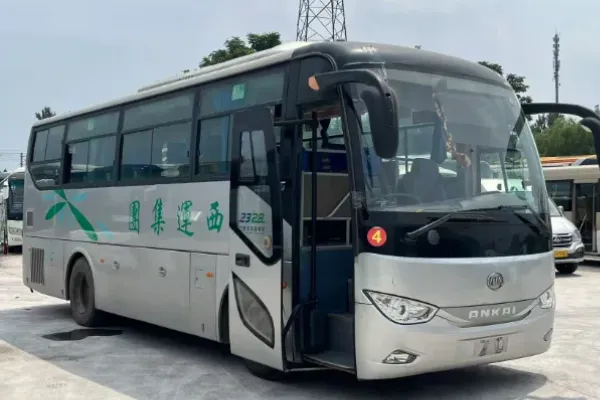
Ankai Buses
Grew out of a joint venture with Germany’s Kassbohrer (SETRA), so its coach DNA is European. The A9 luxury coach and 12-meter diesel coaches are chosen where comfort on intercity and tourist routes matters, with air suspension and ZF components.
Explore ANKAI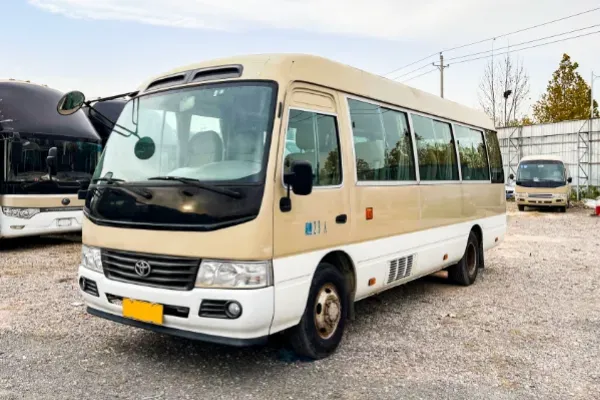
Toyota Buses
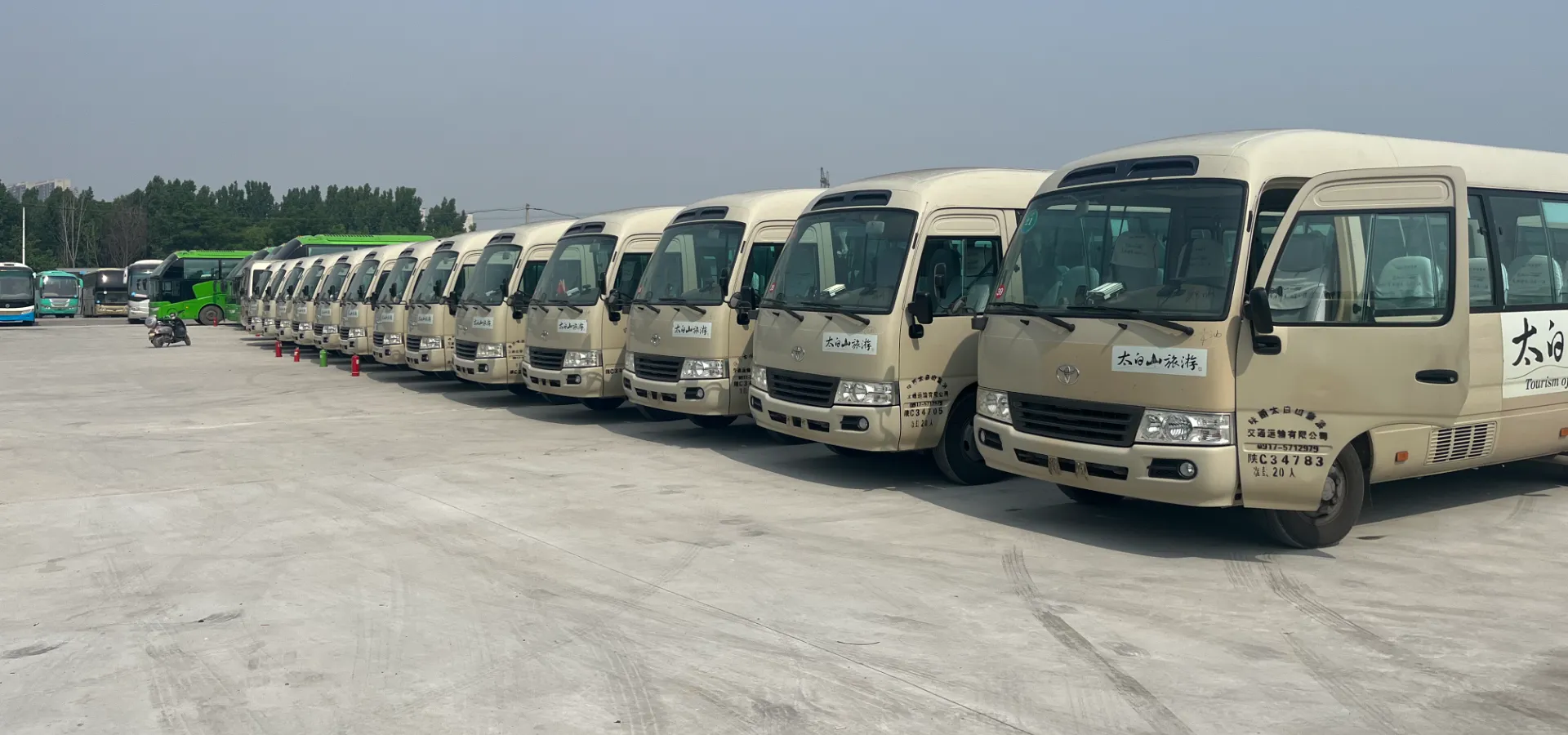
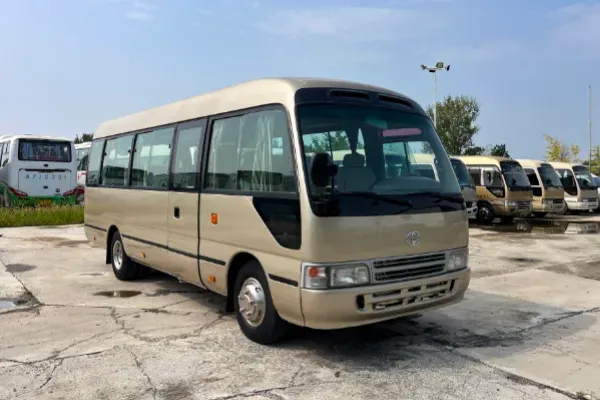
The minibus reference worldwide. Hiace and Coaster are the most widely serviced passenger vehicles on the road, making them the lowest-risk choice for shuttle, staff, and small-group transport — even where heavy-vehicle support is thin.
Explore TOYOTAWhat Is a Bus? City Bus vs Coach vs Minibus
The category splits into three types that are not interchangeable. Choosing the wrong type is the most common and most expensive mistake buyers make.
URBAN TRANSIT
City Bus
Built for standing passengers and rapid boarding, with a low floor, multiple wide doors, and a rear engine. It prioritizes passenger flow over luggage space.
- 30–80 seats Rear, often low floor, multiple wide doors.
- Duty Urban transit, municipal routes, large-site employee transport.
Choose it for
Stop-and-go routes where people board and exit every few minutes.
LONG-DISTANCE
Intercity Coach
Carries seated passengers over long distances, with a high floor that leaves room for underfloor luggage holds and forward-facing seats.
- 45–69 seats Rear engine, high floor, one front door plus luggage holds.
- Duty Intercity routes, tourism, long-distance group travel.
Choose it for
The type most importers mean when they search for a coach bus for sale.
SHUTTLE & FEEDER
Minibus
Seats 16 to 23 passengers, usually front-engine, with a single sliding door. Light and simple, and the easiest of the three to service.
- 16–23 seats Front engine, one sliding door.
- Duty Staff shuttle, airport and hotel transfer, school runs, feeder routes.
Choose it for
Toyota Hiace and Coaster are supported almost everywhere.
Bus Seating Capacity Explained
Seating capacity is the second specification to get right, because it drives axle count, price, and fuel use. Each band fits a different job.
Seating Capacity Bands
| Seats | Typical Application |
|---|---|
| 16–23 | Minibuses for staff, shuttle, and feeder work. Cheapest to buy and run, and easiest to service. |
| 30–45 | Mid-size buses and coaches for regional routes and small fleets. |
| 45–55 | The standard intercity coach, the most common choice for long-distance and tourism work. |
| 55–69 | High-capacity coaches for busy corridors and large-group transport, lowering the per-seat figure. |
A 55-seater is the reference point most buyers ask about, but the right number is the one your route fills.
Matching Seats to Your Route
Confirm Capacity Against the Actual Route
Match seats to peak demand, then allow a little headroom. An over-specified bus burns extra fuel and capital, while an under-seated one leaves revenue behind.
- Define the route before choosing seats
- Match peak passenger count
- Consider standing capacity where allowed
- Allow headroom for comfort and growth
- Check registration limits in your market
The right number is the one your route fills — not the biggest number in the brochure.
New vs Used Buses
Match your purchase to your budget, workload, and ownership plans. Both options follow the same pre-shipment inspection standard.
 NEW EQUIPMENT
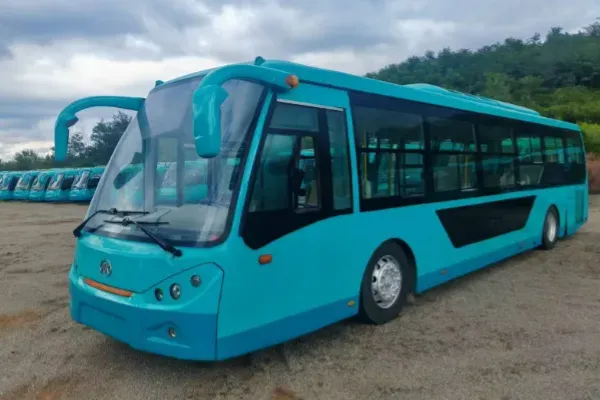
New Buses
A factory-new unit configured to your market — seating, engine power, emission standard, and left-hand or right-hand drive all specified to order, with current-spec drivelines and full documentation.
- Configuration matched to your requirements
- Consistent specifications across your fleet
- Parts, service, and warranty terms agreed upfront
Choose new when
You prioritize long-term operation and exact specifications, with budget for a higher initial investment.
 INSPECTED USED EQUIPMENT
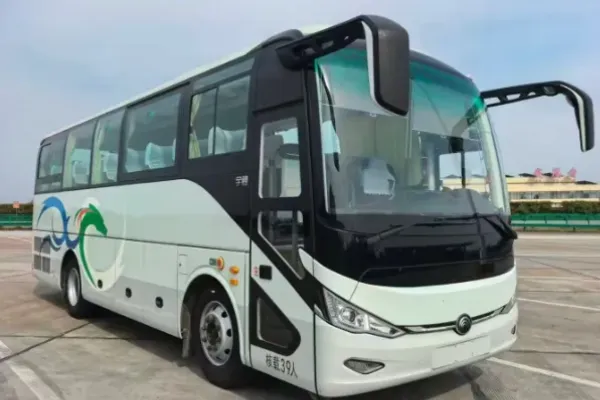
Used Buses
Lower upfront investment for fast payback or standby capacity. The risk sits in what you cannot see, which is exactly what the pre-shipment inspection is for: engine, driveline, body corrosion, air system, and documentation are all checked.
- Lower capital outlay than a comparable new unit
- Faster deployment for the selected vehicle
- Photos, video, and a written inspection report
Choose used when
You prioritize purchase cost or standby capacity, with condition and expected maintenance checked before committing.
Price Guide
A new 55-seat coach typically lists from roughly USD 50,000 to USD 90,000 depending on brand and specification, and a 16–23-seat minibus from roughly USD 7,000 to USD 15,000. Electric city buses run higher, typically above USD 130,000. Every quotation is prepared per unit and per configuration.
Bus Applications by Route Type
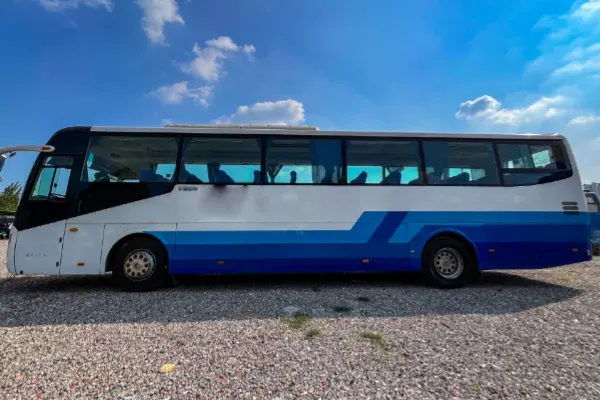
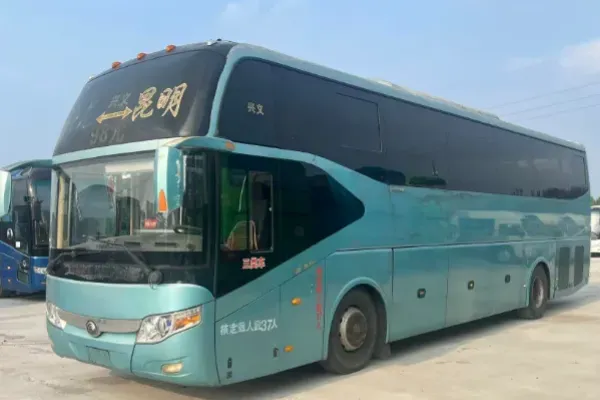
Match the bus to your passengers, trip distance, and haul cycle. Different routes call for different configurations.
How to Choose a Bus
Work through these checks in order, and the specification mostly chooses itself.
-
DEFINE THE ROUTE FIRST
Start with the Route
State the trip distance, the passenger count, the road surface, and how often the bus stops. A bus is sized for a real route, not a brochure figure.
-
CITY, COACH, OR MINIBUS
Pick the Bus Type
City bus for stop-and-go transit, intercity coach for long-distance seated travel, minibus for shuttle and small groups. Choosing the wrong type is the most common and most expensive mistake.
-
MATCH PEAK DEMAND
Set the Seating Capacity
Match seats to peak demand, then allow a little headroom. An over-specified bus burns extra fuel and capital, while an under-seated one leaves revenue behind.
-
FUEL QUALITY & REGULATION
Choose the Engine for Your Fuel
In markets with high-sulfur or inconsistent diesel, a Euro II or Euro III mechanical-pump engine tolerates contaminated fuel better than a high-pressure common-rail engine, and local mechanics service it more easily.
-
REGISTRATION & SERVICE
Confirm Drive and Parts
Right-hand drive is mandatory for several African and Caribbean markets — get this wrong and the unit cannot be registered. Check parts availability before you specify; downtime on a coach can cost more per day than the saving on an unsupported brand.
-
BUDGET & PAYBACK
Decide New Versus Used
A new bus gives a factory-fresh unit configured to your market. A used bus lowers the entry cost for fast payback or standby capacity. Both follow the same pre-shipment inspection standard.
New Units Inspected Used Units Same Inspection Standard
If you already know which bus type and brand fit your route, request a configured quotation — typically within about 24 hours.
Emission Standards and Market Compliance
Emission standard is a specification you choose against two things: what your destination country regulates, and what your local fuel can support.
HIGH-SULFUR FUEL
Euro II
Mechanical-pump engines tolerate high-sulfur diesel and are easier for local mechanics to service — a common choice where fuel quality is inconsistent.
- Mechanical pump Tolerant of contaminated or variable fuel.
- Simple service Local workshops can maintain it easily.
Choose it for
Markets with high-sulfur or inconsistent diesel where service depth is limited.
STEP UP
Euro III
A step up while keeping a simpler, more serviceable fuel system. It suits markets where fuel quality and regulation have begun to tighten.
- Better emissions Lower regulated pollutants than Euro II.
- Serviceable system Still simpler than common-rail alternatives.
Choose it for
Markets in transition, where fuel quality is improving but still variable.
TIGHT REGULATION
Euro V / Euro VI
Required where regulation is tighter, but they demand cleaner fuel and a stronger local service base. They are the wrong choice where neither is available.
- Cleaner fuel required Low-sulfur diesel is a prerequisite.
- Deeper service support Needs trained workshops and diagnostic equipment.
Choose it for
Markets with strict regulation, clean fuel, and a strong service network.
YOUR QUESTIONS, ANSWERED
Bus FAQ
Find answers about bus pricing, seating, brand selection, shipping, and inspected used units.
Discuss Your Requirements1 How much does a passenger bus cost?
A new 55-seat coach typically lists from roughly USD 50,000 to USD 90,000 depending on brand and specification, and a 16–23-seat minibus from roughly USD 7,000 to USD 15,000. The final price depends on engine, seating, emission standard, and options, so we quote per order rather than publish a fixed price.
2 What is the difference between a city bus and a coach?
A city bus is built for standing passengers and rapid boarding on short urban routes, with a low floor and multiple doors. A coach carries seated passengers over long distances, with a high floor, forward-facing seats, and luggage holds.
3 How many seats does a standard coach bus have?
A standard intercity coach seats 45 to 55 passengers. High-capacity coaches go to 69 seats, and minibuses start at 16 seats. The right number is the one your route fills, not the largest in the range.
4 Which Chinese bus brand has the best parts availability?
YUTONG has the deepest export installed base and the widest parts network, with KING LONG close behind. For minibuses, Toyota Hiace and Coaster are the most widely serviced. ANKAI’s network is thinner in some markets, so it suits buyers with a parts plan.
5 Can I buy a used bus from China?
Yes. Used buses are inspected to the same pre-shipment standard as new units — engine, driveline, body, and documentation are checked, photographed, and filmed before payment. Used units lower the entry cost for fast payback or standby capacity.
6 What bus size do I need for an intercity route?
Start with the passenger count and trip distance. A 45–55-seat coach covers most intercity routes; step up to a high-capacity coach above 55 seats for busy corridors, and down to a minibus below 23 seats for shuttle and feeder work.
7 How long does it take to ship a bus from China?
Transit time varies by destination port and shipping method — Ro-Ro for full coaches, flat-rack or container for minibuses. We confirm the expected timeline with your quotation rather than promising a fixed date.
START WITH YOUR ROUTE
Get a Configured Bus Quotation
Choosing a bus is a specification decision before it is a price decision. Start with your route, your passenger count, and your destination port — then match the bus type, seating, engine, and emission standard to them.
Review the actual bus on video and receive
the inspection report before shipment.
ONE CONFIGURED OFFER
Know What Your Quote Includes
Vehicle, selected options, preparation, and transportation to your port.
Request a Quotation Typically within about 24 hours- Configuration
- Inspection
- Export Documentation
- Shipping to Your Port