
Used Dump Truck Inspection: What to Check Before You Buy
A used dump truck inspection is a purchase check, not a driver’s pre-trip walkaround. It runs once, before you pay, and its output is evidence: proof that the truck in the photos is the truck in the contract, and that the unit’s worth what you’re being asked for it.
Here is how the distinction bites. A buyer in West Africa approved a used 6×4 tipper from forty photographs.
When it arrived, the frame rail behind the cab carried a fresh weld under new paint, and the body floor had been patched over a crack. The photos were not faked. They simply never pointed at the two places that mattered.
That story is illustrative, not a customer reference. The pattern behind it is common enough to plan around.
This guide sets out the procedure. It covers the nine areas that decide a used truck’s value, the documents that must match before the balance payment, and the evidence to demand when you can’t stand beside the truck. It also marks the point at which a defect ends the deal.
If you already have a unit in view and want a second opinion on the evidence, request a configured quotation and tell us what you’re looking at. If you’re still choosing between models, the dump truck buying guide covers configuration first.
Key Takeaways
- A used dump truck inspection answers one question: is this specific unit worth the money, in the condition it’s actually in?
- Nine areas decide most deals: engine, transmission, axles, cab, superstructure, brakes, lighting, ordered options, and documentation.
- Ask for a cold start, a timed walkaround with the camera on the frame rails, a full hydraulic lift cycle, and the VIN plate. Curated photos prove nothing.
- Match the VIN, chassis number, and engine number to the invoice, certificate of origin, and bill of lading before the balance payment.
- A static or video inspection can’t measure internal wear. On a fleet order, pay for a third-party inspection.
What a used dump truck inspection should cover
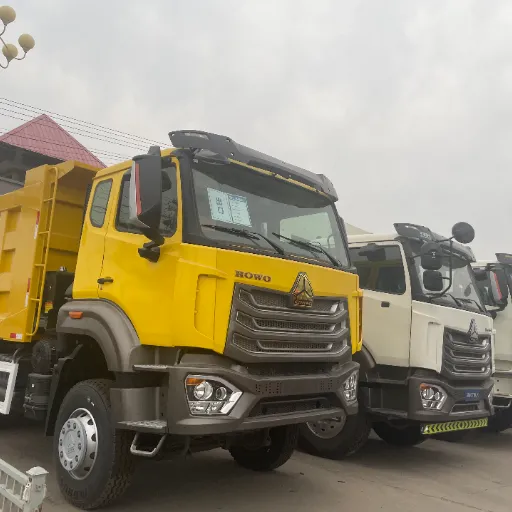
A purchase inspection covers nine areas, and each one has to produce something you can check later: a video, a photo, a measurement, or a document. The areas are engine, transmission, axles, cab, superstructure, brakes, lighting, ordered options, and documentation.
This is the scope AMIGO TRUCK applies before shipment, and it’s a useful template even if you buy elsewhere. What changes between sellers is not the list. It’s how much evidence comes back with it.
The unit itself can come from a local dealer or from a dump trucks for export yard in China, and the same nine areas apply either way. They also apply to a used tipper truck for sale at auction, where the evidence set is usually thinner.
| Inspection area | What the inspector checks | Evidence you should receive |
|---|---|---|
| Engine | Cold start, idle stability, smoke colour, leaks, abnormal noise | Cold-start video with sound and the dashboard visible |
| Transmission | Gear engagement, operation under load, leaks | Driving footage and notes on each gear |
| Axles | Housings, differentials, hubs, seals, leaks | Photos of each axle and hub |
| Cab | Structure, glass, instruments, controls, electrical | Interior and exterior photos, function check |
| Superstructure | Dump body, frame rails, hoist, tailgate, hinges | Full lift and lower cycle on video, frame photos |
| Brakes | Air build-up, lines, chambers, adjustment | Pressure test notes and component photos |
| Lighting | Headlights, indicators, brake lights, work lights | Function video |
| Ordered options | Configuration matched against the order | Checklist against your specification |
| Documentation | VIN, chassis, engine number, invoice, packing list, certificate of origin | Photographs and copies of every document |
Why a pre-trip checklist is not a purchase inspection
Ask what to look for when buying a used dump truck and most of what comes back is a driver’s pre-trip checklist: fluids, lights, tyres, brakes, mirrors, done in ten minutes before a shift. That check exists to keep the truck legal and safe for the next eight hours. It’s not designed to tell you whether the frame is cracked or the hour meter has been rolled back.
A purchase inspection asks a different question. It asks what this truck will cost you over the next three years, and whether the seller’s description survives contact with the metal. The operator who does the daily check has no reason to find frame cracks. The buyer does.
The three checks that decide most deals
Most failed negotiations come down to three findings, long before anyone argues about tyres.
- Frame and chassis condition. Cracks, weld repairs, and bends in the load zone are the most expensive defects on a used tipper and the easiest to hide under paint.
- The hydraulic lift cycle. A dump body that lifts slowly, drifts down, or leaks from a cylinder is a repair bill you can price before you buy.
- The cold start. A diesel that fires cleanly from cold tells you more about compression, fuel delivery, and battery health than an hour of warm idling.
If those three pass, the rest of the inspection is mostly arithmetic. If any of them fails, the question changes from “what is this truck worth” to “do I want this truck at all.”
Before you inspect: documents and identifiers
Metal comes second. Before anyone climbs under the truck, the paperwork should establish that the unit exists, that it’s the unit described, and that it can legally leave China and enter your market.
Match the VIN, chassis number, and engine number
Every truck carries an identifier in at least three places: a plate in the cab, a stamp on the frame rail, and a stamp on the engine block. The exact locations vary by model, so ask the seller to photograph all three and to point to each one on camera.
Then compare them to the commercial invoice, the certificate of origin, and the bill of lading. All four should describe the same vehicle. A VIN that appears on the invoice but not on the frame is a stop sign, not a clerical error to sort out later.
The same logic applies to the seller. The company name on the contract, the invoice, and the bank account should match, and the address should be a real place you can find on a map. Used dump truck dealers vary in how much of that they’ll show, and a yard that photographs all three identifiers before you ask is showing you its process. Our how AMIGO TRUCK works page sets out how an independent supplier and exporter is structured, which is the pattern to check against any seller.
Read the hour meter, then read the wear
Hours matter more than kilometres on a tipper. A quarry truck can run 12,000 hours on short hauls and never travel far, so a low odometer on a machine with polished pedals, a worn seat bolster, and a shiny steering wheel is telling you two different stories. Hour meters can be replaced and odometers altered. The wear surfaces can’t, and they should agree with the number on the dash.
Confirm the export documents before the truck is loaded
A standard export set is a commercial invoice, a packing list, a bill of lading, and a certificate of origin. Your broker will also work from the HS code that classifies the vehicle, and the World Customs Organization maintains the nomenclature behind those codes.
Two details cause most of the trouble at destination. The first is a consignee name that differs between the invoice and the import licence.
The second is a quote that never states its Incoterm. FOB and CIF divide cost and risk at different points, and the ICC’s Incoterms 2020 rules define exactly where that line falls. Without the term and the named port on the quote, you’re comparing two different deals.
The used dump truck inspection checklist, step by step
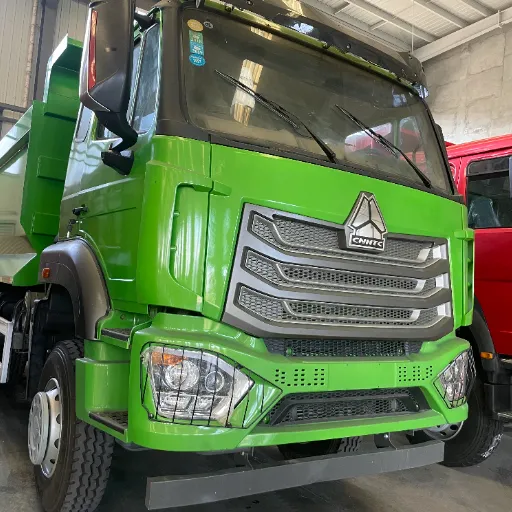
Work through these twelve steps in order. Each one has a pass condition, a fail condition, and a piece of evidence that should end up in your file.
- Confirm identity first. Photograph the VIN plate, frame stamp, and engine number, then match them to the invoice. Pass: all three match. Fail: any mismatch, or a plate that looks re-riveted.
- Start it cold. The camera should show the dashboard before the key turns. Pass: fires within a few seconds and holds a steady idle. Fail: long cranking, hunting, or no idle without throttle.
- Watch the exhaust. Pass: light grey smoke that clears as the engine warms. Fail: persistent white smoke (coolant or unburned fuel), blue smoke (oil), or black smoke under light load.
- Look underneath after five minutes. Pass: no drips at the engine, gearbox, hubs, or hydraulic cylinders. Fail: active oil, coolant, fuel, or hydraulic leaks, as distinct from old seepage.
- Walk both frame rails. Check the cab mounts, spring hangers, cross-member welds, and the section above the rear axle. Pass: original paint, straight rails, factory rivets. Fail: welded repairs in the load zone, paint over a weld, or a straightened rail.
- Inspect the dump body. Floor plate, side sheets, tailgate, hinges, and the mounts to the chassis. Pass: wear consistent with age, no perforation. Fail: a floor patched over a crack, welded hinges, or a body re-mounted on new shims.
- Run a full hydraulic cycle: raise to full height, hold, lower, repeat. Keep clear of the raised body and confirm a safety prop is used. Pass: smooth lift, no drift, no shudder, no leaks. Fail: slow lift, drift under load, a screaming pump, or oil at a cylinder gland.
- Check the hoist, PTO, and hoses. Pass: clean engagement, flexible hoses, dry crimps. Fail: cracked hoses, weeping crimps, or a PTO that won’t disengage.
- Read the tyres: tread, sidewall damage, sizes, and the DOT date code. On tyres built after 2000 the last four digits give the week and year, so 3221 means the 32nd week of 2021. Pass: matched sets with usable tread and dates that fit the truck. Fail: mixed sizes, deep cuts, or “new” tyres older than the last major service.
- Test the brakes and air system: build to cut-out, shut down, and listen for leaks. Check chambers, slack adjusters, and the park brake hold on a slope. Pass: pressure builds and holds. Fail: slow build, audible leaks, or a sinking pedal.
- Work through the cab and electrics. Warning lights, gauges, wipers, horn, HVAC, mirrors, and wiring under the dash. Pass: everything works and the loom is undisturbed. Fail: warning lamps that never illuminate (a sign of a pulled bulb), or spliced wiring.
- Drive it if you can. Work the gears, brake from speed, listen for driveline noise and vibration. Pass: clean engagement, straight braking, no diff whine. Fail: jumping out of gear, a shudder under load, or steering that pulls.
A road test is the only way to load the transmission under torque. If the truck is in a yard and can’t be driven, say so in the report, treat the driveline as unverified, and ask for a driving video with the camera on the gear lever and the road ahead.
What a static inspection cannot prove
No walkaround, however thorough, measures compression, bearing wear, or the condition of the clutch plate. It can’t see a crack that has been ground out and painted over. It can’t predict how the truck will behave after two thousand hours on your roads with your loads.
What it can do is establish the condition of everything visible and testable, and force the seller to put that condition in writing. That’s a real reduction in risk, not a guarantee. Any seller who describes it as a guarantee is overselling.
What evidence to demand if you cannot inspect in person
Most cross-border buyers never see the truck before it ships. That makes the evidence package the inspection. Here is what should be in it.
The photo and video set that proves something
| Evidence item | What it proves |
|---|---|
| Cold-start video | The engine starts from cold without assistance, and the dashboard and hour meter are visible before the key turns |
| Timed walkaround, ten minutes or more, unedited | The whole truck is shown in sequence, including frame rails, body floor, cab corners, and rear cross-member |
| Full lift and lower cycle, filmed from the side | The hydraulics work under load, without drift, judder, or leaks |
| Close-ups of every defect in the written report | The report describes what is actually on the truck |
| VIN plate, frame stamp, and engine number, photographed beside the invoice | The unit matches its documents |
| Every tyre’s DOT code, photographed at the sidewall | The tyre dates are real, and “new” tyres are not older than the truck’s last service |
Curated stills are the easiest thing in the world to select. Continuous video is harder to stage, which is why it’s worth asking for.
A buyer we will call Ahmed learned this on a used HOWO dump truck. The seller sent twelve photographs of a clean engine bay and a short clip of the truck already idling.
Ahmed asked for the first thirty seconds from cold. The new clip showed a two-second crank, a cloud of white smoke, and a misfire that cleared as the engine warmed. He passed. The example is illustrative, not a customer reference.
What a used dump truck condition report should contain
A condition report is only useful if it can be checked. It should name the unit by VIN and engine number, state the date and the method, and record findings area by area against the nine-point scope. Each finding needs a severity and a reference to the photo or video that shows it. A used truck inspection report that lists no defects at all is a report to question, because every working truck has some.
It should also list what was not checked. A report that claims completeness on a static inspection is less trustworthy than one that says “road test not possible, driveline unverified.” Our own written reports follow this shape. You can see how the evidence is used on the inspection and export support page.
When a third-party inspection is worth commissioning
A seller’s own inspection is evidence, but it isn’t independent evidence. For a single unit, a third-party inspection can cost more than it saves. For a fleet order, or for a high-value unit, it usually pays for itself in negotiating position alone.
SGS or Bureau Veritas can be engaged for larger fleet orders, and our published guidance puts the cost at roughly a few hundred US dollars per unit. That figure is indicative. Confirm the scope, the timing, and the price for your order before you rely on it.
When you brief a third-party inspector, ask three things: whether the body is accredited to ISO/IEC 17020, whether the inspector will test the hydraulics under load, and whether the report lists defects by severity rather than a pass mark.
In North America, commercial vehicle inspectors work from the CVSA out-of-service criteria, which are revised every April. That standard is North American, not universal, but it shows the level of specificity a useful report should reach.
Pass or fail: making the go/no-go decision
An inspection that ends with a vague impression wastes the money you spent on it. Before you start, decide which findings would end the deal and which ones you would price instead.
Defects that should end the deal
| Finding | Why it ends the deal |
|---|---|
| Welded or straightened frame rail in the load zone | Structural repair under the body; the repair cost is unpredictable and the truck’s history is unknown |
| VIN, chassis number, or engine number doesn’t match the documents | The unit cannot be exported or registered cleanly, whatever its mechanical condition |
| Refusal to provide a cold-start video or a timed walkaround | The seller is choosing what you are allowed to see |
| Dump body floor perforated through, or body re-mounted on a bent chassis | The body and chassis have worked beyond their design life |
| Hydraulic cylinders leaking at the gland or drifting under load | Repairs are certain, and a failed hoist can stop the truck in the field |
| Air system that won’t hold pressure with the engine off | Brake performance is compromised until the leak is found and fixed |
Each finding is structural, legal, or a sign that the seller won’t show you the truck. None of them improves with a discount.
Defects that are negotiation, not rejection
Tyres, batteries, lights, cab trim, mirrors, seats, minor seal seepage, and body patching away from the load zone are all normal on a working truck. Price them, put them on a repair list, and use the list in the negotiation. A used truck with honest minor defects is a better buy than one presented as flawless.
One caveat: patching is only minor if you can see what’s under it. A plate welded over a crack in the floor is not the same as a patch on a side sheet.
Turning findings into a price adjustment
Ask the seller to price the repair list, then get one independent quote for the same work at your destination. The gap between the two tells you what the repair will really cost. It also gives you a defensible answer to how much is a used dump truck worth to you, because the number stops being an opinion. Where the contract allows it, tie the balance payment to a passing inspection report, which is the structure we publish: a 30% deposit, with the balance against the bill of lading copy or a passing inspection report.
How AMIGO TRUCK runs a used dump truck inspection
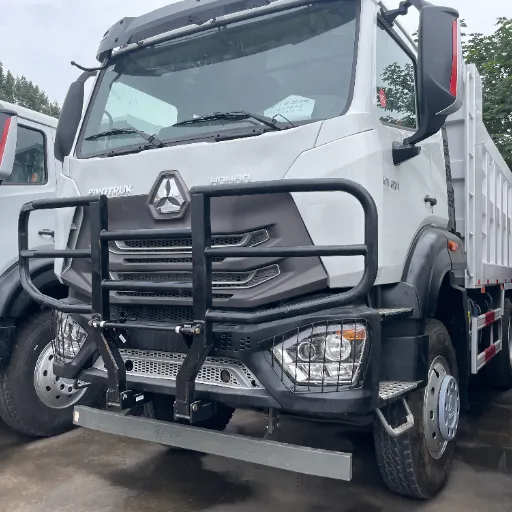
Every unit we supply goes through a pre-shipment inspection covering the nine areas above: engine, transmission, axles, cab, superstructure, brakes, lighting, ordered options, and documentation. You receive photographs of the actual unit, video of the actual unit, and a written report. New and used trucks follow the same stated standard.
The inspection happens after preparation and before loading, so the unit you approve is the unit that ships. What it doesn’t provide is a condition grade, a warranty period, or a prediction of future reliability. We don’t publish a grading scale, because no industry-wide one exists that a buyer can rely on.
If your purchase depends on a warranty, raise it before the deposit and get the terms into the sales contract. For what happens after delivery, the service and parts support page covers parts planning and technical support. If the unit is headed for a quarry or mine, read the mining dump trucks checks before you shortlist.
A fleet buyer we will call Marta commissioned a third-party inspection on five units before a shipment to East Africa. Two came back clean.
Two had body-floor wear the seller had described as minor, and one had a hydraulic leak at the hoist cylinder. She used the reports to renegotiate preparation on all five. The example is illustrative, not a customer reference.
Common mistakes buyers make
Four mistakes account for most of the bad outcomes we see. Approving a unit on curated photos is the first, because a gallery shows the truck at its best. Skipping the document match is the second: a VIN that disagrees with the certificate of origin can’t be fixed by mechanical condition. Inspecting a warm engine is the third, since a seller who starts the truck before you arrive has removed your best evidence.
Treating “reconditioned” as a grade is the fourth. The word describes a repair scope, not a standard, so ask which systems were rebuilt and what proof exists.
If you’re comparing several units and want a second pair of eyes on the reports, contact our export team with the evidence and the asking price. For brand-specific checks, the Sinotruk dump trucks and SHACMAN dump trucks pages list the configurations each range covers, and the truck specifications guide explains how to read the build sheet you’re matching against. If you’re comparing used SHACMAN trucks for sale across yards, ask which series each unit belongs to, because an F3000 and an X3000 of the same year are different trucks.
Used dump truck inspection: frequently asked questions
What should I check first on a used dump truck?
Check the identifiers before the metal. Photograph the VIN plate, the frame stamp, and the engine number, then match them to the invoice and certificate of origin. After that, the frame rails, the hydraulic lift cycle, and the cold start decide most deals.
How long does a used dump truck inspection take?
A thorough static inspection takes hours, not minutes, once you include the hydraulic cycle and the brake test. A road test adds more time on top. For a remote buyer, ask for at least ten minutes of continuous walkaround footage, plus the cold start and the lift cycle.
Can I inspect a used truck in China without travelling there?
Yes, if you set the evidence standard in advance. Ask for a cold-start video, a timed walkaround, a full lift cycle, defect close-ups, and photographs of every identifier and document. For a fleet order, commission an independent inspection from a body such as SGS or Bureau Veritas.
What is included in a used dump truck condition report?
A usable report names the unit by VIN and engine number, then states the date and method. It records findings across the nine inspection areas with a severity for each one, references the photo or video behind every finding, and lists what could not be checked.
What if the inspection finds problems?
Decide in advance which findings end the deal and which ones you’ll price. Structural repairs, document mismatches, and a seller who won’t provide evidence are reasons to walk. Tyres, lights, trim, and minor leaks belong on a repair list that adjusts the price.
Next step
Send us the evidence you have and the asking price, and we’ll tell you what is missing before you commit. If you haven’t shortlisted a unit yet, send your application, required payload, destination port, and budget range, and we’ll match available trucks to the job.
Our published quotation turnaround is about 24 hours, subject to how complete your requirements are. That is a response target, not a delivery promise.
Request a configured quotation with the inspection evidence or the unit’s specification. If you would rather ask a question first, contact our team. The truck export FAQ covers the document questions, and shipping and delivery covers what happens once the inspection passes.
Conclusion
A used dump truck inspection is worth the effort because it converts a seller’s description into evidence you can hold. Check the identifiers, work the twelve steps, demand the video that can’t be staged, and decide your walk-away points before you read the report.
According to the company, AMIGO TRUCK has more than 15 years of vehicle export experience and has served more than 5,000 international customers across 100+ countries. For a buyer, that translates into a documented process: nine inspection areas, photographs and video of the actual unit, and a written report before shipment. Not a promise that nothing will break. Evidence of what you’re buying.
If you’re weighing a used dump truck for sale against a new one, the inspection standard is the same on both sides. Start with the evidence, and the price conversation gets a lot shorter.