
Truck Specifications Explained: How to Read a Spec Sheet
A truck specification sheet is read in a fixed order: weight ratings, axle configuration, power and torque, dimensions, then emission level. Read a truck spec sheet in the order it prints its fields, and two different trucks begin to look comparable when they are not.
The most common failure is small and expensive. Two suppliers both quote 25 tonnes. One means a gross vehicle weight of 25 tonnes, which leaves roughly 15 tonnes of cargo once the truck’s own weight is taken off. The other means 25 tonnes of payload, which needs a heavier chassis and a different axle set.
The buyer compares the two numbers, picks the cheaper, and finds out at a weighbridge.
This truck specifications guide works through the six field groups in the order that decides a purchase, then gives you the comparison procedure to run when three quotations are on the table. It is written for buyers working in metric units, comparing Chinese trucks, and importing rather than buying off a dealer lot.
Weight ratings: the first field where truck specifications disagree
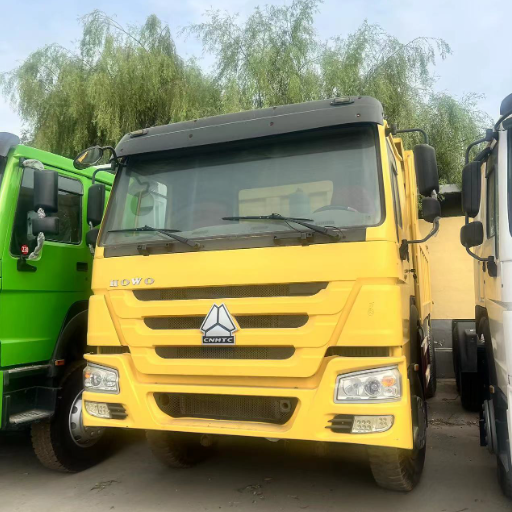
No field on the sheet produces more disagreement than weight, because a sheet lists five different weight figures and the quotation repeats one of them without saying which. The five are gross vehicle weight, tare, payload, gross combination weight, and the axle rating.
Payload is a subtraction, not a claim
Payload is the gross vehicle weight minus the tare weight. Tare is the truck itself: chassis, cab, body, fluids, and fuel. A 6×4 dump truck rated at 25 tonnes gross, weighing 10 tonnes empty, carries 15 tonnes.
Ask for all three figures. A quotation that gives gross weight and payload but not tare is worth checking by arithmetic. Subtract the payload from the gross. If the result is not a plausible empty weight for a truck of that size, one of the two figures is wrong.
Send us the specification you were quoted. We will tell you which of these five fields are missing, and which ones contradict each other. Send the sheet
Rated, gross, and actual are three different numbers
The rating is what the manufacturer’s plate permits. The gross weight is what a weighbridge measures. The two are related and not identical.
The rating is also a set of limits rather than one limit. Each axle carries its own rating, and the sum of the axle ratings always exceeds the gross vehicle weight rating. That is deliberate, because it allows a truck to be loaded unevenly within limits.
It also means a legal gross weight can still produce an illegal load on one axle. On a tipper loaded from the rear, the drive axles are the ones to watch. The NTEA weight distribution guide sets out how the ratings interact.
The tractor unit exception
For a tractor truck, the binding number is the gross combination weight, not the gross vehicle weight. A tractor unit on its own weighs around nine tonnes, and almost nothing about that figure answers the buyer’s question.
What matters is the combined weight of tractor, trailer, and cargo. Put GCW in the comparison table and leave GVW to the rigid trucks.
| Term | What it means | Who sets it | Where you find it |
|---|---|---|---|
| GVW / GVWR | Maximum permitted total weight, loaded | Manufacturer, then the national authority | Spec sheet and plate |
| Tare | Weight of the truck empty, with fluids | Weighed, or stated by the builder | Quotation, rarely the sheet |
| Payload | GVW minus tare | Calculated | Seldom stated. Check it |
| GCW / GCWR | Maximum combined weight of tractor, trailer, and load | Manufacturer, then the authority | Tractor spec sheet |
| GAWR | Maximum load on one axle | Manufacturer | The axle line on the sheet |
Axle configuration: what 4×2, 6×2, 6×4, and 8×4 count
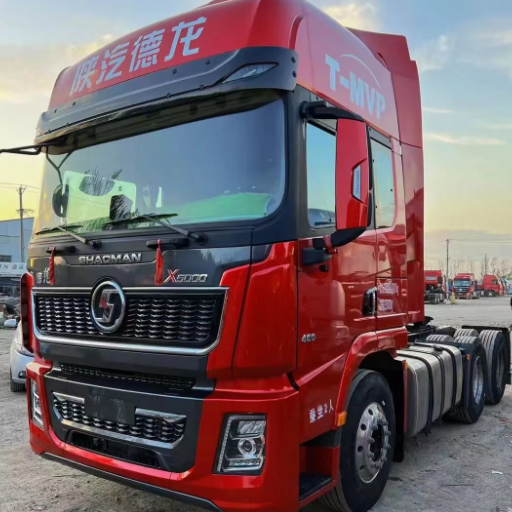
The notation is the part of truck specifications most often explained in a way that does not quite work. The usual gloss, that 6×4 means three axles, is true and does not explain why the truck has 10 tyres.
Wheel positions, not axles
The two numbers count wheel positions and driven positions. The first is how many wheels sit under the truck. The second is how many of them receive power.
A 6×4 has a steering axle with two wheels and a rear tandem with four positions between them. Six positions, four driven, three axles, and 10 tyres because each rear position carries a dual. The same truck is called a three-axle in one market and a 10-tyre in another, and neither name contradicts the notation.
| Configuration | Axles | Wheel positions | Driven | Tyres | Where it is used |
|---|---|---|---|---|---|
| 4×2 | 2 | 4 | 2 | 6 | Rigid distribution, light work |
| 6×2 | 3 | 6 | 2 | 10 | Highway tractor, high payload, low traction need |
| 6×4 | 3 | 6 | 4 | 10 | Construction, quarry, mixed and unsealed roads |
| 8×4 | 4 | 8 | 4 | 12 | Heavy tipper, high volume, site work |
Why 6×2 exists, and when it is the wrong choice
A 6×2 drives one rear axle and carries the other. Fewer driven wheels means less driveline loss and less weight, so it burns less fuel on the same work. The saving is real, but its size depends on the duty cycle, and a figure quoted without one is a claim rather than a measurement.
What a 6×2 gives up is traction. On a loose surface, a wet incline, or an unsealed site road, a lightly loaded 6×2 will spin where a 6×4 climbs. If the truck will spend its life on paved highway at full load, the 6×2 is the rational specification. If it will ever leave the pavement loaded, it is not.
Power and torque: PS, hp, kW, and why 371 is not 371
Three horsepower units, one market
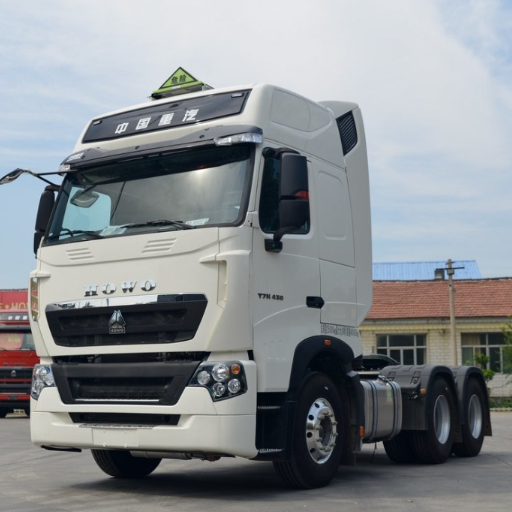
The power line is where truck specifications are least standardised across markets. A Chinese truck is usually quoted in PS, metric horsepower. Most buyers read that number as imperial horsepower, and a few read it as kilowatts. Both readings are wrong, and the confusion is invisible on the page because none of the three units is written down.
371 PS is 273 kW, which is 366 imperial hp. One PS is 0.7355 kW; one imperial horsepower is 0.7457 kW. The gap per unit is small. The gap in meaning is not.
A quotation reading 371 and a quotation reading 273 kW describe the same engine. A quotation reading 371 and one reading 371 hp differ by about 1.4%, which tells you the two suppliers are working in different conventions.
| PS | kW | hp |
|---|---|---|
| 336 | 247 | 331 |
| 371 | 273 | 366 |
| 380 | 280 | 375 |
| 430 | 316 | 424 |
| 460 | 338 | 454 |
| 540 | 397 | 533 |
The torque band matters more than the peak
Peak power is one point on a curve. How a loaded truck feels on a grade depends on where the torque arrives and how flat the curve stays after it.
Ask for peak torque in Nm and the engine speed at which it arrives. A 430 PS engine that reaches peak torque at 1,200 rpm pulls differently from a 430 PS engine that reaches it at 1,600 rpm, and the sheet shown to a buyer frequently lists neither figure.
The final drive ratio decides how that torque reaches the road. At 80 km/h on a 12R22.5 tyre, which rolls about 3.19 metres per turn, a 4.11 ratio turns the engine at roughly 1,720 rpm in top gear. A 4.875 turns it at about 2,040 rpm and pulls harder on a grade at the cost of fuel and top speed. A 3.70 turns it at about 1,550 rpm and cruises cheaply, but only where the load and the terrain allow it.
The arithmetic is (speed in km/h × 1,000 ÷ 60) ÷ tyre circumference in metres × axle ratio × gear ratio.
Dimensions: wheelbase, CA, AF, and the codes on the drawing
The four dimensions a body builder needs
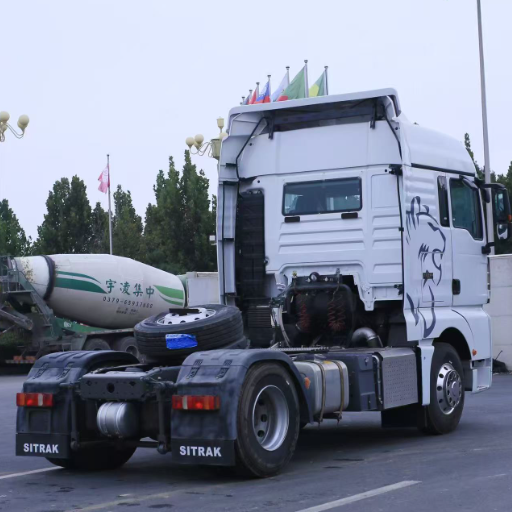
Truck specification abbreviations are not standardised across makers, but four of them appear on almost every drawing and decide whether a body fits:
- WB, wheelbase: front axle centreline to the rear axle centreline, or to the midpoint of the tandem.
- CA, cab to axle: back of cab to the rear axle centreline, or tandem centre.
- AF, after frame: how far the frame rail extends behind the rear axle.
- OAL, overall length: bumper to tail.
Wheelbase alone does not tell you whether a body fits. Two trucks sharing a wheelbase but carrying different cabs have different CA, and CA is what decides the space behind the cab.
The two dimensions buyers get wrong
The first is wheelbase without CA. The second is deck height without fifth wheel height.
Deck height matters on a tractor unit because the trailer has to sit level. The fifth wheel on the tractor and the deck of the semi-trailer have to be compatible, and a mismatch shows up as a trailer that noses down or tails up, loading the wrong axle. The trailer side of the same question, including the S-dimension, kingpin setback, and rear overhang, is covered in semi trailer dimensions.
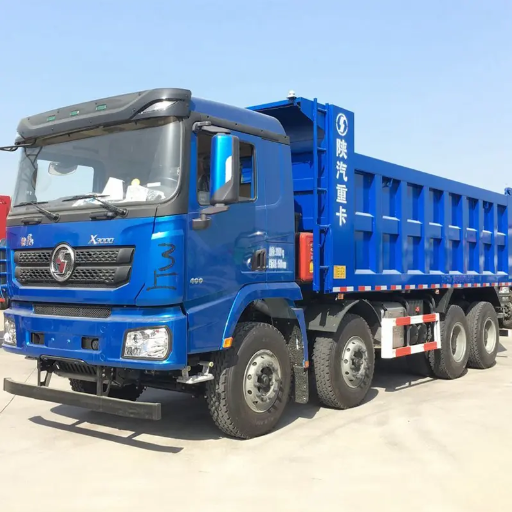
For a tipper, the decision turns on a figure that appears nowhere on the chassis drawing. Dump truck dimensions are quoted as body volume in cubic metres, set by body length, width, and side height, and the dump truck hub lists the volume for each configuration. A body 20 cm taller than the one quoted changes the volume by several cubic metres, and changes the load the truck can legally put on its drive axles. The dump truck buying guide covers those figures for each configuration.
The DAF explanation of specification sheets is the clearest reference for what each letter means on a European drawing.
The emission line, and why it is a border question
China II to China VI in one paragraph
China’s heavy-duty stages track the European tiers closely enough that the two are usually mapped onto each other. China II corresponds roughly to Euro II and needs no aftertreatment. China V, national from 2017, corresponds roughly to Euro V and uses selective catalytic reduction with urea.
China VI, mandatory for new heavy-duty trucks from July 2021, corresponds roughly to Euro VI and adds real driving emissions testing to the laboratory limits. The China heavy-duty engine standards record the limits and the dates.
The destination rule overrides the sheet
Emission is the last field on truck specifications and the first one a border officer checks. The emission line records what the engine was built to. It does not record what your country will register or admit at the border, and those are different rules enforced by different people. Most truck specifications stop at the first.
We will call a buyer in West Africa, who ordered on price and did not ask the question. The truck matched its sheet. At the port it did not match the national minimum tier, and the paperwork could not prove what the sheet claimed. The unit sat in bonded storage for 11 weeks while the buyer negotiated, and the demurrage cost more than the difference between the two engines would have.
Read the emission line as a question for your customs broker, not as an answer. The questions are: which tier does this market require, which document proves the truck meets it, and does the build date fall inside any age cap?
Reading a quotation against a spec sheet
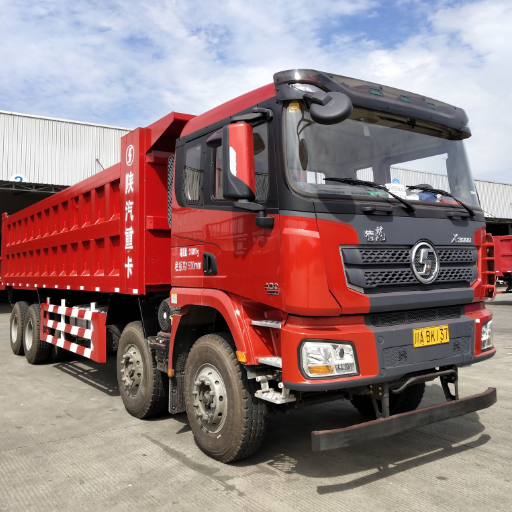
Reading truck specifications is not the same as choosing between two trucks. For the choice itself, truck comparisons sets configuration against duty cycle.
The 12 fields to put side by side
When three quotations arrive, do not read them in the order they were written. Build one table, with the same 12 fields in the same order for every supplier. The blanks tell you as much as the numbers.
| # | Field | Why it matters | What good looks like |
|---|---|---|---|
| 1 | GVW rating | Sets the legal ceiling | A number, with the standard it is rated to |
| 2 | Tare weight | Half of the payload calculation | A measured figure, not an estimate |
| 3 | Payload | The number you actually buy | Calculated from 1 and 2, and shown |
| 4 | Axle configuration | Traction and axle loads | Written as 6×4, not “heavy duty” |
| 5 | Wheelbase and CA | Whether the body fits | Both figures, in millimetres |
| 6 | Engine power | Rating comparison | A number, with PS, kW, or hp named |
| 7 | Peak torque | How it pulls loaded | Nm, plus the engine speed |
| 8 | Transmission | Gearing and drivability | A model number, not “10 speed” |
| 9 | Axle ratio | Cruise speed against gradeability | A ratio such as 4.11 |
| 10 | Emission level | Border eligibility | A tier, such as Euro V |
| 11 | Tyre size and ply | Load capacity per axle | A size such as 12R22.5, plus ply rating |
| 12 | Body volume or tank capacity | What the truck carries | Cubic metres, or litres |
What to ask when a field is blank
A blank is a specification, and it is rarely the one you want. “Chinese axle” is not an axle brand. “Standard tyres” is not a size. “Heavy duty suspension” is not a spring rating.
Ask for the brand, the model, and the rating behind every blank field, and put the answer in writing in the quotation. A supplier who can answer is quoting a truck. A supplier who cannot is quoting an idea of one.
Send the sheet with the blanks. We will return it with the fields filled and named. Send the quotation
What a spec sheet cannot tell you
A truck spec sheet can state the steel grade of a main beam. It cannot state weld quality, paint system thickness, or whether the axle fitted is the axle specified. Those three decide whether the truck is still working in five years, and none of them appears in a table.
That is why pre-shipment inspection exists, and why the inspection should be run against the sheet rather than against a generic checklist. The shipping and delivery service covers what happens between the factory and the port.
Truck specifications FAQ
What does 6×4 mean on a truck?
A 6×4 truck has three axles and six wheel positions, four of which are driven. The first number counts the wheels under the truck and the second counts how many receive power. Because the rear positions carry dual tyres, a 6×4 rolls on 10 tyres.
What is the difference between GVW and payload?
Gross vehicle weight is the maximum the loaded truck may weigh. Payload is what is left for cargo after the truck’s own weight, the tare, is subtracted. A truck rated at 25 tonnes gross and weighing 10 tonnes empty carries 15 tonnes.
How many tonnes can a truck carry?
It depends on the gross vehicle weight rating and the tare weight, not on the body size. Subtract the two. A 6×4 tipper often has a tare between nine and 12 tonnes, so a 25 tonne gross rating leaves 13 to 16 tonnes of cargo. Your market’s axle load law can reduce it further.
What does 371 HP mean in kW?
If the figure is PS, which is how Chinese trucks are usually quoted, 371 PS is 273 kW and about 366 imperial horsepower. If it is imperial horsepower, 371 hp is 277 kW. Ask which unit the quotation uses, because the sheets rarely say.
What is tare weight?
Tare is the weight of the truck with fluids and fuel but no cargo. It is the second half of the payload calculation. It should be measured rather than estimated, because a body heavier than quoted reduces payload without changing the gross rating.
Is a higher axle ratio better?
Neither is better in isolation. A higher numerical ratio, such as 4.875, multiplies torque at the wheels and suits heavy loads and grades. A lower ratio, such as 3.70, turns the engine slower at cruise and saves fuel on flat highway work. The right ratio follows the duty cycle.