
Semi Trailer Buying Guide: Seven Decisions Before You Pay
A semi trailer is chosen in this order: cargo, body type, length, axle count, running gear, tractor match, then shipping. Buyers who start with the type usually finish with the wrong length.
That order is not a preference. Each decision narrows the next one, and a mistake early is expensive to correct late. A trailer is built to order, welded to a length, and shipped 8,000 kilometers. Nobody takes it back because the dock is too short.
This semi trailer buying guide works through the seven decisions in the order they bind. It is written for buyers importing from China into Africa, the Middle East, Latin America, and Southeast Asia, where the trailer is bought sight unseen and the roads are not the roads it was designed for.
Start with the cargo, not the trailer type
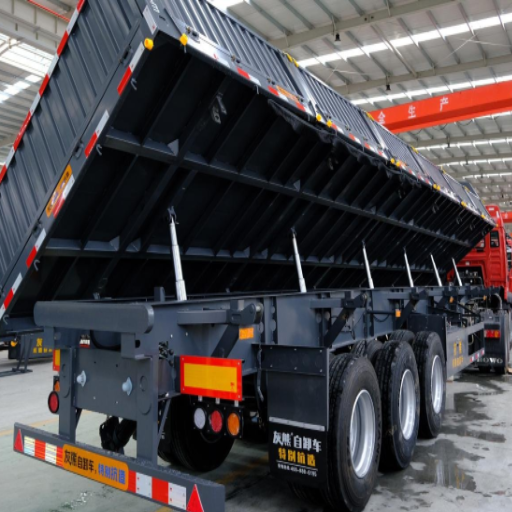
Every trailer question reduces to one: what are you moving, and in what form?
Cargo falls into four families, and each points to a short list of body types.
- Dry freight, unitised. Pallets, cartons, bagged goods, machinery crates. Points to a box trailer, a curtain side, or a flatbed.
- Dry bulk. Sand, gravel, aggregate, coal, grain, cement powder. Points to a tipper body or a bulk tanker.
- Liquid. Fuel, water, edible oil, chemicals. Points to a tanker.
- Rolling stock and oversize. Cars, excavators, dozers, long pipe. Points to a car hauler or a low bed.
Write the answer down before you look at a catalogue. It removes three quarters of the options, and it stops the most common mistake in this purchase, which is choosing a body because it looked capable in a photograph.
Consider two importers we will call Daniel and Ifeoma. Both ordered three trailers in 2025, into the same country.
Daniel chose side dump trailers because a neighbour ran them successfully on a construction contract. Ifeoma started from her cargo, which was containerised general freight moving from port to warehouse. Her skeleton trailers cost less and loaded faster.
Daniel’s side dumps spent four months parked between contracts, waiting for bulk work that did not come. The trailers were not the problem. The order of the decisions was.
Send the cargo, the route, and the destination port, and we will tell you which two types fit before you read further. Tell us what you are moving
Semi trailer types, and what each one is for
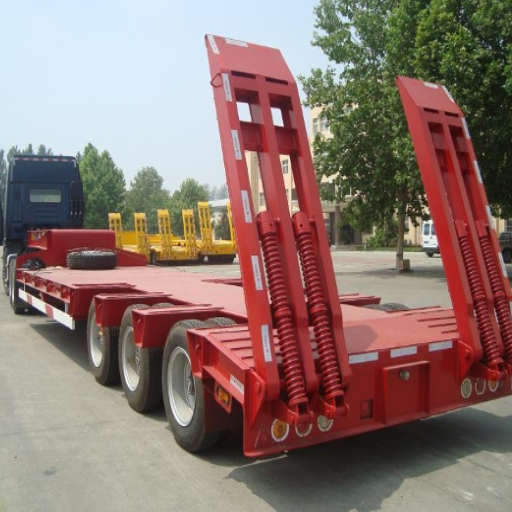
The table below is a starting point, not a catalogue. Ten semi trailer types cover most of what is quoted, and the detail for each sits on its own product page. The full range of semi trailers for sale is listed by body type on the category page.
| Type | Cargo | Typical length | Axles | Planning note |
|---|---|---|---|---|
| Flatbed | Containers, steel, timber, machinery | 40ft to 53ft | 2 to 3 | Most versatile body. Needs lashing discipline |
| Skeleton or container chassis | 20ft and 40ft containers | 40ft, or 20ft plus 40ft | 3 | Twist locks set the container sizes it can carry |
| Box or dry van | Palletised and cartonised freight | 40ft to 53ft | 2 to 3 | Weather protection. Heavier tare than a flatbed |
| Curtain side | Palletised freight loaded by forklift | 40ft to 53ft | 3 | Side access without a rear dock |
| Side dump | Aggregate, spoil, scrap | 30ft to 45ft | 3 | Discharges to the side, so it does not need a tip head |
| Rear dump | Aggregate, sand, ore | 30ft to 45ft | 3 | Higher discharge height. Check overhead clearance |
| Low bed | Excavators, dozers, plant | 40ft to 60ft | 3 to 4 | Deck height and ramp angle matter more than payload |
| Bulk cement tanker | Dry powder | 40ft to 50ft | 3 | Needs a pressure system and a discharge point |
| Fuel tanker | Diesel, petrol, oil | 40ft to 50ft | 3 | Compartment count and safety equipment drive the price |
| Car hauler | Passenger vehicles | 6 to 10 cars | 2 to 3 | Ramp geometry decides what it can load |
Dry freight bodies
Flatbed, box, and curtain side cover most general freight, and the choice turns on how the cargo is handled.
A flatbed is loaded from above and from the side, which suits containers, steel, and awkward machinery. A box trailer protects cargo from weather and theft but weighs more empty, which costs you payload on every trip. A curtain side gives forklift access along the full length, which matters where there is no loading dock.
If you move containers, the body is not really a choice. A container skeleton trailer is built around twist lock positions, and those positions decide whether it can carry a 20ft box, a 40ft box, or both.
Bulk and tipper bodies
Side dump and rear dump both carry aggregate, and they differ in how they get rid of it.
A side dump discharges to one side, so it works without a tip head and can spread material along a road shoulder. A rear dump raises higher and discharges behind, which suits a tip point or a hopper but needs overhead clearance. Neither is better. The site decides.
For dry powder, the body is a pressure vessel rather than a tipper. A bulk cement tanker trailer needs a pressure system, a discharge point, and a customer who can receive powder, so it is usually bought against a specific contract.
Liquid and rolling stock
A fuel tanker trailer is specified by compartment count, capacity, and the safety equipment your market requires, not by length. A car hauler semi trailer is specified by ramp geometry and deck positions, because a ramp that is too steep simply will not load the vehicles you sell.
Length, dimensions, and the rules that actually limit you
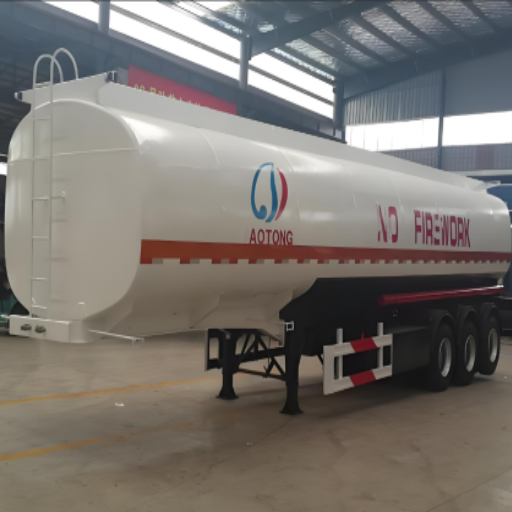
Trailer length is not a free choice. Three things fix it: the cargo unit, the geometry of the tractor-trailer combination, and the law in the destination market.
When a supplier quotes trailer dimensions, ask which three are meant: overall length, deck height, and the kingpin-to-axle distance.
Length is also the decision most semi trailer buying guides rush, and the one that is hardest to change afterwards. A welded frame does not grow.
Container sizes decide most lengths
If you haul containers, the length follows automatically. A 40ft skeleton carries a 40ft box. A gooseneck or extendable chassis can carry a 20ft box in one position and a 40ft in another, which is worth paying for if your freight is mixed.
Outside container work, length follows the cargo. A 53ft box carries more pallets per trip but is illegal in many markets and unwieldy on narrow roads. A 40ft trailer is the safer default where road width and turning space are unknown.
The S-dimension and rear overhang
Two trailer dimensions govern how it behaves behind a tractor, and neither appears on a sales sheet.
The S-dimension is the distance from the kingpin centre to the centre of the rear axle group. It sets the turning circle and the load distribution. A long S-dimension tracks well on highways and cuts corners badly in towns.
Rear overhang is the distance from the rear axle group to the back of the trailer. Authorities limit it as a share of the trailer wheelbase, or as an absolute figure, because a long overhang swings wide in a turn and strikes what is beside it. Alberta, for example, caps rear overhang at 35% of the trailer wheelbase.
Axle load law in your market
Every market sets a maximum load per axle, and that number, not the trailer’s rating, decides how many axles you need. Authorities publish these limits in dimension and mass guides. New Zealand’s transport agency sets out its semi-trailer dimension and mass rules in public form, and Alberta publishes configuration-specific limits down to axle spacing.
Those are not the rules that apply to you. They are examples of how authorities express the limits, and they show the pattern: a per-axle figure, an axle spacing requirement, and an overall length cap. Ask your customs broker or road authority for the three numbers in your market, and specify against them.
Western Australia’s dimension guide is worth reading once even if you never ship there, because it defines the measurements the trade uses.
Axles, suspension, and steel: where cheap trailers lose money
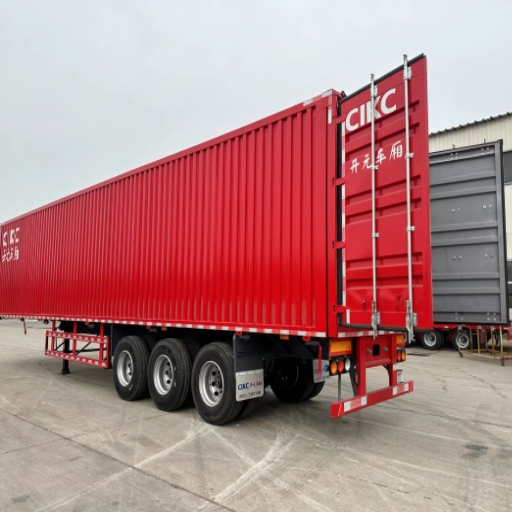
Two quotes can differ by 30% and describe the same trailer on paper. The difference is in three places: axle count, running gear, and the steel in the main beam.
Semi trailer axle configuration is also the part of this guide that surprises first-time buyers, because the answer is legal rather than mechanical.
Axle count is a legal question before it is a payload question
| Configuration | Typical use | What it costs you |
|---|---|---|
| 2 axles | 20ft containers, light general freight, short haul | Lower price and tare. Lowest legal payload |
| 3 axles | The standard for 40ft containers and general heavy cargo | The balance point for most buyers |
| 4 axles | Low beds, concentrated loads, markets with tight axle-load limits | Higher price, more tyres, wider turning circle |
Three axles is the default because it satisfies most markets’ axle-load rules while keeping tare and tyre cost sensible. Four axles is not a sign of a stronger trailer. It is a response to a specific legal limit or a specific load.
A tridem group, meaning three consecutive axles, typically spans between 2.4 and 3.7 meters depending on the market. If the spacing is wrong for your jurisdiction, the trailer is overloaded on paper even when it is empty.
Mechanical or air suspension
Mechanical suspension is cheaper, simpler, and repairable in any workshop with a hammer and a leaf spring. Air suspension rides better, protects the cargo and the road, and lets you adjust ride height at a dock.
For rough unpaved routes and a workshop with limited tooling, mechanical is the honest choice. For sealed roads, high-value cargo, and a fleet with a service contract, air pays for itself in tyre life and cargo damage.
The main beam
The main beam is the trailer. Everything else bolts to it, and when it fails the trailer is finished.
Chinese trailer builders work in Q235, Q345B, and Q355B steel. Q235 is cheap and adequate for light duty. Q355B is the export standard for heavy work, with a higher yield strength that resists the fatigue that eventually cracks a beam.
You cannot see the grade once the trailer is painted. Ask for the mill certificate, and write the grade into the contract. Two quotes that look identical usually differ here first.
Four things to write into the contract
- Main beam steel grade, with a mill certificate supplied.
- Axle brand and model. BPW and FUWA are the recognized names. “Chinese axle” is not a specification.
- Brake chamber type, and whether the trailer is ABS or EBS equipped.
- Landing gear capacity, rated for a loaded trailer, not an empty one.
Matching the trailer to your tractor
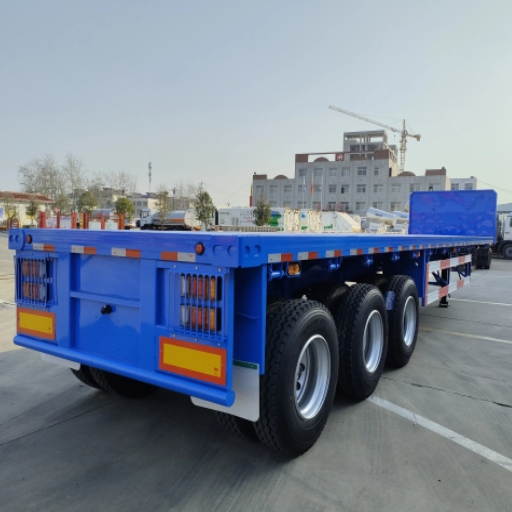
A trailer that does not fit the tractor is a trailer that does not work. Three measurements decide it, and buyers who purchase the tractor first sometimes discover them too late.
Most semi trailer buying guides skip this section. It is the one that decides whether the trailer is usable at all. If you have not chosen a tractor yet, our tractor truck range sets out the units these trailers are matched to.
Fifth wheel height and deck height
The tractor’s fifth wheel sits at a fixed height, typically around 1.2 to 1.3 meters on a standard tractor unit. The trailer’s deck height is set by its own suspension and frame. The two must agree, or the trailer will nose down, tail up, or foul the tractor’s chassis.
If you are buying both, this is a non-issue because it is specified together. If you already own the tractor, send its model and fifth wheel height with the trailer enquiry.
Kingpin position and wheelbase
The kingpin sits a set distance back from the trailer’s front, commonly between 24 and 36 inches, and some markets cap it at 2.0 meters. That setback, combined with the tractor’s wheelbase, sets whether the combination turns cleanly or scrubs its tyres through every junction.
A long-wheelbase tractor pulling a trailer with a short S-dimension will cut corners badly. The fix is specification, not driving technique.
Ramp and deck clearance on a low bed
On a low bed trailer, the limiting factor is rarely payload. It is whether the machine can climb the ramp without grounding its belly, and whether it fits under bridges on the route.
Check three numbers before you buy: the ramp angle, the deck height loaded and empty, and the height of your tallest machine on the deck. Then check the lowest bridge on your route. A low bed that cannot pass a bridge is a low bed that cannot do the job.
How a trailer ships, and what knocked down means
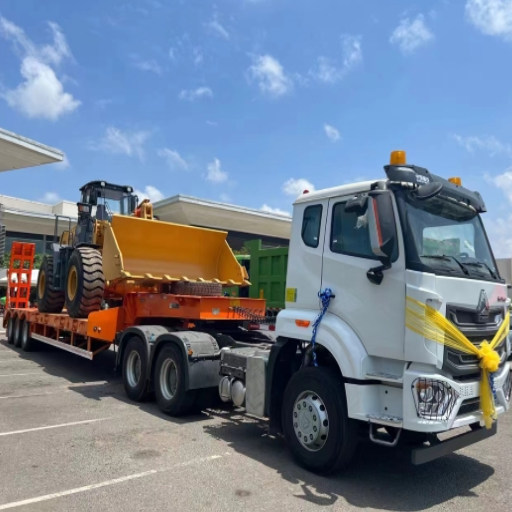
The last decision in this semi trailer buying guide is how the trailer reaches you. A trailer is bulky and light relative to its value, which makes shipping a design decision rather than an afterthought.
| Method | How it works | Best for | Watch for |
|---|---|---|---|
| Container, knocked down | Main beams nested, axles and parts crated, assembled at destination | Multiple trailers, long routes, buyers with a workshop | Assembly work, welding quality, missing parts |
| Flat rack or open top | Partly assembled, secured on deck | One or two units, no assembly capability | Weather exposure, lashing cost |
| Ro-Ro | Rolled on and off, assembled | Complete trailers that can be towed | Not all ports serve Ro-Ro; loose parts are refused |
| Breakbulk | Lifted as general cargo | Oversize or unusual units | Fewer sailings, higher handling risk |
Trailers commonly ship either fully assembled or knocked down, with the main beams nested to save space. Which method applies to your order depends on the trailer, the route, and the port, so it should be confirmed in writing with the quotation rather than assumed.
What knocked down costs you
Knock-down shipping saves freight, and it moves cost and risk to the destination.
You need a workshop with a welder who can work to a drawing, a torque specification for the axle and suspension bolts, and someone to check the alignment. Assembly errors show up later as tyre wear and beam cracks, and they are hard to trace back.
If you have no workshop, do not choose knock-down to save freight. The saving will be spent on the first repair.
What you can and cannot check before loading
Assembled and inspected at origin, a trailer can be checked properly: beam straightness, weld quality, brake function, lighting, and every dimension against the order.
Knocked down, the check is different. You are inspecting components, not a finished trailer. Count the crates against the packing list, confirm the beam sections and their grade markings, and check that the axle and suspension sets match the order. Frame alignment can only be confirmed after assembly.
That is not a reason to avoid knock-down. It is a reason to know which inspection you are buying. Our shipping and delivery service sets out how vehicles and trailers move, and how the paperwork follows them.
What to confirm before you pay the balance
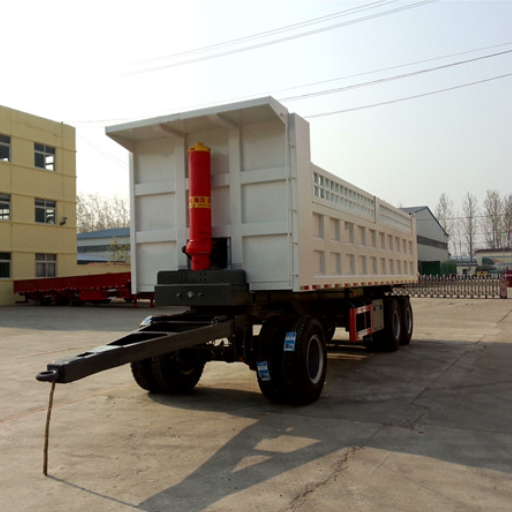
Not every semi trailer buying guide ends with a payment checklist. This one does, because the balance is where the risk sits. Eight items, each cheap to settle before payment and expensive to settle afterwards.
- A dimensioned drawing, signed off by you, before production starts.
- Main beam steel grade stated in the contract, with a mill certificate.
- Axle, suspension, brake, and landing gear brands named, not described.
- Tyre brand, size, and whether a spare is included.
- The shipping method in writing, assembled or knocked down, and who assembles.
- Pre-shipment inspection evidence: photographs, video, and a report.
- Warranty terms covering the frame, the axles, and the paint, with the exclusions named.
- The document set for your customs broker: invoice, packing list, bill of lading, and certificate of origin.
If a supplier cannot answer items two and five, the quotation is not finished. Both are specification questions, and both are settled before steel is cut.
Remote inspection: what to photograph and film
You will approve this trailer from a screen. Ask for evidence that can actually be checked.
- Main beam and welds. Close photographs of the beam-to-crossmember welds, front and rear, both sides. A weld that looks like a stack of coins is a good sign. A weld with undercut or porosity is not.
- A continuous video walkaround, with the camera held steady and the whole trailer in frame, including the underside.
- Dimensions measured on camera. Tape measure against overall length, deck height, and axle spacing, with the reading visible.
- Brake and electrical test. Air pressure held, brakes applied and released, every lamp lit in sequence.
- Kingpin and fifth wheel plate. Wear on the kingpin is a real measurement, not a judgement. A worn kingpin can be out by 0.03 inches and still look fine. Brake lining below 1/4 inch is finished.
We will call the next buyer Marta. She bought two flatbeds in 2024 and approved them from a set of photographs taken in a yard, at an angle, from standing height.
The photographs were honest and useless. The trailers arrived with the wrong twist lock spacing for her 20ft boxes, which nobody had measured because nobody had asked. The rework cost more than the freight saved.
A measurement on camera takes four minutes and settles the question.
Price a trailer with the shipping mode you need. Send the type, the dimensions, and the port of discharge, and the quotation will separate trailer, preparation, and freight. Price a trailer with the shipping mode you need
Semi trailer buying guide FAQ
How many axles does a semi trailer need?
Three axles suits most 40ft container and general heavy freight work. Two axles is lighter and cheaper for 20ft containers and light cargo. Four axles is a response to a specific load or a tight axle-load limit in your market. The deciding number is your authority’s maximum load per axle, not the trailer’s structural rating.
How much does a semi trailer cost?
Supplier-published 2026 price guides put FOB China ranges at roughly USD 8,500 to 15,000 for a 40ft skeleton, USD 9,600 to 16,000 for a flatbed, and USD 13,500 to 35,000 for a low bed. Treat those as directional. FOB is typically 70% to 80% of landed cost, and freight, duty, and port charges vary by route.
What is the difference between a flatbed and a low bed trailer?
A flatbed carries containers, steel, and general freight on a standard deck height. A low bed drops the deck to carry tall or heavy machines under height limits. Low beds are specified by deck height and ramp angle as much as by payload.
Can one trailer carry both 20ft and 40ft containers?
Only if it has twist lock positions for both, which usually means a gooseneck or extendable skeleton. A fixed 40ft chassis carries one 40ft box or two 20ft boxes in line, and cannot carry a single 20ft box without repositioning.
Is air suspension better than mechanical suspension?
On sealed roads with high-value cargo, air suspension protects the load and the tyres. On rough unpaved routes with limited workshop support, mechanical suspension is simpler to repair. Match it to the route, not to the brochure.
How long does it take to build and ship a semi trailer from China?
Supplier-published lead times are typically 20 to 35 days for a standard build, with customization adding 7 to 20 days. Sea freight then adds 30 to 45 days on the water depending on the route. Ask for a schedule with the quotation and treat it as an estimate.