
PASSENGER TRANSPORT · SHUTTLE · TOURISM
Toyota Bus for Sale Coaster & HiAce Range
Coaster coaches and HiAce minibuses. 10 to 30 seats.
A Toyota bus for sale in most export markets means the Coaster light-duty coach or the HiAce van-derived minibus. Amigo Truck sources new and used units, inspects them, prepares export documentation, and ships to your port.
- Coaster Light-duty coach
- HiAce Van-derived minibus
- Quantum South African HiAce
TOYOTA BUS RANGE
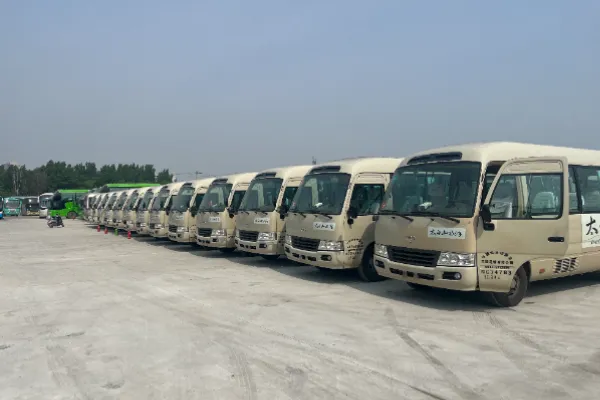
10–30 Seats
Configured to your route
Two Body Styles
Coach and minibus
Deep Parts Network
Benchmark in class
Inspect Before Shipment
Photos, video, and report
Each bus is quoted by configuration. Confirm seating, engine, drive side, and local import rules in your offer.
Toyota Bus Model Range
Compare Coaster coaches and HiAce minibuses. Match the model, seat count, and engine to your route, fuel quality, and import rules.
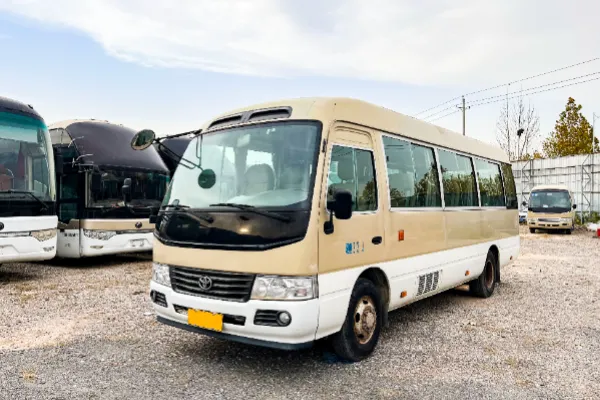
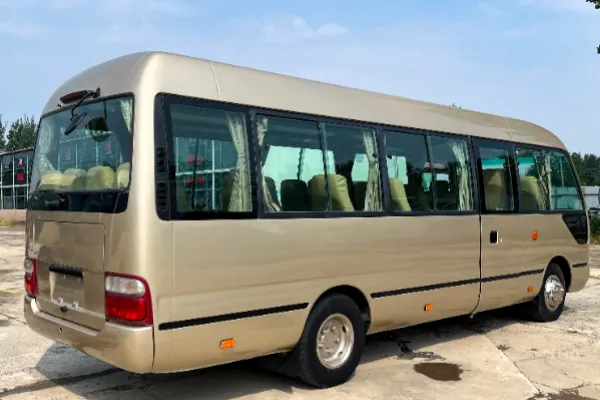
Toyota Coaster 23 Seater Diesel Bus
A body-on-frame coach with the 4.2L 1HZ diesel. Built for intercity, tourism, and staff transport where rough roads and full loads are normal.
View Bus Details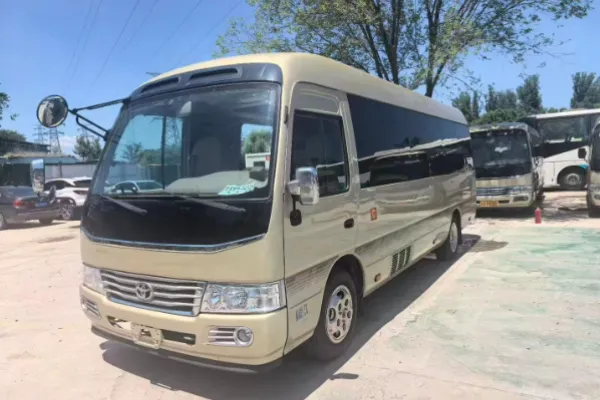
Toyota Coaster 17 Seater Bus
The shorter Coaster for routes that need coach durability without a full 30-seat body. Ideal for school runs, staff transport, and tourism.
View Bus Details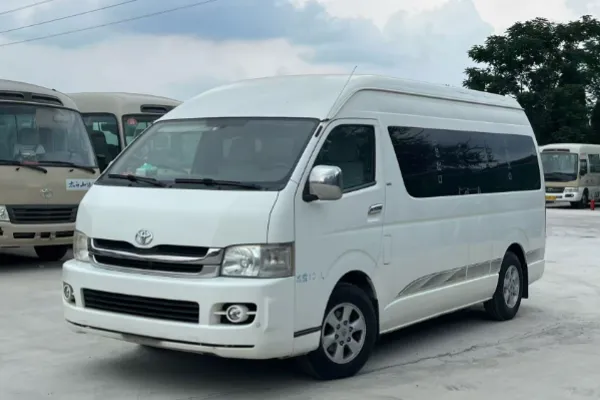
Toyota HiAce Minibus
A van-derived minibus seating 10 to 17 passengers. Lighter and cheaper to run, suited to airport transfers, taxis, and short urban routes.
View Bus DetailsSpecifications vary by model, engine, and build. Confirm seating, drive side, and destination compliance in your configured quotation.
Toyota Bus Specifications
Typical export builds for the Coaster and HiAce. Individual units vary by engine, seat count, trim, and destination market.
Coaster
BODY-ON-FRAME COACH
17–30 Seats
A separate ladder chassis with the body bolted on top. Built for rough roads, heavy daily use, and full loads.
- Diesel engines 4.2L 1HZ · 4.0L N04C · 2.8L 1GD-FTV
- Petrol engines 2.7L 2TR-FE · 4.0L V6
Typical duty
Intercity · Tourism
HiAce
MONOCOQUE MINIBUS
10–17 Seats
A one-piece van body. Lighter, cheaper to run, and easier to manoeuvre in traffic and tight sites.
- Diesel engines 2.5L 2KD-FTV · 3.0L 1KD-FTV · 2.8L 1GD-FTV
- Petrol engines 2.7L 2TR-FE · 3.5L V6
Typical duty
Shuttle · Commuter
Both
DRIVE & EMISSIONS
RHD / LHD · Euro IV–V
Both models are rear-wheel drive with manual or automatic transmission. Drive side and emission standard are confirmed to your market.
- Transmission 5MT · 6MT · 6AT
- Drive side RHD and LHD available
Confirm at order
Market-specific
Coaster vs HiAce — Key Specifications
| Specification | Toyota HiAce Minibus | Toyota Coaster |
|---|---|---|
| Seating | 10–17 seats | 17–30 seats |
| Class | Van-derived minibus | Body-on-frame coach |
| Chassis | Monocoque | Body-on-frame (ladder) |
| Drivetrain | Rear-wheel drive | Rear-wheel drive |
| Drive side | RHD and LHD | RHD and LHD |
| Emission standard | Euro IV / Euro V | Euro III–V |
Specifications are drawn from Toyota market sources and vary by build. Confirm the exact figures for your unit in the configured quotation.
Toyota Coaster vs Toyota HiAce
Each vehicle is the better tool for a different job. Buying the wrong one means paying for capacity you never fill or wearing out a van on coach work.
Choose the Coaster for a Coach
A ladder chassis with the body bolted on top survives rough roads and heavy daily use. Seats 17 to 30 passengers.
Best for intercity, tourism, school fleets, and staff transport.Choose the HiAce for a Shuttle
Lighter, cheaper to buy and run, and easier to manoeuvre in traffic. Seats 10 to 17 passengers.
Best for airport transfers, taxis, and short staff runs.Where They Overlap
Both can be built with 17 seats. Look at the duty, not the number: a 17-seat HiAce is a van doing shuttle work; a 17-seat Coaster is a coach doing route work.
If the route is long or rough, step up to the Coaster.Which Bus Fits Your Route?
| Model | Choose When |
|---|---|
| Coaster Body-on-frame coach | The route is long, the roads are rough, or the bus carries full loads all day. |
| HiAce Van-derived minibus | The work is short urban hops with light loads, and purchase and running cost matter most. |
| 17 Seats Overlap point | Decide by duty: shuttle work points to HiAce, route work points to Coaster. |
Confirm the drive side and fuel quality for your market before choosing between the two.
Compare the 17 Seater CoasterWhich Engine for Your Fuel Quality
The most important specification choice on a Toyota bus is the engine, and it is decided by the diesel your market actually sells, not the badge or the horsepower.
4.2L 1HZ Diesel
A simple, non-turbocharged unit with no complex emissions after-treatment. Tolerates high-sulfur fuel and rough operating conditions.
Best for high-sulfur fuel and rough duty2.8L 1GD-FTV Turbo Diesel
More efficient and meets a higher emission standard, but carries a diesel particulate filter that can clog on high-sulfur fuel or constant short routes.
Best for long routes on low-sulfur fuelPetrol 2.7L / 3.5L / 4.0L
Avoid diesel complexity entirely. Suited to light-duty or short-route operators where diesel after-treatment risk is not worth the efficiency gain.
Best for light-duty and short routesIf your market sells high-sulfur diesel or your routes are short, lean toward the 4.2L 1HZ, the older 2.5L or 3.0L diesels, or a petrol build. If you run long routes on low-sulfur fuel, the 2.8L’s efficiency pays for itself. An engine that derates on local fuel is the most expensive mistake in the whole purchase.
New vs Used: Price and Import Age Rules
A Toyota bus has no fixed price, because the model, seating, engine, and destination all change the figure.
-
Model & Seating
A Coaster costs more than a HiAce, and a 30-seat build costs more than a 17-seat build.
-
Engine & Emission Standard
The 1HZ, 1GD-FTV, and petrol engines carry different costs and after-treatment complexity.
-
New vs Used
New Coaster 23-seat diesel commonly lists around USD 57,500–67,100. Used HiAce units commonly run USD 8,000–15,000.
-
Import Age Rules
Kenya applies an eight-year rule; Nigeria applies a ten-year rule plus SONCAP. The model year becomes a compliance decision.
-
Shipping & Destination
Container, Ro-Ro, or breakbulk costs depend on the bus, route, and destination port.
Get a Price for Your Configuration
Send your route, seat count, and destination port. Receive a configured quotation covering the bus, options, preparation, and transport—typically within about 24 hours.
Buying and Shipping a Toyota Bus from China
Review the unit being supplied, confirm your specification, and prepare delivery to your destination port.
See the Unit Before You Pay the Balance
Every unit undergoes pre-shipment inspection. Check the bus against your ordered configuration before it leaves China.
- Engine & transmission
- Chassis & body
- Cab & seating
- Brakes & lighting
- Documentation
Your inspection evidence
Photos, video, and an inspection report sent before balance payment and shipment.
Shipping & Export Documentation
Container, Ro-Ro, and breakbulk are the main options. The right method depends on the bus, route, and destination port.
- Container
- Ro-Ro
- Breakbulk
Documents for your customs broker
Commercial invoice, bill of lading, certificate of origin, packing list, and SONCAP where required.
-
Consultation & Quotation
Tell us the model, seat count, port, and fuel quality.
-
Inspection
Review photos, video, and the report before shipment.
-
Shipping
Confirm transport and paperwork for your port.
Toyota vs Chinese Coaches (Yutong, King Long, and Ankai)
Each side wins a different job. Toyota is not automatically the better buy, and a Chinese coach is not automatically the cheaper compromise.
Where Toyota Wins
Benchmark reliability, deep parts availability, and strong resale value. Both Coaster and HiAce are widely recognised in their class.
Safer choice for uptime and resaleWhere Chinese Coaches Win
New-vehicle value and larger seat counts. For the price of a new Coaster, a Yutong, King Long, or Ankai delivers more seats.
Stronger buy for 40–69 seats and fleet budgetsCompare Build Sheets
Fuel economy and reliability come from the engine family, emission standard, and transmission, not the name on the grille.
Compare specifications, not badgesMatch Drive Side & Fuel
Confirm right-hand or left-hand drive and the fuel quality in your market before choosing. These matter more than the badge.
Market-specific configuration is essential
YOUR QUESTIONS, ANSWERED
Toyota Bus FAQ
Compare models, engines, pricing, import rules, shipping, and after-sales support.
Discuss Your Requirements1 How much does a Toyota bus cost?
There is no fixed price, because the model, seating, engine, and destination all change the figure. A new Coaster 23-seat diesel is commonly listed around USD 57,500 to USD 67,100, a new HiAce 15-seater from about USD 26,400 to USD 34,600, and used units from about USD 8,000 to USD 15,000. Send your route, seat count, and destination port for a configured quotation.
2 What is the difference between a Toyota Coaster and a Toyota HiAce?
The Coaster is a body-on-frame coach seating 17 to 30 passengers, built for intercity and heavy-duty work. The HiAce is a van-derived minibus seating 10 to 17 passengers, built for shuttle and commuter work. The Coaster is larger, heavier, and more durable; the HiAce is lighter and cheaper to buy and run.
3 How many seats does a Toyota bus have?
The HiAce seats 10 to 17 passengers, and the Coaster seats 17 to 30 passengers, depending on the build. Together the range covers every small-passenger duty from a 10-seat shuttle to a 30-seat coach.
4 Is a Toyota Coaster better than a Yutong or King Long coach?
For reliability, parts depth, and resale, Toyota is usually the safer choice. For new-vehicle value and larger seat counts, Yutong, King Long, and Ankai usually win. Compare build sheets and match the drive side and fuel quality to your market, because those matter more than the badge.
5 Which Toyota bus engine is best for poor fuel quality?
The 4.2L 1HZ diesel is the simplest and tolerates high-sulfur fuel best, followed by the older 2.5L and 3.0L diesels and the petrol versions. The modern 2.8L 1GD-FTV turbo diesel carries a diesel particulate filter that can clog on poor fuel or short routes.
6 Can I import a used Toyota bus to Kenya or Nigeria?
It depends on the model year. Kenya applies an eight-year age rule, and Nigeria applies a ten-year rule plus SONCAP certification. Confirm the unit’s year against your market’s rules before you commit, because these rules decide whether a used bus can be cleared at all.
CONFIGURED TO YOUR ROUTE
Conclusion Get Your Toyota Bus Configured
Choosing a Toyota bus for sale is a specification decision before it is a price decision. Match the model, engine, drive side, and emission standard to your route, fuel quality, and import rules.
- Seat Count
- Route Conditions
- Fuel Quality
- Destination Port
YOUR CONFIGURED OFFER
Coaster
HiAce
Quantum
10–30 Seats · Matched to your route
Request a QuotationTypically within about 24 hours
Review photos, video, and inspection evidence
before shipment.