
DIGGING · LOADING · TRENCHING
Excavators for Sale
Doosan, Cat & Komatsu. Sized to the job, not the listing.
An excavator for sale on the export market is, in almost every case, a crawler excavator — a tracked earthmoving machine with a boom, arm, and bucket. The range spans roughly 5 to 45 tons, from mini machines for tight urban sites to large machines for quarry and mining production.
- Doosan Mini & midi to large
- Caterpillar (Cat) Proven global support
- Komatsu Quarry & mining class
EXCAVATOR RANGE
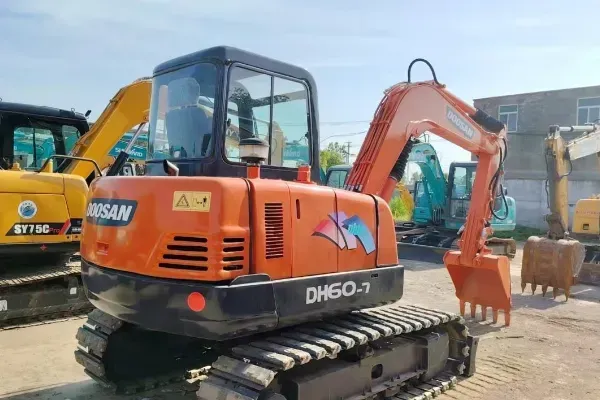
~5 t / 20 t / 45 t
Configured to your application
Roughly 5–45 t
From mini urban machines to quarry and mining class
Size First, Brand Second
The ton class decides the job before the badge does
Inspect Before Shipment
Hours, hydraulics, and the unit — photos and report before payment
The first decision is the size, the second is the brand, and the rule underneath both is the same: confirm the hours, the hydraulics, and the unit before you pay.
Excavators for Sale by Brand
Explore Doosan, Caterpillar, and Komatsu excavators. Match your machine to the ton class, the job, and local parts and service support.
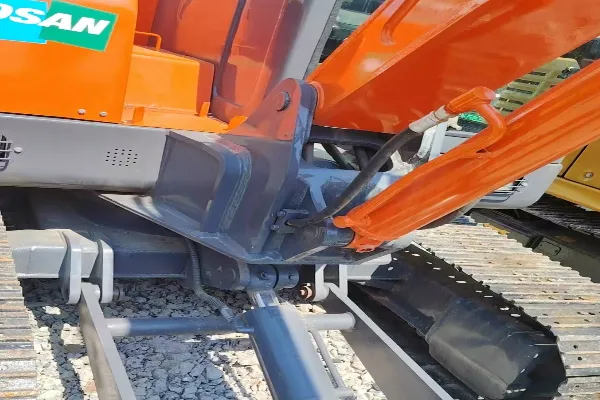
Doosan Excavators
Mini and midi machines through to large crawler excavators. Match the ton class to urban, utility, and general construction work, and confirm the hours, hydraulics, and undercarriage per unit.
View Excavator Range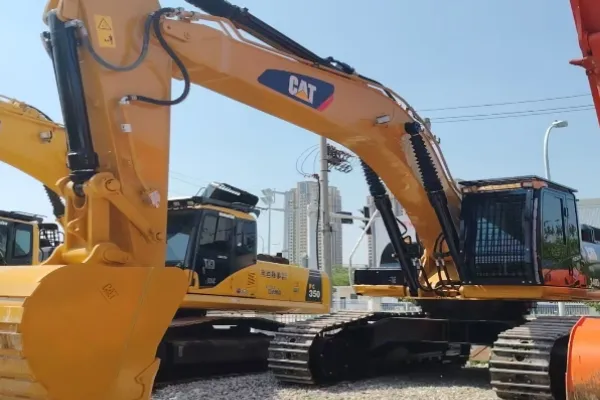
Caterpillar Excavators
Proven global support across the Cat range, from compact machines to heavy production classes. Confirm the model, hours, and hydraulic condition before you pay.
View Excavator Range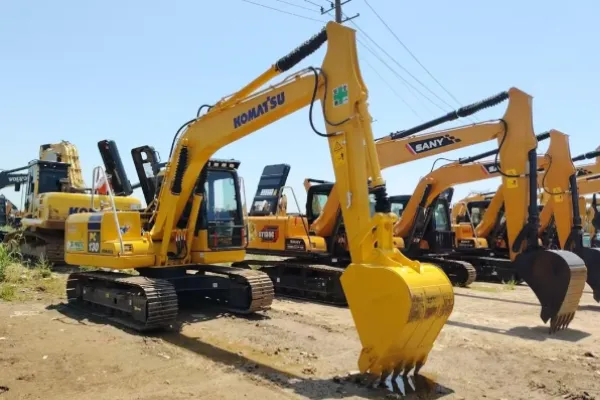
Komatsu Excavators
Quarry- and mining-class machines built for production digging and loading. Match the ton class to your material and haul cycle, and verify the unit before shipment.
View Excavator RangeSpecifications vary by model, build, and condition. Confirm the engine, hydraulics, undercarriage, hours, and destination compliance in your configured quotation.
What a Crawler Excavator Is
Three things decide how a crawler excavator is understood: what the machine is, why it runs on tracks, and what to confirm before you buy one used.
Boom / Arm / Bucket
ROTATING PLATFORM
What an Excavator Is
An excavator is an earthmoving machine built around a boom, an arm, and a bucket on a rotating platform. In this category it is almost always crawler-mounted — running on tracks rather than wheels.
- Working tools Boom, arm, and bucket on a rotating platform.
- Mounting Crawler tracks, not wheels, in this category.
Key takeaway
Built to dig, load, and trench
Tracks
LOW GROUND PRESSURE
Why Crawler-Mounted
The tracks are the point: they spread the machine’s weight over a large area, so a 30-ton excavator can work on soft or broken ground that would sink a wheeled machine.
- Why it matters Soft or broken ground stays workable.
- Result Crawler is the default for digging, loading, and trenching on construction, quarry, and mining sites.
Key takeaway
Tracks keep a 30-ton machine working
Hours · Hydraulics · Brand
THE BUYING QUESTIONS
What to Confirm Before You Buy
On the export market, “excavator for sale” almost always means a used crawler machine. The buying questions are the machine’s own: hours, hydraulic condition, and the brand behind the parts supply.
- Hours How many hours the machine has actually run.
- Hydraulics How the hydraulic system runs.
- Brand Which brand is behind the parts supply.
Key takeaway
Used machines: verify before you pay
Crawler vs Wheeled Excavator at a Glance
| Factor | Crawler Excavator | Wheeled Excavator |
|---|---|---|
| Mounting | Tracks | Wheels |
| Ground pressure | Low — spreads the machine’s weight over a large area | Higher |
| Soft or broken ground | Works without sinking | Can sink |
| Best fit | Construction, quarry, and mining sites | Paved surfaces and road work |
| Buying focus | Hours, hydraulics, and brand parts supply | Same checks apply |
*Comparison is an indicative reference, not a guaranteed specification. The excavator category sits under the wider heavy equipment hub, which also covers bulldozers and the machines that run alongside an excavator on the same site. Confirm hours, hydraulic condition, and brand parts support per unit before you pay.
Doosan, Caterpillar, and Komatsu
The eleven models in the category break down by brand and ton class. Each model has its own page — choose by the ton class, the job, and the parts support behind the brand.
Doosan — The Korean Value Anchor
A proven, high-volume brand that competes on acquisition cost and parts availability rather than the prestige of the nameplate. Four models span the mini DH55 and DH60-7, the mid-size DX225, and the large DX300LC-9C.
Covers most construction and earthmoving work without a premium badge.Caterpillar — The Deepest Global Network
The established American name, with the deepest global parts and service network in the category. Three models — the 320D2L, the 323D2L, and the 340D2L — span the mid and large classes.
Choose Cat when parts availability and resale value matter as much as the machine.Komatsu — Strong in Mining & Production
The established Japanese name, strong in mining and heavy production work. Four models — the PC130, PC220, PC400LC, and PC450 — span the mid to large classes, with the PC400LC and PC450 aimed squarely at production and mining.
High-hours, high-duty machines are the expectation here.Eleven Models at a Glance
| Brand / Model | Ton Class | Best Fit |
|---|---|---|
| Doosan DH55 Mini | ~5.5 t | Mini, tight sites |
| Doosan DH60-7 Mini | ~6 t | Mini, utility |
| Doosan DX225 Mid | ~22 t | Mid, earthmoving |
| Doosan DX300LC-9C Large | ~30 t | Large, earthmoving |
| Caterpillar 320D2L Mid | ~20 t | Mid, general |
| Caterpillar 323D2L Mid | ~23 t | Mid, general |
| Caterpillar 340D2L Large | ~34 t | Large, production |
| Komatsu PC130 Mid | ~13 t | Mid, utility |
| Komatsu PC220 Mid | ~22 t | Mid, earthmoving |
| Komatsu PC400LC Large | ~40 t | Large, production |
| Komatsu PC450 Large | ~45 t | Large, mining |
Each model page carries its own specification. Confirm the hours, hydraulic condition, undercarriage, and parts support locally before choosing.
Ask About a Specific ModelExcavator Specifications
Excavators are bought used and configured to order rather than sold from a fixed sheet, so the ranges below are typical and confirmed per unit. The exact engine, hydraulic system, and attachments are matched to your application.
-
Tonnage & Type
Roughly 5.5–45 tons across the line, and crawler (tracked). The tonnage is set by the application — mini for tight sites, large for production and mining.
-
Engine & Hours
Diesel, brand-matched to the machine. Hours are the first honest signal of how hard the machine has worked — read them against the service history, not on their own.
-
Hydraulic System
Pump, cylinders, swing motor, and travel motors. This is where the work shows up — a machine with clean, smooth, leak-free hydraulics is worth far more than the same model with a lower hours number and a tired pump.
-
Bucket & Attachments
A standard digging bucket, per application. The bucket is set by the material and the job, not picked from a chart.
-
Application
Digging, loading, trenching, and earthmoving. The tonnage and the bucket follow the application — this is the sizing decision.
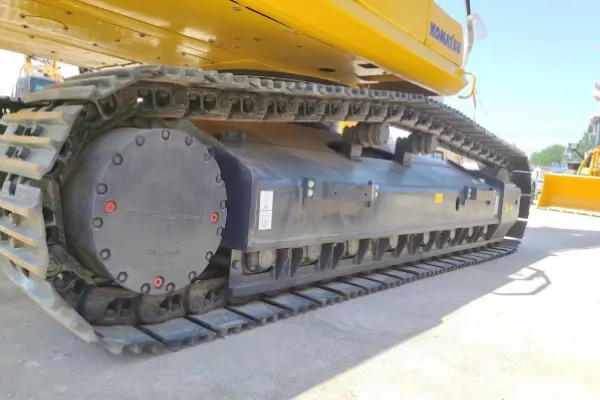
Hours and Hydraulics Decide the Value
The two specifications that decide a used excavator’s value are the engine hours and the hydraulic system. Hours are the first honest signal of how hard the machine has worked, and the hydraulics are where that work shows up. Send your ton class, application, and destination port — receive a unit-specific quotation with photos, video, and an inspection report, typically within about 24 hours.
Buying a Used Excavator from China — Check the Engine Hours and Hydraulics First
A cross-border purchase makes the process more important, not less — and on an excavator, the engine hours and the hydraulic system are the first things to verify, not the last. The wear concentrates in the engine and the hydraulics, and those two things decide the machine’s real value far more than its paint.
See the Unit Before You Pay the Balance
The unit you pay for has to be a genuine machine, it has to be the unit that arrives at your port, and its condition has to be what you were told. Every unit undergoes a serial-number check and a 100% pre-shipment inspection.
- Engine hours & condition
- Hydraulic system — boom, arm, bucket, swing, travel
- Pump, cylinders & hoses
- Undercarriage — tracks, rollers, idlers, sprockets
- Structure & boom cracks / repair welds
- Serial number & export documentation
Your inspection evidence
Photos, video, and an inspection report sent before balance payment and shipment — so you raise any question while it is still in the yard, where a decision is cheap.
Shipping & Export Documentation
Shipping is coordinated by Ro-Ro, container, or breakbulk to your destination port. The export file has to be complete before anything ships.
- Ro-Ro
- Container
- Breakbulk
Documents for your customs broker
Commercial invoice, bill of lading, certificate of origin, and packing list. After delivery, after-sales support and genuine parts keep the machine working.
-
Read the Engine Hours
Against the service history — not the number alone.
-
Cycle the Hydraulics
Boom, arm, bucket, swing, and travel — watch for hesitation and drift.
-
Check the Undercarriage & Structure
Tracks, rollers, sprockets, and boom welds — then the documents.
The Brand Decision
The brand decision on an excavator is a value-and-parts decision — not about one brand being “better”, but about which brand’s cost-and-parts profile matches your operation.
Doosan — The Value Anchor
The Korean value anchor: a proven machine at a lower acquisition cost. It suits a buyer who wants capability without paying for a badge — covers most construction and earthmoving work without the premium.
Capability without the premium badgeCaterpillar — The Deepest Network
The established American name with the deepest parts and service network in the category. It suits a buyer who will run the machine hard and wants parts without a wait — resale value is part of the argument too.
Parts without a wait, and stronger resaleKomatsu — Mining & Heavy Production
The established Japanese name with a strong mining and heavy-production reputation. It suits a buyer on a high-duty site where the machine is expected to run at high hours and high duty.
Built for high-duty, high-hours sitesAnswer Parts Availability First
The eleven model pages carry the specifics, but the parts-availability question is the one to answer first: a machine parked waiting for a component costs more than any price difference between the three.
Uptime outweighs the price gap
YOUR QUESTIONS, ANSWERED
Excavator FAQ
Compare ton classes, brands, pricing, shipping, and after-sales support.
Discuss Your Requirements1 What is a crawler excavator?
A crawler excavator is a tracked earthmoving machine with a boom, arm, and bucket on a rotating platform, used for digging, loading, and trenching. The tracks spread the machine’s weight so it can work on soft or broken ground, which is why crawler is the default for earthmoving.
2 How much does a used excavator cost?
There is no fixed price. A used excavator is priced by its ton class and brand, engine hours, the condition of the hydraulics and undercarriage, its attachments, and the freight to your destination port. Request a quotation with your application and destination, and we will come back with a concrete figure.
3 What size excavator do I need?
Match the ton class to the application. A mini machine (5–8 t) suits tight sites, utility, and trenching; a mid-size machine (13–25 t) suits general earthmoving and construction; and a large machine (30–45 t) suits production, quarry, and mining.
4 Which excavator brand is best?
There is no single best brand — it depends on your cost-and-parts profile. Doosan is the Korean value anchor, Cat carries the deepest parts and service network, and Komatsu is strong in mining and heavy production. Match the brand to how hard you will run the machine and how fast you need parts.
5 What should I check before buying a used excavator?
Check the engine hours against the service history, then cycle every hydraulic function and check the pump, cylinders, and hoses for leaks. Finish on the undercarriage wear, the structure for cracks, and the serial number against the documentation.
6 Can I buy an excavator from China?
Yes. Amigo Truck supplies new and used Doosan, Cat, and Komatsu excavators with serial-number verification, pre-shipment inspection, export documentation, shipping to your destination port, and genuine-parts support after delivery. Start with a quotation request and your application details.
MATCHED TO YOUR APPLICATION
Get Your Excavator Configured
An excavator is a condition decision before it is a price decision. Share your requirements and we’ll confirm the ton class, brand, and attachments.
- Ton Class
- Application
- Attachments
- Destination Port
YOUR CONFIGURED OFFER
Doosan
Cat
Komatsu
5.5–45 t · Matched to your job
Request a QuotationTypically within about 24 hours
See the engine and hydraulics work
on video before shipment.