
Komatsu Excavators for Sale PC130, PC220, PC400LC & PC450
The Japanese benchmark for fuel economy and field repairability.
Amigo Truck supplies four Komatsu crawler excavators — the 13-ton PC130, the 20-ton PC220, the 42-ton PC400LC, and the 45-ton PC450 — as genuine Japan-built machines, re-exported through China, the world’s largest concentration point for used Komatsu equipment.
Every unit is origin-verified and inspected before shipment. This page sets out the model range, where a Komatsu earns its keep and where it gives ground, and how sourcing, inspection, and shipping work.
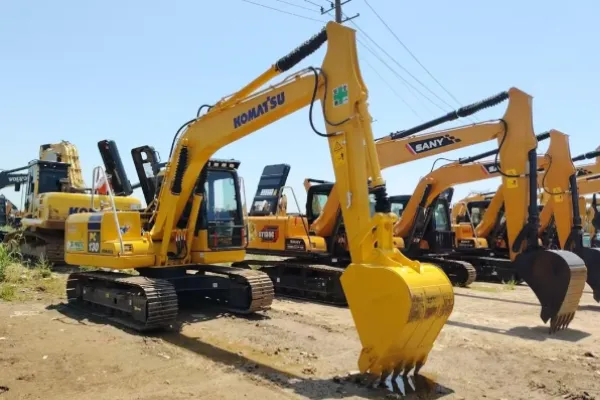
- 270 kW
- Top power (PC450)
- 13–45 t
- Tonnage range
- 4
- Models supplied
- 0.53–2.80 m³
- Bucket range
Figures vary by build. Exact specifications for each unit are confirmed on its model page and in your configured quotation.
Komatsu Excavators We Supply
Four tonnage classes, one sourcing process. Each unit is origin-verified and inspected before shipment.
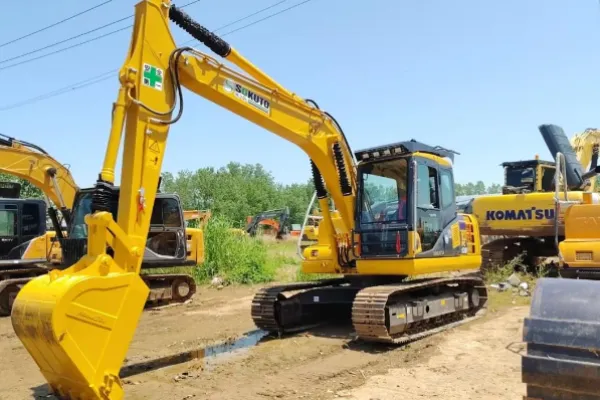
Komatsu PC130 Excavator
The 13-ton compact end of the range. A Komatsu SAA4D95LE engine at 66–72 kW, a 0.53–0.64 m³ bucket, and about 12,600–13,200 kg operating weight for urban utility and small-site work.
View Machine Details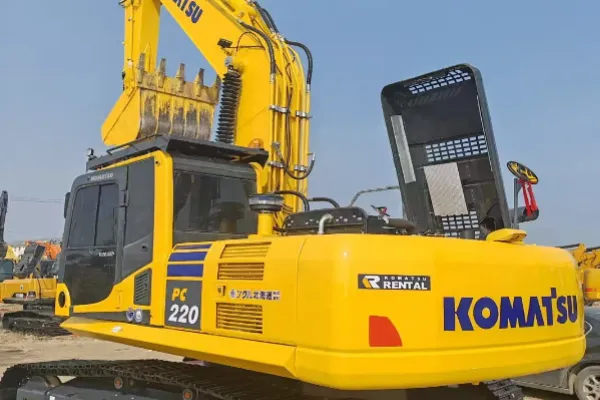
Komatsu PC220 Excavator
The 20-ton workhorse and the most liquid model in the used Komatsu market. A SAA6D107E-1 at 129 kW, a 0.72–1.26 m³ bucket, and about 23,200–23,700 kg operating weight.
View Machine Details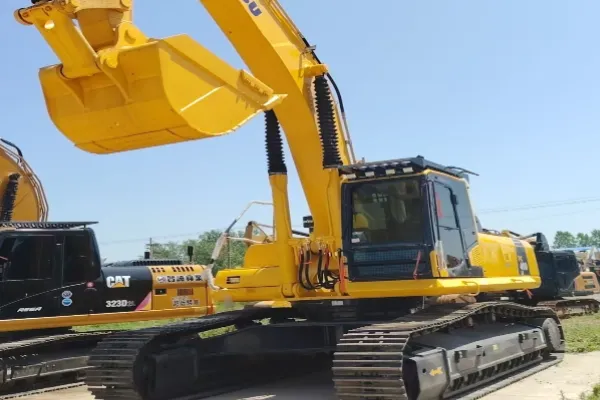
Komatsu PC400LC Excavator
The 42-ton heavy end. A SAA6D125E-5 at 257–270 kW, a 1.30–2.80 m³ bucket, and up to 43,200 kg operating weight. Long-carriage, wide-track undercarriage for quarry and mining cycles.
View Machine Details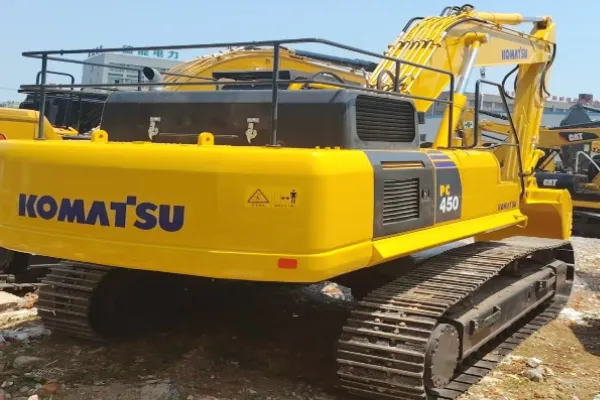
Komatsu PC450 Excavator
The 45-ton top of the range. The same SAA6D125E-5 engine with a larger 1.90–2.10 m³ bucket at up to 45,125 kg. Built for high-production rock loading and mining.
View Machine DetailsSpecifications vary by model and build. Confirm engine, bucket, undercarriage, origin, and destination compliance in your configured quotation.
Komatsu Excavator Models Compared
The four Komatsu excavators Amigo Truck supplies span the tonnage scale from 13 to 45 tons. The right one is decided by your job, not by the price tag. Exact figures vary by generation, boom and arm, counterweight, and undercarriage.
| Model | Class | Operating weight | Engine | Power | Bucket | Typical application |
|---|---|---|---|---|---|---|
| Komatsu PC130 | 13-ton | About 12,600–13,200 kg | Komatsu SAA4D95LE | 66–72 kW (89–97 HP) | 0.53–0.64 m³ | Urban utility, drainage, small-site construction |
| Komatsu PC220 | 20-ton | About 23,200–23,700 kg | Komatsu SAA6D107E-1 | 129 kW (173 HP) | 0.72–1.26 m³ | General construction and light quarry work |
| Komatsu PC400LC | 42-ton | 41,740–43,200 kg | Komatsu SAA6D125E-5 | 257–270 kW (345–362 HP) | 1.30–2.80 m³ | Heavy excavation, quarry, and mining |
| Komatsu PC450 | 45-ton | 43,320–45,125 kg | Komatsu SAA6D125E-5 | 257–270 kW (345–362 HP) | 1.90–2.10 m³ | High-production mining and rock loading |
Reference figures from Komatsu model data and the Komatsu Africa range booklet, cross-checked against independent specification sources. Individual units vary by generation, boom and arm, counterweight, and undercarriage — confirm the exact build in your configured quotation.
01
PC130: 13-Ton Urban Utility
The compact end of the range. The four-cylinder SAA4D95LE engine delivers 66–72 kW, with an operating weight around 12,600–13,200 kg and a bucket of 0.53–0.64 m³. The right tool for urban utility work, drainage, and small-site construction where a 20-ton machine is oversized and hard to position. The smaller class is also easier and cheaper to move between jobs.
02
PC220: 20-Ton General Construction
The workhorse of the range and the single most liquid model in the used Komatsu market. It runs the six-cylinder SAA6D107E-1 at 129 kW, carries a 0.72–1.26 m³ bucket, and weighs about 23,200–23,700 kg. For general construction, trenching, and light quarry work, it is the default choice — big enough to produce, small enough to move, easy to resell.
03
PC400LC: 42-Ton Heavy Excavation
The heavy end of the line. The six-cylinder SAA6D125E-5 delivers 270 kW gross, the operating weight reaches 43,200 kg, and the bucket runs 1.30–2.80 m³. This is the machine that tears through hard ground, loads dump trucks, and holds up to continuous quarry or mining cycles. The “LC” is the long-carriage, wide-track undercarriage that keeps a 42-ton machine stable and low-ground-pressure.
04
PC450: 45-Ton High-Production Mining
The top of the supplied range. It shares the SAA6D125E-5 engine with the PC400LC but carries a larger 1.90–2.10 m³ bucket at an operating weight of up to 45,125 kg. Specify it when the job is high-production rock loading and mining, where a few extra tons per cycle compound into real output across a shift.
Why Choose a Komatsu Excavator
The reasons an operator chooses a Komatsu excavator over a cheaper brand are operational, not cosmetic.
01
Best-in-Class Fuel Economy
Intelligent work modes and load-sensing hydraulics match power to demand. A PC200-class unit runs around 14.5 L/h against about 15.8 L/h for a comparable 20-ton competitor — the single biggest operating-cost saving across a year of daily hours.
02
In-House Components
The engine, HydrauMind hydraulics, and electronics are all designed and built by Komatsu itself. One engineering family means predictable behavior, shared parts across models, and easier diagnostics when something goes wrong.
03
Field-Repairable Electronics
Fewer proprietary modules than premium competitors means a competent local technician can keep the machine running on-site — a real advantage in markets without a strong dealer presence.
04
Resale Value & Global Parts
Komatsu holds strong used-market value, second only to CAT, returning part of the purchase price when you trade up or sell. As a top-three brand, parts are obtainable in most African, Middle Eastern, and Latin American markets.
The trade-offs are real. A Komatsu excavator delivers less breakout and digging force than a CAT of the same class, so pure rock-breaking favors CAT. It offers fewer grade-control and automation features than CAT’s latest Next Gen range. And while the dealer network is strong, CAT’s footprint is wider in some remote markets. A Komatsu is the right call when fuel cost, poor fuel, and field repairability dominate the decision.
Komatsu vs CAT vs Doosan: Which Excavator Fits Your Site
Most buyers who look at a Komatsu excavator are really weighing it against the other two majors. The table lays the three brands side by side.
| Factor | Komatsu Premium | CAT (Caterpillar) Premium / benchmark | Doosan Mid-range / value |
|---|---|---|---|
| Origin | Japan | United States | South Korea |
| Core strength | Fuel economy, in-house components, field repairability | Durability, breakout force, resale value | Lower purchase price, versatility |
| Main trade-off | Less breakout force, fewer grade-control features | Higher purchase price and fuel consumption | Lower build quality, weaker residual value |
| Best use | Fuel-sensitive fleets, poor fuel, thin dealer support | Mining, rock, heavy-duty, high-resale fleets | Tight budgets, general construction |
Choose Komatsu When
Fuel economy, simple field repair, and long-term running cost are the priority — a real advantage in markets with poor fuel and thin dealer support.
Choose CAT When
The machine will work rock, run hard shifts, and be resold later — CAT’s breakout force and resale value carry the premium.
Choose Doosan When
Capital is tight and the work is general construction. Doosan competes on a lower purchase price.
Parts & Support
Check local dealer and parts support before ordering. All three brands carry a premium on genuine parts in remote markets.
CONSIDER KOMATSU
Fuel-sensitive fleets, poor fuel quality, and thin dealer support — Komatsu’s running cost and simple field repair make the difference.
CONSIDER CAT OR DOOSAN
Rock and high-resale fleets suit CAT; tight budgets and general construction suit Doosan.
New vs Used Komatsu Excavators
A Komatsu excavator can be bought new or used, and the choice is a budget decision more than a quality decision.
-
New Komatsu Unit
Factory-built with zero hours and a clean service history from day one. The right choice for a long-life asset that will run for years and be resold as a known-history machine.
-
Used Komatsu Excavator
A lower capital outlay and a faster payback, which suits standby capacity, a short project, or a premium machine without the new-unit price.
-
Market Price Reference
As market context — not an Amigo Truck quotation — China-based used listings advertise 20-ton Komatsu PC220 units from roughly USD 18,000 to USD 33,000 and 42-ton PC400LC units from roughly USD 39,000 to USD 65,000.
-
The Same Inspection Either Way
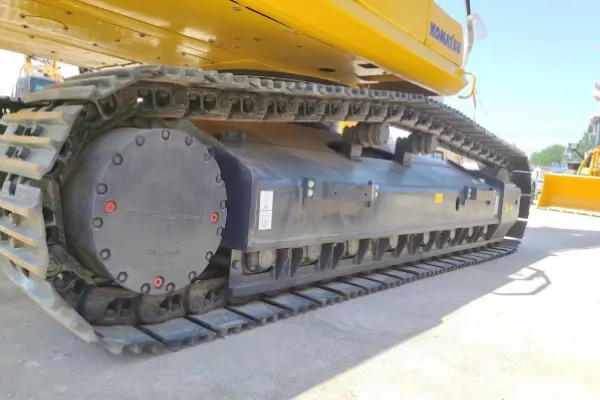
Both new and used units pass the same pre-shipment inspection, including origin and serial documentation. The difference is hours, history, and upfront cost — not how carefully the machine is checked.
Price Is Quoted Per Configuration
A Komatsu excavator has no fixed price, because the model, tonnage, engine, bucket, condition, and destination all change the figure. Send your requirements and we return a configured quotation, typically within about 24 hours.
Buying a Komatsu Excavator from China: Origin, Inspection, and Shipping
Komatsu is a Japanese brand, not a Chinese one, so be clear on how the sourcing works. Amigo Truck is a China-based export service, and China is the world’s largest concentration point for re-exported Komatsu excavators.
The Five-Stage Export Process
Japan-origin used units are imported to China, held in export stock, and re-exported to Africa, the Middle East, and Latin America. What you receive is a genuine Japan-built Komatsu machine, verified by origin and condition and documented before it leaves.
- Consultation — tonnage, application, port
- Customized quotation — machine, options, freight
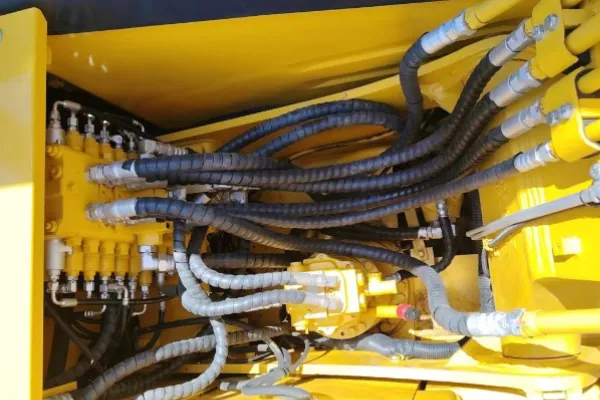
- Inspection — photos, video, written report
- Customization — bucket, counterweight, attachments
- Shipping — Ro-Ro, flat-rack, or breakbulk
You See the Unit Before You Pay
In the used re-export market there is a real risk of clocked hours, mismatched origin, or misrepresented condition. Nothing ships until the inspection report and origin documentation are in front of you.
- Inspection
- Engine, hydraulics, undercarriage, bucket, boom and arm, operating hours, and serial and origin documentation.
- Shipping method
- A 13-ton or 20-ton unit typically ships by Ro-Ro or flat-rack; a 42-ton or 45-ton unit by flat-rack or breakbulk.
- Transit time
- Route-dependent. The expected timeline is confirmed with your quotation rather than promised as a fixed date.
Practical Support. From Origin Verification to Delivery.
Get the right configuration, review your machine and its origin documentation before shipment, and plan delivery with a clear scope.
Configured for Your Site
Match the tonnage, engine, bucket, and undercarriage to your material, ground conditions, and destination.
Your application comes firstOrigin Verified Before Shipping
Review photos, video, and an inspection report, plus serial and origin documentation — confirming the unit is a genuine Japan-built Komatsu machine.
Verify before you commitClear Export & Shipping Support
Confirm the shipping method, freight scope, expected timeline, and export paperwork for your port.
Plan delivery before orderingParts & Maintenance Planning
Arrange genuine spare parts and consumables, and check local dealer support before you buy.
Support beyond the shipmentKomatsu Excavator FAQ
Answers to common questions about cost, brands, machine size, origin, and shipping. Need help with your configuration? Contact our team.
1 How much does a Komatsu excavator cost?
There is no fixed price, because the model, tonnage, engine, condition, and destination port all change the figure. As market context, used 20-ton Komatsu PC220 units are advertised in China from roughly USD 18,000 to USD 33,000, and 42-ton PC400LC units from roughly USD 39,000 to USD 65,000. For your order, send the tonnage, application, and destination port, and you receive a configured quotation — typically within about 24 hours.
2 What is the difference between a Komatsu excavator and a CAT or Doosan?
Komatsu is the Japanese brand known for fuel economy, in-house components, and easier field repair. CAT is the US benchmark for durability, breakout force, and resale, at a higher purchase and fuel cost. Doosan competes on a lower purchase price for general construction. The right brand depends on your site, fuel quality, and parts situation.
3 Which Komatsu excavator size do I need for construction vs mining?
A 13-ton PC130 covers urban utility and small-site work; a 20-ton PC220 handles general construction and light quarry work. For heavy excavation, quarry production, and mining support, specify the 42-ton PC400LC, and step up to the 45-ton PC450 for high-production rock loading.
4 Are the Komatsu excavators sold from China genuine Japan-built machines?
Yes. The units Amigo Truck supplies are genuine Komatsu machines — most of them Japan-origin units re-exported through China, not China-built clones. Each one’s origin and serial documentation are verified as part of the pre-shipment inspection.
5 Should I buy a new or used Komatsu excavator?
It depends on your budget and payback target. A new unit gives zero hours and a clean history for a long-life asset; a used unit lowers capital outlay and pays back faster. Both pass the same pre-shipment inspection, so the difference is hours, history, and upfront cost.
6 How long does it take to ship a Komatsu excavator from China?
Transit time varies by route, shipping method, and schedule, so we confirm the expected timeline with your quotation rather than promise a fixed date. A 13-ton or 20-ton unit typically ships by Ro-Ro or flat-rack; a 42-ton or 45-ton unit by flat-rack or breakbulk.
SPECIFICATION BEFORE PRICE
Conclusion
A Komatsu excavator is a specification decision before it is a price decision. Match the tonnage, engine, bucket, and undercarriage to your job — and decide honestly whether Komatsu fuel economy, CAT breakout force, or the Doosan price fits your operation — so you get a machine that earns on low running cost and easy field repair.
Amigo Truck handles consultation, customized quotation, inspection, customization, and shipping as one process, with the origin documentation and inspection report in front of you before anything ships. Send your tonnage, application, and destination port, and we will return a configured quotation — typically within about 24 hours.
Review your machine on video, with origin and serial
documentation, before shipment — export paperwork
prepared for your destination.
Request a Quotation
Start with your specification.