
SHACMAN F3000 8×4 Tractor Truck
Heavy-haul prime mover for extreme-weight combinations.
A specialist heavy-haul prime mover — a four-axle unit with two steer axles and a rear drive tandem, built to pull very heavy semi-trailers and road-train combinations that a standard 6×4 cannot legally or safely handle.
This is not the standard F3000 tractor (4×2 or 6×4). The 8×4 is a niche configuration for oversize and extreme-weight transport in a handful of markets. If you run ordinary long-haul freight, the 6×4 is almost certainly the right unit.
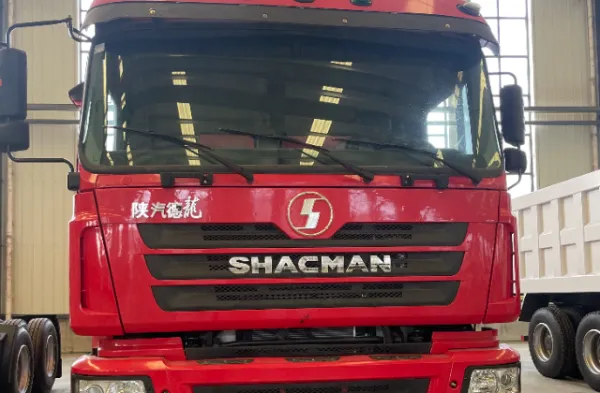
- 8×4
- Drive configuration
- 4-Axle
- Two steer + tandem
- Heavy-Haul
- Niche configuration
- Custom Spec
- Confirmed per order
Every specification is representative and confirmed per order against a SHACMAN spec sheet — this is not a shelf configuration. Confirm local limits and parts support.
What an 8×4 Tractor Truck Actually Is
A genuine 8×4 tractor is a specialist heavy-haul build, not the mislabeled rigid truck often found in listings. It exists for a narrow job: pulling very heavy semi-trailers or road-train combinations that exceed a standard 6×4.
| Factor | Tractor Truck | Rigid Truck |
|---|---|---|
| Drive configuration | 8×4 (two steer + rear tandem) | 8×4 (two steer + rear tandem) |
| Load carrying | Pulls a semi-trailer via a fifth-wheel coupling; carries no load itself. | Carries the load on its own chassis and body. |
| Typical use | Oversize and extreme-weight transport (heavy-haul semi-trailers, road-trains). | Dump, cargo, or mixer applications. |
| Standard config | Normally 4×2 or 6×4; 8×4 is a niche. | 8×4 is standard for heavy rigid work. |
| Quick visual check | Has a fifth wheel. | Has a cargo or dump body. |
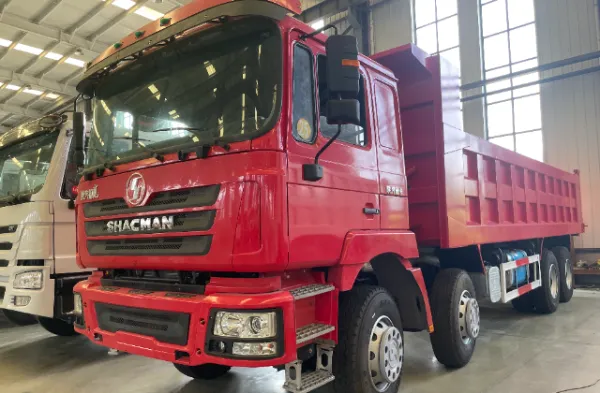
If the listing photo shows a cargo or dump body, it is not a tractor — whatever the title says.
01
The 8×4 Drive Layout
The 8×4 drive configuration means four axles: two steer axles at the front and a rear drive tandem, with power going to the four rear wheels.
- In a rigid truck: this layout carries a body, and the load sits on the chassis.
- In a tractor: the unit carries no load itself; it pulls a semi-trailer through a fifth-wheel coupling.
02
The Specialist Tractor
A tractor is normally built as a 4×2 or 6×4, because that is all the unit needs to pull a standard trailer. An 8×4 tractor exists only for a narrow job: pulling very heavy semi-trailers or road-train combinations where the fifth-wheel load and traction demand exceed a 6×4.
- Standard tractors: 4×2 or 6×4 for ordinary long-haul freight.
- 8×4 tractors: specialist heavy-haul builds for extreme weights.
03
Spotting Mislabeled Listings
You will see “8×4 tractor truck” listings that are actually 8×4 rigid trucks with the wrong label. The quick check is the fifth wheel: a tractor has one, a rigid truck does not.
- Tractor: fifth wheel, no body, pulls a trailer.
- Rigid: cargo or dump body, no fifth wheel.
Get the Specification Sheet for Your Build
Send your combination weight and destination port. Receive a configured offer, typically within about 24 hours.
SHACMAN F3000 8×4 Tractor Truck Specifications
The table below gives representative specifications for a heavy-haul SHACMAN F3000 8×4 tractor. The exact build — engine rating, gearbox, axle type, axle ratio, and emission standard — is confirmed against your routes, combination weight, and destination market before quotation, not ordered from a fixed sheet.
| Specification | 8×4 Heavy-Haul Confirm Per Order |
|---|---|
| Drive configuration | 8×4 (four axles, two steer + rear drive tandem) |
| Engine | Weichai WP12/WP13, roughly 430–550 HP |
| Transmission | FAST 12- or 16-speed manual |
| Gross combination weight (GCW) | 60 t and above, market-dependent |
| Fifth wheel | 90# coupling |
| Front steer axles | roughly 2×7.5 t |
| Rear drive tandem | roughly 2×16 t (hub-reduction common) |
| Wheelbase | confirmed per order |
| Fuel tank | confirmed per route |
| Emission standard | Euro II–Euro V, market-dependent |
Engine & Power Rating
A heavy-haul 8×4 tractor needs more power than the standard 6×4, and the F3000 8×4 reflects that. The build uses the Weichai WP12 or WP13 inline-six, rated from roughly 430 HP up to about 550 HP. Lower ratings do not suit this application: pulling a 60-tonne-plus combination up a grade with an underpowered engine means a truck that crawls, overheats, and burns more fuel than the headline saving was worth.
Transmission & Gearing
The transmission is a FAST 12- or 16-speed manual. The 16-speed is the common choice for heavy haul, because the closer ratios keep the engine in its torque band through long climbs and heavy starts. FAST, or Shaanxi Fast Gear, is the gearbox SHACMAN fits as standard, and its wide parts availability is one reason the drivetrain is practical to keep running in export markets.
Axles & GCW
The 8×4 layout spreads the load across four axles. The two front steer axles are rated at roughly 2×7.5 t, and the rear drive tandem at roughly 2×16 t, with hub reduction common for the extra traction and ground clearance heavy haul demands on unpaved or soft surfaces. The unit’s real capacity is the gross combination weight (GCW) — the truck plus the loaded trailer — set by the fifth-wheel rating, the axle ratings, and your market’s legal axle limits.
Fifth Wheel & Axle Ratio
A heavy-haul F3000 8×4 is rated for combination weights of 60 tonnes and above, with a 90# fifth wheel to carry the trailer’s kingpin load. Axle ratio is the detail that most often gets a heavy-haul tractor wrong: it is specified against your steepest grade and your load, because the ratio that holds a 70-tonne road train on a mountain pass is not the ratio that suits a flat run.
CONSIDER F3000 8×4
Oversize and extreme-weight transport in a handful of markets, where the combination weight and traction demands genuinely exceed what a standard 6×4 can legally or safely handle.
CONSIDER F3000 6×4
Ordinary long-haul, container, and regional haulage where a 6×4 (or 4×2) is all the unit needs to pull a standard trailer.
Rated GCW vs the Overloaded Road Train
This is the section most heavy-haul listings leave out, and it matters most to a buyer’s safety and compliance.
01
What Sets Legal Capacity
A road-train tractor’s legal and safe capacity is set by its fifth-wheel rating, its axle ratings, and local axle and combination limits — not by the biggest number a listing can print.
- Fifth-wheel rating Sets the kingpin load the unit can legally pull.
- Axle ratings Front steer and rear tandem limits govern the combination.
- Local rules Your market’s axle and combination limits decide what registers.
02
The Overload Figure
A heavy-haul F3000 8×4 is rated for combination weights of 60 tonnes and above, but the exact legal figure depends on your market’s rules and your trailer’s axle count. You will see the same unit marketed for far higher gross train weights in markets where overloading is common.
- What it is Running the truck and trailer beyond their rated capacity.
- What it stresses Brakes, axles, and tyres work beyond specification.
- What it risks The combination may be illegal to register and insure.
03
What We Quote
When we quote the F3000 8×4, we quote the legal combination weight for your route and trailer, not an overload figure you cannot put on the road.
- Legal GCW Rated combination weight for your route and trailer.
- Trailer matched Spec confirmed against your trailer’s axle count.
- Honest advice If a bigger build is needed, we will tell you.
8×4 vs 6×4 — Which F3000 Tractor Is Right for You?
Most buyers who arrive at this page need the 6×4, not the 8×4. Here is the honest split.
-
Role & Axles
8×4: Specialist heavy-haul and road-train work. Four axles (two steer + rear tandem).
6×4: Standard long-haul and regional duty. Three axles (rear tandem).
-
Engine & GCW
8×4: Weichai WP12/WP13, ~430–550 HP. Gross combination weight 60 t and above.
6×4: Weichai WP10/WP12, ~336–430 HP. Rated around 40 t GCW.
-
Parts & Support
8×4: Niche configuration with a thinner parts and service network.
6×4: The widest, deepest parts and support network in the SHACMAN range.
-
Price & Fit
8×4: Higher price. Only earns its keep when the fifth-wheel load or traction demand genuinely exceeds what a 6×4 can carry.
6×4: Lower price and lowest running cost. If your combination weight is under about 40 tonnes, this is the better, cheaper, better-supported tool.
Confirm the Right Chassis for Your Load
Send your combination weight, haul routes, and destination port. We will recommend the 6×4 or 8×4 based on what the job actually requires.
Buying and Shipping a SHACMAN 8×4 from China
A niche build makes the cross-border purchase more important, not less. The specification has to be right before anything ships, and the unit you pay for has to be the unit that arrives at your port.
The Purchase & Inspection Process
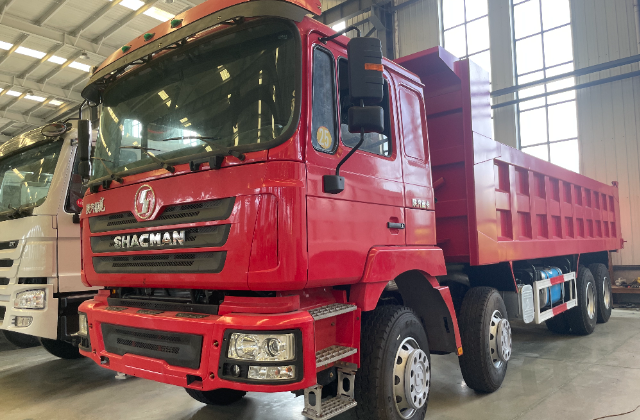
Because the 8×4 is a confirm-per-order build, we verify the engine, axle, and GCW codes against a SHACMAN spec sheet before the quotation is final. Amigo Truck applies a 100% pre-shipment inspection to every F3000 before it ships, so you review the actual unit rather than a stock image.
- Engine & transmission
- Axles & fifth wheel
- Cab & brakes
- Lighting & ordered options
- Export documentation
Shipping & Export Paperwork
From there we handle the export paperwork and coordinate shipping by container, Ro-Ro, or breakbulk to your destination port.
- Documents
- Commercial invoice, bill of lading, certificate of origin, and packing list.
- After-sales
- Original spare parts for Weichai, FAST, and SHACMAN keep the truck working.
- Trailers
- For heavy-haul combinations, we also supply semi-trailers, including lowbed trailers for oversize loads.
Built for Road Trains, Heavy Haul and Demanding Routes
The 8×4 tractor is a specialist tool. It earns its keep only when your combination weight and traction demands exceed what a standard 6×4 can legally or safely handle.
Road Trains & Heavy Haul
This is the 8×4 tractor’s genuine home. It suits operators pulling multi-trailer road trains, heavy lowbed combinations, and oversize loads where a 6×4 cannot carry the kingpin load or would lose traction on the pull-away and the climb.
Stability and grip for heavy combinationsWhen a 6×4 Is the Better Tool
For ordinary long-haul, container, and regional freight — the vast majority of tractor work — the 6×4 is the right choice. It is cheaper to buy, cheaper to run, and far easier to service, because every local workshop already knows the 6×4 configuration.
Cheaper and easier to serviceEmission Compliance
A truck built to a higher standard may run poorly on high-sulfur fuel. A lower-standard truck may not be permitted to register in strict markets. Confirm your country’s required emission standard before ordering.
Matched to destination regulationsFuel Quality & Customization
Confirm the fuel quality realistically available along your routes. We configure the F3000 8×4 from Euro II through Euro V to match, and can customize the heavy-haul package for markets with tighter rules.
Built to your actual routesSHACMAN F3000 8×4 Tractor Truck FAQ
Answers to common questions about heavy-haul configurations, specifications, shipping, and spare parts. Need help with your configuration? Contact our team.
1 What is an 8×4 tractor truck?
An 8×4 tractor truck is a four-axle prime mover — two steer axles and a rear drive tandem — fitted with a fifth-wheel coupling to pull a semi-trailer. It is a specialist heavy-haul configuration for very heavy semi-trailers and road trains, not the standard 4×2 or 6×4 tractor.
2 Is the SHACMAN F3000 8×4 a standard tractor truck?
No. The standard SHACMAN F3000 tractor is built as a 4×2 or 6×4. The 8×4 is a niche heavy-haul build for combination weights and traction demands that exceed a 6×4, and every specification is confirmed per order against a SHACMAN sheet.
3 What is the difference between an 8×4 tractor truck and an 8×4 dump truck?
An 8×4 tractor truck has a fifth wheel and pulls a semi-trailer, so the trailer carries the load. An 8×4 dump truck has a tipper body mounted on its own chassis and carries the load itself. Many “8×4 tractor” listings are actually 8×4 rigid trucks with the wrong label; the fifth wheel is the tell.
4 When should I choose an 8×4 tractor instead of a 6×4?
Choose the 8×4 only when your combination weight or traction demand genuinely exceeds what a 6×4 can carry — typically road-train, heavy-lowbed, or oversize operation above roughly 40 tonnes combination weight. For standard long-haul, container, and regional freight, the 6×4 is the cheaper and better-supported choice.
5 What is the GCW of a SHACMAN F3000 8×4 tractor truck?
A heavy-haul SHACMAN F3000 8×4 is rated for gross combination weights of 60 tonnes and above, but the exact legal figure depends on the fifth wheel, the axle ratings, and your market’s combination limits. We quote the legal figure for your route, not an overloaded marketing number.
6 Can I buy an 8×4 tractor truck from China?
Yes. Amigo Truck supplies the SHACMAN F3000 8×4 configured to your heavy-haul application, with 100% pre-shipment inspection, export documentation, shipping to your destination port, and parts support after delivery. Start with a quotation request and your combination weight, trailer type, and destination.
NEXT STEP
Confirm the Configuration, Then Quote
The SHACMAN F3000 8×4 tractor truck is a specification decision before it is a price decision — and for this niche build, the honest first question is whether you need it at all. If your combination weight and traction demand genuinely exceed a 6×4, the 8×4 is the right tool; if they do not, the 6×4 will save you money and service trouble.
Amigo Truck has supplied heavy trucks to more than 100
countries over 15+ years, serving over 5,000 international
customers. We respond to quotation requests typically within
about 24 hours, and we inspect every unit before it ships.
Request a Quotation
Start with your specification.