
FAW J6P 6×4 Tractor Truck
Xichai power for long-haul, container, and cross-border freight.
The FAW J6P 6×4 is a heavy-duty tractor truck built on a Xichai CA6DM or CA6DL engine, from roughly 420 to 560 horsepower. It suits long-haul freight, container transport, and cross-border haulage.
It is the balanced workhorse of the Chinese heavy-truck range — the quietest cab of the major brands and the most flexible chassis to modify. Its real value depends on how it is specified for your fuel.
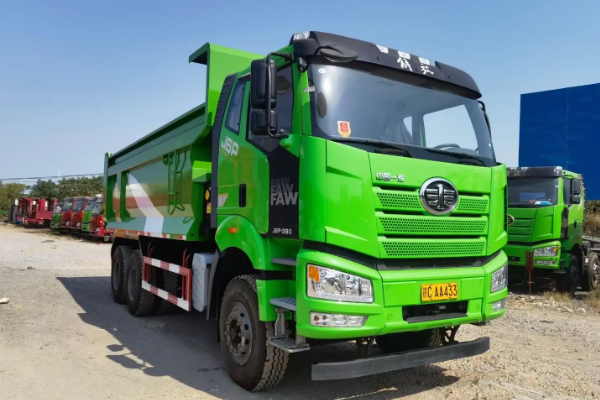
- 420–560 HP
- Engine power
- Up to ~2,600 N·m
- Max torque
- 6×4
- Drive configuration
- ~50,000 kg
- Gross combination weight
Common build: 25,000 kg GVW, ~38,000–40,000 kg towing capacity, and a 500–800 L fuel tank. Specifications vary by rating and emission standard — confirm your configuration in the quotation.
FAW J6P 6×4 Tractor Truck Specifications
Explore the common J6P 6×4 build, with engine, chassis, and cab options matched to your route and market. Treat it as a starting point — FAW builds this model in several ratings and emission standards.
| Component | Common Specification |
|---|---|
| Drive configuration | 6×4 (six wheels, four driven) |
| Engine | Xichai / FAW CA6DM2 (11 L), or CA6DL (8.6 L) |
| Horsepower | 420 to 560 HP (350 to 420 HP on CA6DL builds) |
| Max torque | Up to ~2,600 N·m (560 HP CA6DM3 build) |
| Transmission | FAST 12-speed manual (12JSD series) or FAW 12-speed |
| Front axle | ~7.5 T |
| Rear axle | 457 single-reduction axle |
| Axle ratio | ~3.727 to 5.92 (heavier ratios for grade work) |
| Gross vehicle weight | 25,000 kg |
| Towing capacity | ~38,000 to 40,000 kg |
| Gross combination weight | ~49,000 to 50,000 kg |
| Fuel tank | 500 to 800 L (up to 1,000 L with dual tanks) |
| Cab | J6P high-roof sleeper, four-point air suspension, LCD cluster |
| Brakes / safety | WABCO ABS available |
| Emission standard | Euro II to Euro VI, matched to destination market |
| Tires | 12R22.5, 12.00R20, or 315/80R22.5 |
Typical values only. Confirm the final configuration, legal payload, and compliance in your quotation.
01
Engine Options: the Xichai CA6DM Family
The J6P runs FAW’s own Xichai engines, which is the point of difference from a HOWO or SHACMAN build. The 11-litre CA6DM2 in 420 and 460 horsepower is the volume workhorse rating — proven, economical, and widely understood. The 12.5-litre CA6DM3 at 560 horsepower serves heavy loads and steep grades.
- In-house engines: parts for them are FAW-line parts — plan your spare-parts stock around that rather than assume generic HOWO or SHACMAN parts will interchange.
- Power spread: roughly 420 to 560 HP, with 350 to 420 HP on the smaller CA6DL builds.
02
Transmission and Axles
The FAST 12-speed manual box is the standard fit, with 12 forward and 2 reverse gears. It is a robust, simple unit, and its parts are among the most available of any Chinese heavy-truck gearbox. The 457 rear axle is the long-serving FAW drive axle, proven across Africa, the Middle East, and Latin America.
- Axle ratio: the number to check against your route — it decides the balance between grade-climbing ability and cruise fuel economy.
- Options: ~3.727 to 5.92, with heavier ratios for grade work.
03
Emission Standard, Axle Ratio, and Fuel Quality
The emission standard is a compliance decision before it is a price decision. Euro II is simpler and more tolerant of high-sulfur diesel, which is why it still moves in several markets. Euro V and Euro VI are required for others and bring SCR aftertreatment — which needs clean diesel and urea to stay healthy.
This is the honest point most sellers skip: owner feedback on the J6P is consistent. The truck is durable when it runs on clean diesel with good filters, but poor or variable fuel shortens injector life and, on Euro V and Euro VI engines, clogs the urea and NOx aftertreatment. If your fuel supply is high-sulfur or variable, we specify the filtration and — where your regulation allows — the emission standard that tolerates it.
- Emission standard: Euro II to Euro VI, matched to your destination market.
- Axle ratio: a lower (numerically higher) ratio climbs grades and pulls heavy loads; a higher ratio cruises efficiently on flat corridors.
- Fuel quality: specify the filtration and emission standard for the fuel you will actually burn.
Get the Specification Sheet for Your Build
Send your route, payload, and destination port. Receive a configured offer, typically within about 24 hours.
Which J6P Configuration Fits Your Route?
The J6P is built in more than one layout. A 4×2 has two driven wheels and is lighter and cheaper to run, which suits flat, paved, lighter duty such as port drayage. A 6×4 has four driven wheels, giving more traction and payload capacity on grades and unpaved roads. If you are weighing this model against a HOWO T7H or SHACMAN X3000, all three are capable long-haul units — the choice turns on engine family, cab comfort, parts availability in your market, and the specific build sheet.
| Factor | 4×2 J6P Lighter Regional Haulage | 6×4 J6P Heavy & Rough-Road Work |
|---|---|---|
| Driven wheels | Two | Four |
| Weight | Lighter | Heavier, with more payload capacity |
| Purchase cost | Lower | Higher |
| Fuel economy | Better on flat, paved routes | Higher consumption, offset by traction |
| Traction | Limited on loose ground | Superior on grades and unpaved roads |
| Best for | Port drayage and lighter regional distribution | Long-haul, container, mining, and quarry haulage |
Route Grade & Surface
Flat, paved corridors suit the 4×2. Grades, unpaved haul roads, and a loaded semi-trailer call for the 6×4’s four driven wheels.
Payload & Trailer
A single trailer with lighter regional freight fits the 4×2. High-payload long-haul and container work fit the 6×4’s towing capacity.
Fuel & Operating Cost
The 4×2 is cheaper to buy and cheaper on fuel. The 6×4 costs more upfront but earns its keep where traction and payload decide the job.
Build Sheet
Engine rating, axle ratio, emission standard, and fuel tank all move the answer. We match the layout to your actual route, not a default build.
CONSIDER 4×2 J6P
Flat, paved, lighter duty such as port drayage or regional distribution with a single trailer.
CONSIDER 6×4 J6P
Long-haul freight, container transport, and mining or quarry haulage where traction and payload matter.
Where the FAW J6P 6×4 Works Best
The 6×4 J6P earns its keep in a few clear duty cycles. Configure the engine rating, axle ratio, and fuel tank to the work you actually do.
01
Long-Haul Freight & Cross-Border Logistics
With the right axle ratio and a large fuel tank, the J6P 6×4 covers long distances with a comfortable cab and the load stability a four-driven-wheel chassis provides.
- Axle ratio A faster ratio suits good roads and long cruise distances.
- Fuel tank 500 to 800 L, or up to 1,000 L with dual tanks.
- Cab comfort High-roof sleeper with four-point air suspension.
02
Container Transport
The 6×4 layout pairs with a skeleton or container chassis and handles loaded boxes over port access roads and highways alike.
- Chassis flexibility The most flexible chassis of the major Chinese brands to modify.
- Fifth-wheel height Matched to your container chassis and local road rules.
- Fleet sign scheme The J6P accepts local upfitting without trouble.
03
Mining & Quarry Haulage
In high-payload, rough-road work, the 460 to 560 HP ratings and reinforced frame options hold up where a 4×2 would struggle.
- Power rating 460 to 560 HP for heavy loads and steep ramps.
- Axle ratio A heavier ratio climbs grades and pulls full loads.
- Emission & fuel Specified for the diesel quality at your site.
What Affects the Price of a FAW J6P 6×4 Tractor Truck?
There is no honest single number. The price moves with the engine, emission standard, options, order volume, and destination port.
-
Engine and Horsepower
A 420 HP CA6DM2 build sits at the volume end; a 560 HP CA6DM3 build for heavy loads and steep grades moves the price up.
-
Emission Standard
Euro II is simpler and more tolerant of high-sulfur diesel. Euro V and Euro VI bring SCR aftertreatment and higher cost.
-
Options and Build Sheet
Axle ratio, fuel tank size, fifth-wheel height, and fleet sign scheme all change the configured price.
-
Destination Port and Shipping
Container, Ro-Ro, and breakbulk have different freight costs. Compare the quoted scope and total landed cost.
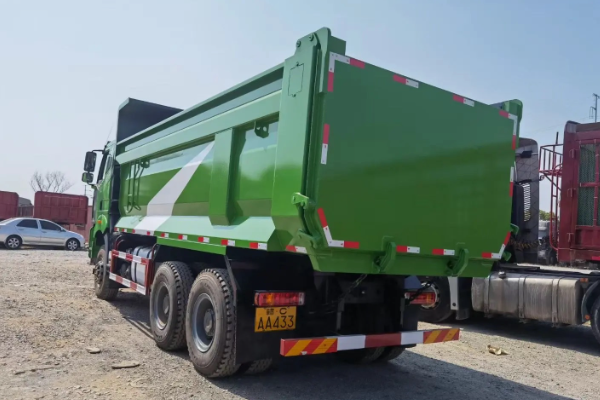
Get a Quote for Your Configuration
A 420 HP 6×4 unit typically lists in a broad FOB reference range around $30,000 to $37,000 depending on specification — a factory-gate figure, not a landed cost. Send your route, payload, and destination port for a configured offer that covers the vehicle, options, preparation, and transportation.
See the Unit Before You Pay
The biggest risk in buying a tractor truck thousands of kilometres away is receiving a different unit than the one you viewed — or a unit with a fault nobody told you about.
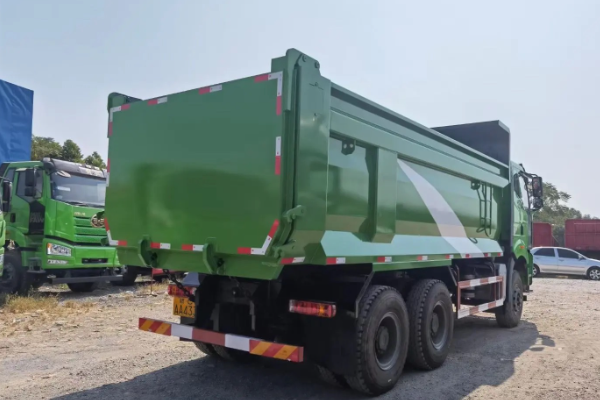
100% Pre-Shipment Inspection
Every FAW J6P 6×4 we supply passes a 100% pre-shipment inspection before it leaves. Our team checks the engine, transmission, axles, cab, brakes, lighting, the ordered options, and the documentation against your order — and, because of the J6P’s known sensitivities, we pay particular attention to the aftertreatment system, the injectors, and the urea and NOx components.
- Engine & transmission
- Axles & brakes
- Cab & ordered options
- Lighting & documentation
- Aftertreatment & injectors
- Urea & NOx components
Shipping & Export Paperwork
You receive the photos, the video, and the inspection report before the container is sealed and before payment is final. If something does not match, we sort it out before it ships — not after it lands at your port.
- Documents
- Commercial invoice, bill of lading, certificate of origin, packing list, and homologation paperwork where your market requires it.
- Shipping
- Container, Ro-Ro, or breakbulk — whichever fits the vehicle and the port, with tracking through to your destination.
Practical Support. From Specification to Delivery.
Configuration advice built on 15-plus years and more than 5,000 customers across 100-plus countries, a pre-shipment inspection you can see, and documentation, shipping, and parts support handled through to your port.
Configured for Your Route
Match the engine rating, emission standard, axle ratio, and fuel tank to your route, your fuel, and your destination market.
Your application comes firstSee the Truck Before Shipping
Review photos, video, and a 100% pre-shipment inspection report — with extra attention to the aftertreatment, injectors, and urea and NOx components.
Review the unit being suppliedClear Export & Shipping Support
Container, Ro-Ro, or breakbulk — whichever fits the vehicle and the port, with export documents your customs broker needs and tracking to your destination.
Plan delivery before orderingParts & Maintenance Planning
Plan your spare-parts stock around FAW-line parts rather than assuming generic HOWO or SHACMAN parts will interchange. We advise on local Xichai support.
Support beyond the shipmentFAW J6P 6×4 Tractor Truck FAQ
Answers to common questions about horsepower, layout, fuel consumption, reliability, and pre-shipment inspection. Need help with your configuration?
1 What is the FAW J6P 6×4 tractor truck?
The FAW J6P 6×4 is a heavy-duty tractor truck with a six-wheel, four-driven layout, built on FAW’s own Xichai CA6DM or CA6DL engine with a FAST 12-speed gearbox and a 457 rear axle. It is used for long-haul freight, container transport, and mining or quarry haulage, with gross combination weight up to about 50,000 kg.
2 How much horsepower do I need for long-haul freight?
For long-haul freight on good roads, 420 to 460 HP is usually enough, provided the axle ratio matches your cruise speed. Reserve 500 HP and above for heavy loads, steep grades, or high-altitude routes. Horsepower is less important than pairing the engine rating with the right axle ratio for your terrain.
3 What is the difference between the 4×2 and 6×4 J6P?
A 4×2 has two driven wheels and is lighter and cheaper to run, which suits flat, paved, lighter duty such as port drayage. A 6×4 has four driven wheels, giving more traction and payload capacity on grades and unpaved roads. Choose 6×4 for heavy or rough-road work, and 4×2 for lighter regional haulage.
4 What fuel consumption should I expect?
In real service the J6P 6×4 typically returns around 32 to 38 L/100 km, but the figure depends on your engine rating, axle ratio, load, and route grade. A heavier axle ratio and hilly route will push consumption up; a faster ratio on flat highway will bring it down.
5 Is the J6P reliable where diesel quality is poor?
It can be, but only if it is specified for it. The drivetrain is durable, but the J6P is sensitive to poor diesel — it shortens injector and aftertreatment life on Euro V and Euro VI engines. If your fuel supply is high-sulfur or variable, we specify the filtration and, where your regulation allows, the emission standard that tolerates it, so the truck does not spend its life in the workshop.
6 How do I verify the unit before I pay?
Every unit passes a 100% pre-shipment inspection covering the engine, transmission, axles, cab, brakes, lighting, ordered options, and documentation — with extra attention to the aftertreatment and injectors on this model. You receive photos, video, and the inspection report before the container is sealed and before payment is final, so a different unit cannot arrive at your port.
CONFIGURED FOR YOUR JOB
Request Your FAW J6P 6×4 Quotation
The J6P is a proven, comfortable, and flexible workhorse, but its value depends on how it is specified — and whether you can trust the unit you are paying for. Send your route, payload, and destination, and we will quote a configured FAW J6P tractor truck, with the inspection report in front of you before anything ships.
Match the engine rating, emission standard, axle ratio,
and fuel tank to your route and fuel — then review the
unit on video before shipment.
Request a Quotation
Start with your specification.