
Tractor Truck Buying Guide: Match 4×2 or 6×4 to Your Route
The right tractor truck is decided by your route, your gross combination weight, and the trailer it must pull, before horsepower or brand. A 4×2 suits standard container work on sealed roads, while a 6×4 earns its cost on steep grades, heavy loads, and unpaved routes.
The cheapest tractor unit is often the most expensive one you will run. Buyers who start from price, or from a headline horsepower figure, usually end up with a truck that burns fuel it does not need or cannot hold a grade with a full trailer. The specification comes first, and it comes from your operation.
You likely already sense this. You know a tractor unit is only half the machine, and that the semi-trailer it couples to decides much of the specification. What most buyers are missing is the sequence that turns those facts into a safe, verifiable order.
This tractor truck buying guide walks through that sequence: the route and load first, then axle configuration, power, the trailer match, emission standard, and finally how to inspect and ship the unit so you receive what you ordered.
Start with the route, the load, and the trailer
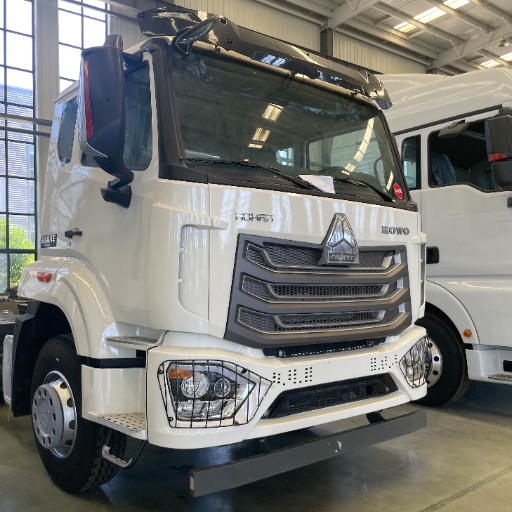
Before you compare models, define the job. Write down the gross combination weight you will run, the longest route, the steepest grade, and the trailer type you will couple. Those four facts decide the rest of the specification.
A tractor truck for port container work on flat highways is a different machine from one hauling a low-bed trailer up mine access roads. The first needs efficiency and reliability at speed. The second needs traction, torque, and a drivetrain that will not overheat under sustained load.
Consider a fleet operator we will call Daniel, running container moves between the port and an inland depot near Lagos. He priced a 540 horsepower unit because a supplier told him more power is always better. His route is flat, and his gross combination weight sits around 44 tons. The extra power never gets used, but the fuel bill and the purchase price both climbed. A 400 to 460 horsepower 4×2 would have done the same job and paid for itself faster.
Match the truck to the job before you match anything to the truck. Our logistics trucks page shows how long-haul and container applications are typically configured.
Choose the axle configuration: 4×2, 6×2, or 6×4
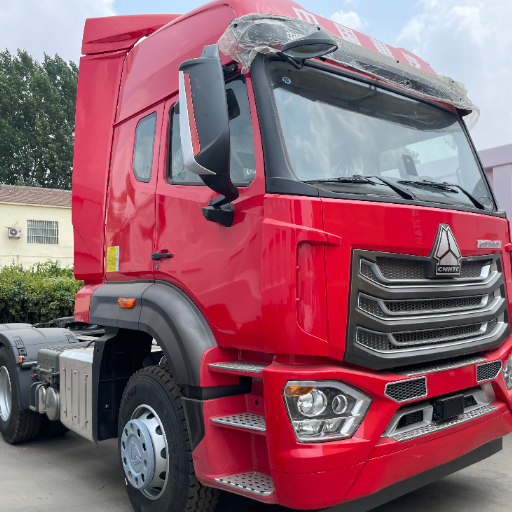
Axle configuration is the most consequential decision in a tractor truck build. It sets your traction, your payload, and your fuel cost at the same time.
| Configuration | Driven axles | Typical gross combination weight | Best for | Trade-off |
|---|---|---|---|---|
| 4×2 | One | ~40 to 44 tons | Standard container, sealed roads, regional distribution | Lightest, best fuel economy, least traction |
| 6×2 | One, plus a lift or tag axle | ~40 to 44 tons | Tankers, high fifth-wheel loads, weight-sensitive routes | Compromise between payload and fuel |
| 6×4 | Two | 49 tons and above | Heavy loads, steep grades, unpaved and site work | Heavier, higher fuel use, more traction |
A 4×2 is lighter, simpler, and cheaper to run. It is the right default for sealed-road freight where traction is rarely the problem. A 6×4 adds a second driven axle, which gives grip on soft ground and mountain grades, but costs you weight and fuel on every kilometer.
The rule is simple: choose the smallest configuration that comfortably meets your gross combination weight and traction needs, with a margin for safety. Do not buy a 6×4 to run flat container work, and do not buy a 4×2 to pull a loaded low-bed up a quarry ramp. You can see the full range of configurations on our tractor trucks page.
Horsepower, torque, and axle ratio
Horsepower is the number buyers talk about, but torque is the number that moves the load. Low-rpm torque decides how well the truck gets a heavy combination moving and holds it on a climb.
For starting and climbing, torque matters more than peak horsepower. A unit that makes strong torque at low engine speed will hold a gear on a grade, while a high-horsepower unit with weak low-end torque will drop gears and overheat.
Rear axle ratio is the second half of the same decision. A high ratio, sometimes written as a larger number, gives more pulling force for hills and heavy loads but limits top speed and raises fuel use at highway pace. A lower ratio suits flat, fast routes.
| Application | Recommended horsepower | Why |
|---|---|---|
| Port and container, flat routes | 320 to 420 | Fuel-efficient and adequate for roughly 35 to 40 tons |
| Highway long-haul | 400 to 460 | Holds speed at gross combination weights of 44 to 70 tons |
| Heavy haul and mountain routes | 480 to 540 | Reserve torque for grades and high altitude |
| Mining and road train | 500 and above | 100+ tons and sustained high stress |
As a rough rule of thumb, allow about 5 to 8 horsepower per ton of cargo, then add a margin for grades and headwinds. A 500 horsepower unit can save meaningful time over a 400 horsepower unit on the same heavy load, but on flat container work that extra power is mostly wasted fuel. FAW Truck’s configuration guide and BAS World’s tractor unit guide both walk through this matching process. Match the drivetrain to your actual route, which is exactly what our custom truck solutions are for.
Match the tractor to the semi-trailer
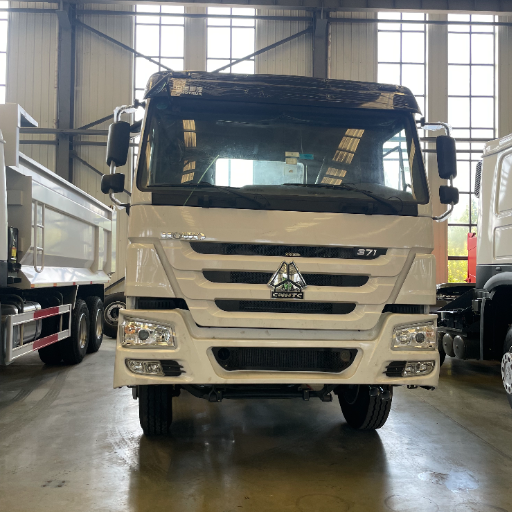
A tractor truck is only half the unit. The semi-trailer it couples to decides the fifth wheel, the kingpin, and the load distribution, and getting that wrong leaves you with a tractor that cannot work with the trailers you already own.
The fifth wheel is the coupling plate that receives the trailer kingpin. Its height and specification must match the trailer. If the heights are wrong, or the kingpin size does not match, the units will not couple safely.
Gross combination weight is the total of tractor, trailer, and cargo. It is the number your axle configuration and engine were chosen for. Exceed it, and you overload the drivetrain and the chassis, whatever the brochure promised.
A contractor we will call Amina ordered a tractor unit for a fleet of existing low-bed trailers. The unit arrived with the wrong fifth-wheel height, and none of her trailers would sit level when coupled. The fix cost time and money that a single check before ordering would have avoided.
Confirm the fifth wheel, kingpin, and gross combination weight against your trailers before you commit. Our semi-trailer truck range shows the trailer types we supply, so you can specify the tractor and trailer together.
Emission standards and your market’s rules
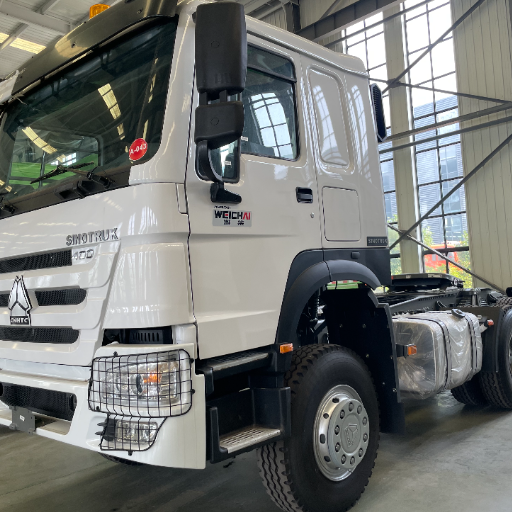
Emission standards are a compliance question and a fuel-quality question at the same time. The right choice depends on where the truck will be registered, not on a global default.
Africa is not one market. West African ECOWAS countries generally set a Euro IV minimum for newly imported commercial vehicles. Several East African countries still accept Euro II or Euro III for light-duty use, but recommend Euro IV for logistics fleets. South Africa has moved new heavy trucks to Euro VI. Your customs broker can confirm the exact requirement for your country.
Fuel quality decides the rest. Much of Africa runs on high-sulfur diesel. Engines with selective catalytic reduction, often called SCR or urea systems, and diesel particulate filters need low-sulfur fuel to work. On high-sulfur fuel, an EGR-only Euro IV build is usually the safer choice because it does not depend on urea or a DPF.
Confirm two things before you order: the emission standard your destination requires, and the fuel quality available along your routes. Compliance documentation such as Nigeria’s SONCAP or Kenya’s PVoC also needs to line up with the unit you buy. Sute Silk Road’s guide to African emission standards details the market-by-market rules. We configure the emission standard to your market, rather than shipping a single global build.
New versus used tractor trucks
New and used units both have a place, and the decision is about capital and maintenance capability more than preference.
A new unit gives you a known history and a full working life, which suits a fleet that runs hard and keeps trucks for years. A used unit lowers the entry cost and puts more trucks on the road for the same budget, but it depends entirely on condition.
If you buy used, inspect the things that wear first:
- Cold-start the engine and watch the exhaust. Blue smoke points to oil, white smoke to coolant, and black smoke to a fuel or injection problem.
- Check the transmission for smooth shifts and no slipping.
- Inspect the chassis for cracks, weld repairs, or corrosion.
- Verify the fifth wheel, the kingpin fit, and the odometer against maintenance records.
Amigo Truck supplies both new and used vehicles, inspected to the same standard. The deciding factor should be total cost across the life of the truck, including parts and downtime, not the purchase price alone.
Buying a tractor truck from China: inspection, shipping, and landed cost
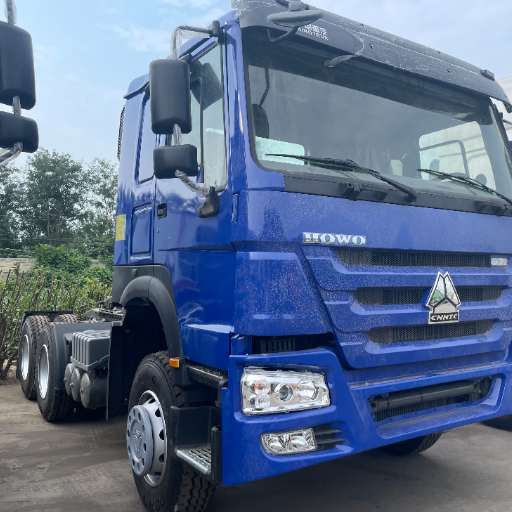
The most expensive mistake in cross-border buying is paying for a unit you have never seen, only to find it does not match the order. Inspection is what converts that risk into information.
Amigo Truck applies a 100% pre-shipment inspection before a vehicle ships. The inspection covers the engine, transmission, axles, cab, braking system, lighting, ordered options, and documentation. Photos, video, and an inspection report go to you before shipment, so you review the actual unit rather than a stock image.
A dealer we will call Musa once ordered a 6×4 and, from a previous supplier, received a 4×2 that looked similar in photographs. The lesson stuck with him. Now he insists on inspection evidence tied to the specific unit, checked against the order line by line, before anything is sealed and shipped.
Shipping and landed cost are part of the specification, not an afterthought. Tractor trucks typically move by Ro-Ro, container, or breakbulk, and the right method depends on the vehicle and your destination port. Freight, insurance, duty, and local taxes usually add 25% to 50% on top of a FOB figure, depending on the country.
Third-party export guides list new Chinese tractor units from roughly USD 28,500 to USD 75,000 FOB depending on configuration, with used units ranging lower. Treat these as market reference points, not fixed prices. Amigo Truck quotes per configuration, so your quotation reflects your actual build. Our shipping and delivery page explains the methods, and after-sales support covers the parts that keep a tractor running after it lands.
Frequently asked questions
What is the difference between a tractor truck and a semi truck?
They are the same kind of machine under different names. A tractor truck, also called a tractor unit or prime mover, is the powered front portion that tows a semi-trailer. A semi truck is the common North American name for the same tractor unit, while the full tractor and trailer combination is a semi-trailer truck.
What is the difference between 4×2 and 6×4 tractor trucks?
A 4×2 has one driven rear axle and suits standard container work on sealed roads, where it is lighter and more fuel-efficient. A 6×4 has two driven rear axles for traction on heavy loads, steep grades, and unpaved routes, at the cost of more weight and fuel.
How much horsepower do I need for heavy hauling?
Match horsepower to your gross combination weight and grades. For heavy haul and mountain routes, 480 to 540 horsepower is typical, with torque at low engine speed mattering more than peak power. For flat container work, 320 to 420 horsepower is usually enough.
Which tractor truck brand is best for long-distance freight?
No single brand wins for everyone. SINOTRUK, HOWO, and SHACMAN are both widely used in export markets, and VOLVO and MAN units suit premium long-haul fleets. Match the brand to your parts access, your budget, and the configuration you actually need, not to a general ranking.
How much does a tractor truck cost?
The price depends on axle configuration, engine power, emission standard, cab, and destination, so it must be quoted per configuration. Third-party guides list new Chinese units from roughly USD 28,500 to USD 75,000 FOB, with freight, duty, and taxes adding 25% to 50% on top. Amigo Truck quotes each build individually.
Can a tractor truck pull any semi-trailer?
No. The fifth wheel, kingpin, and gross combination weight must match the trailer. A tractor specified for one trailer type may not couple safely to another. Confirm the coupling and the combined weight against your trailers before you order.