
HOWO T7H 6×4 Dump Truck
The proven 3-axle workhorse for site hauling and quarry work.
A T7H tipper configured for your material, haul roads and destination. Agree the engine, axle ratio and body specification for the actual chassis, with inspection evidence before shipment.
Choosing the right engine, axle ratio, and body spec is the difference between a truck that runs hard for years and one that sits in the workshop.
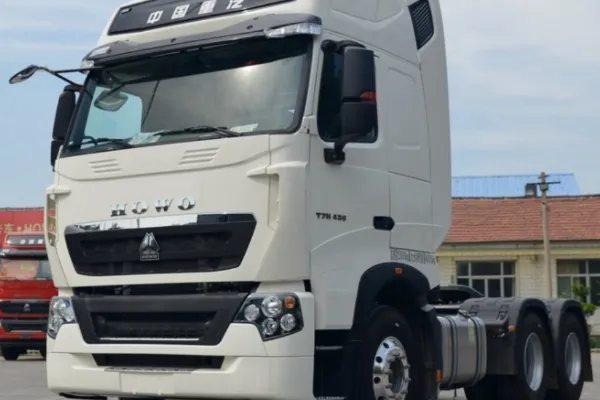
- Confirm build
- Payload reference
- Per order
- Engine options
- 6×4
- 3 axles · 10 wheels
- Per order
- Typical body volume
T7H configurations vary by production year and destination. Confirm the exact chassis model, engine, cab, transmission, body and approved weights in the factory build sheet for the offered unit.
OVERVIEW
What Is a HOWO T7H 6×4 Dump Truck?
A HOWO T7H 6×4 dump truck is a three-axle tipper from SINOTRUK with six wheel positions, four of them driven; the illustrated dual-rear-tyre build uses ten tyres. It has a hydraulic lifting body for hauling sand, gravel, rock, and demolition material.
Dump truck and tipper truck name the same vehicle — a HOWO T7H 6×4 tipper truck is this unit by another common name. The 6×4 layout gives stronger traction and a configuration-dependent payload compared with a 4×2 truck on rough or unpaved haul roads, while costing and weighing less than an 8×4. That balance is why it is the default choice for construction and quarry fleets.
HOWO T7H 6×4 Dump Truck Specifications
A typical export build, with engine, chassis, and body options matched to your job and market. Individual units vary, so every quotation is prepared per configuration.
| Specification | T7H Build Confirmation |
|---|---|
| Drive Type | 6×4, three axles with drive to the rear tandem. Confirm the supplied tyre arrangement. |
| Cab | HOWO T7H cab. Confirm roof, sleeper, steering side and equipment on the offered unit. |
| Engine | Engine code, rated power, emission standard and fuel requirements stated in the unit-specific quotation. |
| Displacement | Confirmed from the exact engine code and factory documentation. |
| Emission Standard | Matched to destination registration requirements and available fuel quality. |
| Transmission | Exact gearbox model, ratios and available options confirmed against the chassis specification. |
| Front Axle | Model and rated load confirmed from the offered chassis build sheet. |
| Rear Axles | Axle model, ratings and final-drive ratio matched to the load, grades and route. |
| Cargo Body | Body volume, floor and side steel, and hydraulic arrangement agreed for the material and rated payload. |
| Payload Reference | Completed-vehicle GVW, curb weight, individual axle ratings and destination limits checked together. |
| Curb Weight | Confirmed for the completed unit, including body or fifth-wheel equipment. |
| Wheelbase | Confirmed for the chassis model and ordered equipment. |
| Overall Dimensions | Confirmed for the completed vehicle and proposed shipping method. |
| Tires | Tyre size, load rating, arrangement and spare agreed for the supplied unit. |
| Fuel Tank | Tank capacity and layout confirmed for the route and chassis. |
| Steering | Left-hand or right-hand drive confirmed before model selection. |
| Brakes | Service, parking and auxiliary braking equipment confirmed on the chassis specification. |
Confirm the order specification against the actual T7H chassis and factory build sheet. Treat this table as a reference point, not a final build sheet.
01
Engine and Horsepower Options
Confirm the engine model and rated power on the vehicle plate and factory build sheet. Assess the loaded climb, working cycle, fuel quality and local service capability before selecting the powertrain.
- Power and torque: specify enough performance for loaded climbs and repeated starts. Compare the engine torque curve, transmission and axle gearing as one drivetrain.
- Emission and fuel: SCR and DPF engines need low-sulfur diesel. In high-sulfur markets, an earlier-emission unit with simpler injection is often the more serviceable choice.
02
Axle Ratio and Payload Capacity
Confirm the front and rear axle ratings, final-drive ratio, completed-vehicle weight and destination limits together. Component ratings alone do not establish the permitted payload.
- 5.73 ratio: strong low-speed pull for steep grades, soft ground, and loaded starts out of a quarry.
- 4.8 ratio: lower engine revs at highway speed, for flatter haul roads and longer cycles.
03
Dump Body and Hydraulic Options
Body volume on a HOWO T7H 6×4 typically runs 16–20 CBM, sized to the density of your material. Sand and gravel load to volume; rock and ore load to weight.
- Floor and side walls: 8 mm floor and 6 mm sides is the common heavy-duty spec for rock and blasted stone.
- Lift system: front-lift or center-lift, selected for the discharge conditions and body length.
Get the Specification Sheet for Your Build
Send your payload and destination port. Receive a configured offer, typically within about 24 hours.
HOWO T7H 6×4 vs 8×4 — Which Fits Your Work
The two configurations differ in one practical way: how much weight each axle can legally carry. Choose by permitted payload and axle-limit rules, not by body volume alone.
| Factor | HOWO T7H 6×4 3 axles · payload per build | HOWO 8×4 4 axles · higher permitted payload |
|---|---|---|
| Axles & Wheels | 3 axles, 10 wheels | 4 axles, 12 wheels |
| Payload Reference | Confirm build | Higher on roads with strict per-axle limits |
| Purchase Cost | Lower | Higher |
| Tires & Maintenance | Fewer axles, lower running cost | More axles and tires to maintain |
| Best For | Unpaved site roads, quarry ramps | Roads with strict per-axle limits |
Traction & Site Roads
The 6×4’s two driven axles give strong traction on soft ground and unpaved haul roads. The 8×4 adds an axle, but also adds weight.
Payload Reference & Axle Limits
Payload must be confirmed for the completed vehicle and destination. An 8×4 spreads the load across four axles, so it can legally carry more where per-axle limits are enforced.
Purchase & Running Cost
Fewer axles mean lower purchase cost, lower tire cost, and simpler maintenance. The 8×4 costs more upfront and to keep on the road.
How to Decide
If your loads fit the 6×4’s permitted payload and your roads are not axle-limited, the 6×4 is the better value. If you need maximum permitted payload on regulated roads, move up to the 8×4.
CONSIDER HOWO T7H 6×4
Unpaved haul roads, non axle-limited routes, or when purchase cost and tire cost matter most.
CONSIDER HOWO 8×4
Roads with strict per-axle limits where you need the highest permitted payload on every trip.
Applications: Construction, Quarry, and Mining
Configure your tipper for the material, road conditions, and destination — not just the model name.
01
Construction and Site Hauling
For contractors moving aggregate, backfill, and demolition waste around a site, the HOWO T7H 6×4 is the standard tool.
- Site roads Handles unpaved site roads and keeps a useful payload.
- Running cost Costs less to run than an 8×4 that never leaves the project.
- Full range See our construction trucks page for site-hauling configurations.
02
Quarry and Aggregate Transport
Quarry work is harder on a truck than general construction. Steep pit ramps, rock loading, and rough haul roads punish the chassis, drivetrain, and body.
- Axle ratio Specify the higher ratio for steep pit ramps and loaded climbs.
- Body steel Thicker floor and sides for repeated impact loading.
- Horsepower Enough power to climb loaded without constant downshifting.
What Affects the Price of a HOWO T7H 6×4 Dump Truck
There is no single fixed price — the price is decided by the configuration you order, not by a catalog number.
- Engine specification: power rating, emission equipment and local service requirements affect the quoted price. Compare quotations for the same confirmed powertrain.
-
Emission Standard
The required standard changes the engine, and often the after-treatment package, which affects the final figure.
-
Body & Hydraulics
Body volume, floor and side-wall thickness, and the hydraulic lift system all change the vehicle price.
-
Axle Ratio and Axle Set
Optional ratios and reinforced axle packages add cost, and change how the truck performs on your route.
-
New vs. Used
A used HOWO T7H 6×4, inspected to the same standard, lowers the upfront capital.
-
Trade Term & Destination
EXW, FOB, CFR, and CIF quote different scopes. Distance to your port, shipping method, and documentation all land in the final figure.
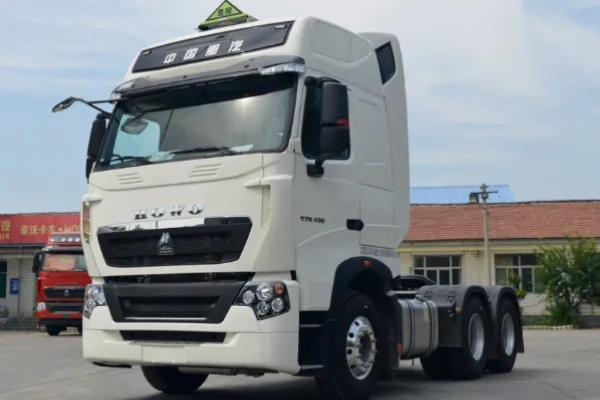
Get a Quote for Your Configuration
Send your specification and destination port, and we come back with a configured quotation covering the vehicle, options, preparation, and transportation — with no hidden line items.
Pre-Shipment Inspection and After-Sales Support
Buying a heavy truck thousands of kilometres away is a risk decision. We remove the parts of the risk we can control.
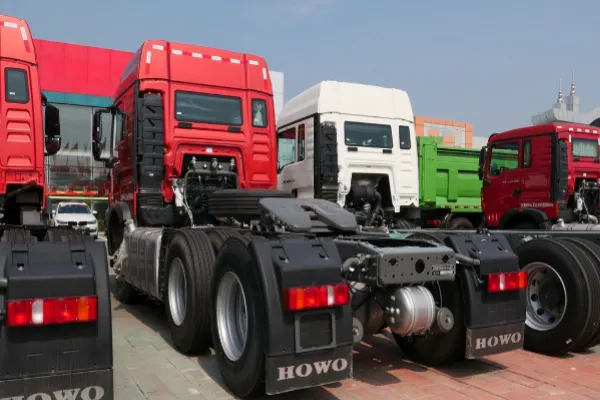
See Your Truck Before You Pay
Every HOWO T7H 6×4 passes a 100% pre-shipment inspection. You receive photos, video, and an inspection report before the unit ships.
- Engine & transmission
- Axles & brakes
- Cab & dump body
- Lighting & ordered options
- Export documentation
Shipping & Export Paperwork
Ro-Ro is commonly used for heavy dump trucks. Container or breakbulk shipping may suit other vehicles and ports.
- Documents
- Commercial invoice, bill of lading, certificate of origin, packing list, and required compliance paperwork.
- Transit Time
- Route-dependent. The expected timeline is confirmed with your quotation.
Practical Support. From Specification to Delivery.
Get the right configuration, review your truck before shipment, and plan delivery with a clear scope.
Configured for Your Job
Match the engine, axle ratio, body, and emission standard to your payload, roads, and destination.
Your application comes firstSee the Truck Before Shipping
Review photos, video, and an inspection report covering the drivetrain, brakes, cab, body, and ordered options.
Review the unit being suppliedClear Export & Shipping Support
Confirm the shipping method, freight scope, expected timeline, and export paperwork for your port.
Plan delivery before orderingParts & Maintenance Planning
We supply original spare parts and consumables for SINOTRUK, SHACMAN, and FAW, and advise on what to stock before you specify.
Support beyond the shipmentFrequently Asked Questions
Answers to common questions about payload, specifications, shipping, and spare parts. Need help with your configuration? Contact our team.
1 How much does a HOWO T7H 6×4 dump truck cost?
The price depends on engine, emission standard, body specification, axle ratio, trade term, and destination — there is no single figure. A used 6×4 costs less than a new higher-spec build. Send your specification and destination port for a configured quotation, typically within about 24 hours.
2 What is the payload capacity of a HOWO T7H 6×4 dump truck?
A HOWO T7H 6×4 carries a Confirm build (25-tonne) legal payload, supported by HC16 rear axles rated at 2×16,000 kg and an HF9 front axle at 9,000 kg.
3 What is the difference between a HOWO T7H 6×4 and an 8×4 dump truck?
The 6×4 has two driven axles and carries a 25-tonne payload at lower purchase and running cost. The 8×4 spreads the load across four axles for a higher permitted payload on roads with strict per-axle limits. Choose by permitted payload and axle-limit rules, not by body volume alone.
4 Which axle ratio should I choose for a HOWO T7H 6×4 dump truck?
Choose 5.73 for steep grades, quarry ramps, and loaded starts; choose 4.8 for flatter, longer haul cycles where fuel economy matters more than maximum pulling force. The correct ratio is set by your steepest climb and haul distance.
5 Is HOWO or SHACMAN better for quarry work?
For steep ramps and severe off-road duty, SHACMAN is often specified stronger; for lower cost, simpler maintenance, and broad parts availability, HOWO is usually the better choice. Compare the two on our SHACMAN dump trucks page.
6 Can I see the truck before I pay?
Yes. Every HOWO T7H 6×4 passes a 100% pre-shipment inspection, and you receive photos, video, and an inspection report covering the engine, transmission, axles, cab, body, brakes, lighting, ordered options, and documentation before it ships.
CONFIGURED FOR YOUR JOB
Get Your HOWO T7H 6×4 Quotation
The HOWO T7H 6×4 is a proven workhorse, but only when the specification matches the road. Tell us your payload, your grades, your fuel quality, and your destination port, and we will quote a configuration that fits — typically within about 24 hours.
Review the unit on video before anything ships,
with the inspection report in your hands.
Request a HOWO T7H 6×4 Quotation
Start with your specification.