
Yutong ZK6808 35-Seater Midibus
An 8-meter midibus for shuttle, feeder, and staff transport.
The Yutong ZK6808 35 seater bus is a fixed-capacity, 8-meter midibus from Yutong — the world’s largest bus manufacturer — for shuttle, feeder, and staff transport. In the export market it is almost always sourced as a used machine.
Two things to get straight: the “8” in the model is the 8-meter class, not a seat count, and on a used midibus the body and the brakes are the first things to check, because frequent-stop duty wears them faster than long-haul running.
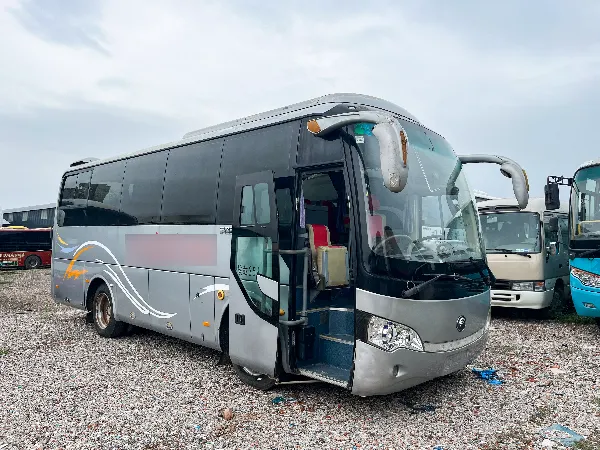
- 8-Meter Class
- Model designation, not seat count
- 35 Seats
- Fixed-capacity layout
- Yutong
- World’s largest bus manufacturer
- Body & Brakes
- First checks on a used midibus
Whether you call it a 35-seater, an 8-meter midibus, or a shuttle bus, the machine is the same — and so is the rule: see the body, the brakes, and the seating before you pay.
Yutong ZK6808 35 Seater Bus Specifications
Representative specifications for the 8-meter class. Used midibuses vary with age, mileage, and maintenance, so the exact figures are confirmed per unit against the machine you are buying, not ordered from a fixed sheet.
| Specification | 8-Meter Class (confirm per unit) |
|---|---|
| Length | ~8,000 mm |
| Width | ~2,300–2,400 mm |
| Height | ~2,950–3,100 mm |
| Seating | 35 seats (fixed per CSV) |
| Engine |
Diesel, ~130–170 HP (Weichai / Yuchai / Cummins), front or rear per build |
| Suspension | Leaf or air (per build) |
| Doors | Front entrance, frequent-stop layout |
| A/C | Roof- or dash-mounted (per build) |
Typical values only. Confirm the final configuration, seating layout, and condition in your quotation.
01
Length, Engine & Fixed Seating
The ZK6808 runs roughly 8,000 mm long, which puts it in the midibus class and gives it the turning circle and road clearance a full-size coach lacks. The engine is a diesel in the 130 to 170 HP range — Weichai, Yuchai, or Cummins depending on the market and build — and the layout varies: some builds are front-engine, others rear-engine.
- Seating: 35 seats, fixed — the defining specification of this bus.
- What that means: capacity is a stated fact, not a configuration option, so you know the passenger count you are buying and can confirm it directly against the unit.
02
Compact Layout & Maneuverability
The layout is where a midibus earns its keep. The compact body and short wheelbase are what let the ZK6808 work narrow urban streets and tight site roads where a 12-meter coach cannot physically turn — and that maneuverability is the reason the bus exists, not a side benefit.
- Footprint: ~2,300–2,400 mm wide, with a short wheelbase.
- Use case: shuttle, feeder, and staff transport where a full-size coach is too big or runs half-empty.
03
Suspension, Doors & A/C
Suspension is leaf or air depending on the build, and the door layout is built for frequent stops — a front entrance with a step-well that passengers use dozens of times a day. That frequent-stop design is the point of the bus, but it is also the thing to inspect most closely on a used example, because the entrance is exactly where the wear concentrates.
- A/C: roof- or dash-mounted depending on the build.
- Inspection focus: door mechanism, step-well, and entrance wear on a used midibus.
Get the Specification Sheet for Your Bus
Send your route, passenger volume, and destination port. Receive a unit-specific offer, typically within about 24 hours.
Buying a Used Yutong ZK6808
This is the section most listings leave out, and on a midibus it matters more than on a long-haul coach. A bus is mostly body, and a midibus does stop-start, load-and-unload duty that wears the brakes, the door mechanism, and the step-well far faster than highway running. Check the body first, then the brakes and doors.
| Check Area | What to Look At On the actual unit | Why It Matters The cost you can miss |
|---|---|---|
| Body & Structure | Corrosion at wheel arches, floor, and lower panels; crash damage; previous repairs; glazing and door seals; roof water damage | Biggest cost you can miss on any bus — the body drives its real value |
| Brakes & Air System | Brake discs and linings for wear; air system for leaks | Stop-start duty wears brakes far harder than highway running |
| Doors & Step-Well | Door mechanism opens and closes cleanly; step-well and floor around the entrance for damage | Years of passenger traffic concentrate wear at the entrance |
| Engine & Drivetrain | Service records; cooling system for overheating; gearbox and rear axle for noise and play | A low-mileage midibus with no records is a bigger risk than a high-mileage one with a documented history |
| Seating & Documentation | Count the seats against the 35-seat spec; serial number against plate and paperwork; seating certification | A re-seated bus is not the vehicle you were quoted; missing documents can strand it at the port |
Body, Structure & Corrosion
Look at the structure and the paneling for corrosion, crash damage, and previous repairs — a midibus that has run humid or coastal routes will show rust at the wheel arches, the floor, and the lower panels first. Check the glazing and the doors seal properly, and the roof for the water damage a failing A/C or poor seal can hide.
Brakes, Doors & Step-Well
On a midibus, the brakes and the entrance wear faster than on a coach, and they are where a used example hides its real age. Check the brake discs and linings for wear and the air system for leaks; check the door mechanism opens and closes cleanly, and the step-well and floor around the entrance for damage. These are the parts a seller will quietly overlook — and a bus with tired brakes or a failing door is not a bargain, it is a repair bill waiting on the route.
Engine, Drivetrain & Overheating
Once the body and the brakes are right, check the engine and drivetrain. Look at the engine against the service records, and at the cooling system for the signs of overheating that stop-start urban duty causes in hot climates. A low-mileage midibus with no records is a bigger risk than a high-mileage one with a documented history. Check the gearbox and the rear axle for noise and play.
Seating & Documentation
Check the seating, because the fixed capacity is the point of this bus. Count the seats and confirm they match the 35-seat specification, because a bus re-seated to a different configuration is not the vehicle you were quoted — and the whole appeal of a fixed-capacity bus is that this check is straightforward. Verify the serial number against the plate and the paperwork, and confirm the seating certification your market requires.
WATCH: HUMID OR COASTAL ROUTES
Rust shows at the wheel arches, the floor, and the lower panels first — check there before you trust the paint.
WATCH: STOP-START VS STEADY LOOP
A shuttle on stop-start urban duty ages differently from a steady-loop feeder route — the difference shows in the body, the entrance, and the suspension before the odometer.
ZK6729 vs ZK6808 vs ZK6859
Yutong sells three midibuses around this size. The answer is seating and size, not brand — all three are compact Yutong buses.
01
Yutong ZK6729
The most maneuverable, configurable option — a compact 7-meter midibus for narrow roads, feeder, and staff work.
- Class 7-meter midibus (~7.7 m).
- Seating ~28–33, configurable.
- Best fit Narrow roads, feeder, staff.
02
Yutong ZK6808
The fixed-capacity midibus — an 8-meter bus with a predictable 35-seat layout and the certainty that comes with it.
- Class 8-meter midibus.
- Seating 35 seats (fixed).
- Best fit Fixed 35-seat shuttle.
03
Yutong ZK6859
The larger midibus — more capacity and a configurable layout for higher-volume mid-size work.
- Class 8.5-meter midibus.
- Seating Configurable.
- Best fit Higher-volume mid-size.
Why Yutong — The Parts-Availability Argument
The strongest reason to buy a Yutong over another Chinese bus is parts availability, and it is not a small point. Yutong is the world’s largest bus manufacturer by units.
-
Parts Availability
Yutong is the world’s largest bus manufacturer by units, so the parts network behind it is broader than almost any rival — the one thing that keeps a bus earning instead of sitting idle waiting for a component.
-
Value vs Premium European Midibus
Set the ZK6808 against a premium European midibus or coach and the decision is value versus premium. The ZK6808 does the same shuttle and staff work for a lower purchase price, with parts you can actually source in your market.
-
Resale Value vs Upfront Cost
Premium vehicles hold higher resale value and a deeper local dealer network, but they cost substantially more up front — and that premium only returns if you can support them where you operate.
-
Buy What You Can Verify and Keep Running
Buy the bus you can verify and keep running, not the nameplate — a Yutong with parts on the ground will outwork a premium bus that waits weeks for a component.
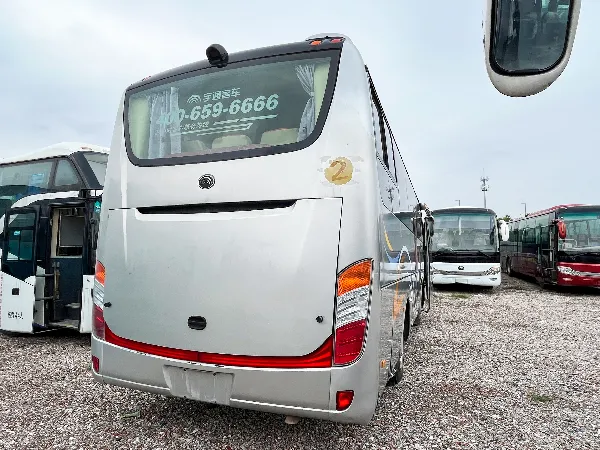
Compare the ZK6808 with a Premium Midibus
Send your route, passenger volume, and destination port. Your offer will detail the bus, condition report, parts support, and transportation on the same basis as a premium European midibus or coach.
Buying and Shipping a Yutong ZK6808 from China
A used midibus makes the cross-border purchase more important, not less — and on a passenger vehicle, the body and the documentation are the first things to verify, not the last.
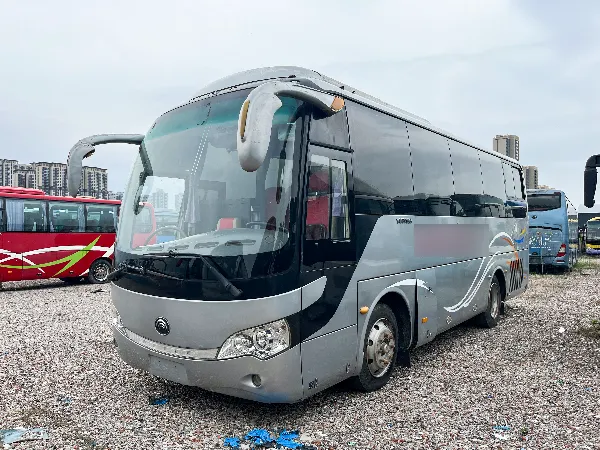
See Your Bus Before You Pay
The unit you pay for has to be a genuine Yutong, it has to be the unit that arrives at your port, and its condition has to be what you were told. Every unit receives a serial-number check and a 100% pre-shipment inspection — with the body and the brakes inspected first.
- Body & structure, glazing, doors
- Brakes & step-well
- Engine & drivetrain
- Suspension & electrical system
- 35-seat interior & seating
- Seating certification & export paperwork
Shipping & Export Paperwork
Shipping is coordinated by Ro-Ro or container to your destination port. You receive photos, videos, and an inspection report before the bus is loaded, so you review the actual unit rather than a stock image.
- Documents
- Commercial invoice, bill of lading, certificate of origin, packing list, and the seating certification your market requires.
- Before Loading
- Photos, videos, and an inspection report of the actual unit — raise any question while it is still in the yard, where a decision is cheap.
Where the ZK6808 Earns Its Place
Match the midibus to the route and the passenger load. Shuttle, staff, and school work each ask something different from a fixed 35-seater.
Shuttle & Feeder Routes
This is the ZK6808’s genuine home. On shuttle and feeder routes the bus runs a short loop with frequent stops, and the compact body, the maneuverability, and the frequent-stop entrance are what make the service work — the combination a 12-meter coach cannot offer economically. The fixed 35-seat capacity is sized exactly for the steady, predictable passenger count these routes carry.
Fixed 35 seats for steady, predictable countsStaff Transport
For staff transport, the fixed 35 seats match the demand and the cost. A contractor or factory moving a crew of 30 to 35 workers a shift does not need a 55-seat coach, and the ZK6808 carries the full shift at a fraction of the purchase and running cost — the right-sized decision that keeps fleet spend sensible, with no ambiguity about what the bus holds.
Right-sized for a 30–35 worker shiftSchool & Institutional Routes
For school and institutional routes, the fixed capacity and the maneuverability are the whole argument. A school or a college runs a predictable passenger count on streets a full-size coach cannot enter, and the ZK6808 does the run with the known capacity and the turning clearance the route needs. This is where a fixed 35-seater earns its place in a fleet rather than simply costing less.
Known capacity plus turning clearanceYutong ZK6808 35 Seater Bus FAQ
Answers to common questions about the 8-meter class, the fixed 35-seat capacity, used pricing, the ZK6729 comparison, used-midibus checks, and buying from China. Need help with your route? Contact our team.
1 What is the Yutong ZK6808 bus?
The Yutong ZK6808 is a fixed-capacity 8-meter midibus from Yutong, the world’s largest bus manufacturer, with 35 seats. The “8” in the model is the 8-meter class and “08” is the series — it is not a seat count.
2 How much does a Yutong ZK6808 35 seater bus cost?
There is no fixed price, because a used midibus is priced by its age, mileage, body condition, engine and brake condition, and preparation, plus freight to your destination port — and a Yutong is priced below a premium bus of the same class. Request a quotation with your route, seat count, and destination, and we will come back with a concrete figure.
3 What is the difference between the Yutong ZK6808 and the ZK6729?
Both are compact Yutong midibuses, but the ZK6808 is an 8-meter fixed 35-seater while the ZK6729 is a 7.7-meter bus with configurable seating of roughly 28 to 33. Choose the ZK6808 for the certainty of a fixed 35-seat capacity, and the ZK6729 for a more maneuverable, configurable option.
4 What should I check on a used midibus before buying?
Check the body first — the structure, paneling, glazing, and doors for corrosion and damage — because a bus is mostly body. Then check the brakes, the door mechanism, and the step-well, because a midibus does frequent-stop duty that wears them faster, followed by the engine, the seating, and the serial number and seating documentation.
5 How many seats does a Yutong ZK6808 bus have?
The Yutong ZK6808 has a fixed 35-seat capacity. The seat count is stated, not configurable, so you can confirm it directly against the unit you are buying.
6 Can I buy a Yutong ZK6808 35 seater bus from China?
Yes. Amigo Truck supplies the Yutong ZK6808 as a used midibus with serial-number verification, body-first inspection, export documentation including seating certification, shipping to your destination port, and genuine-parts support after delivery. Start with a quotation request and your route details.
CHECK THE BODY, THEN SEE IT BEFORE YOU PAY
Request Your Yutong ZK6808 Quotation
Send your route, passenger volume, and destination port. The fixed 35-seat capacity is a condition decision before it is a price decision — receive a unit-specific quotation, typically within about 24 hours.
Review the body report and the unit on video before
shipment — with the body, brakes, and seating
certification checked for your market.
Request a Quotation
Start with your route.