
YUTONG C9 Mid-Size Coach
Full coach quality in a right-sized 9-meter package.
A 9-meter mid-size coach from the world’s largest bus manufacturer, built on the current C-series platform. Yuchai or Cummins power, 37–39 seats, and modern safety such as AEBS and driver-fatigue monitoring.
Suited to intercity, tour, charter, and staff-shuttle work where a 12-meter coach is more bus than the route needs. Every unit is inspected before shipment.
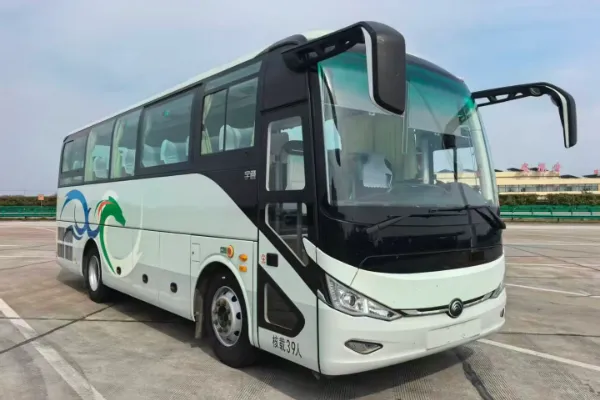
- ~9 m
- Overall length
- 37–39
- Passenger seats
- 12.9–13.5 t
- Gross vehicle weight
- Euro III–VI
- Emission options, incl. CNG
Typical export build: 37+1+1 seats, air suspension, disc brakes with ABS. Confirm the exact model code, emission standard, and configuration in your quotation.
What Is the YUTONG C9 Bus?
The YUTONG C9 bus is a 9-meter mid-size coach built by YUTONG, the world’s largest bus manufacturer by volume, on its current C-series platform. It is most commonly configured with 37 seats plus driver and guide, or 39 plus driver and guide.
It sits between a minibus and a full-size 12-meter coach. The point of the vehicle is exactly that: full coach build quality and passenger comfort, without the fuel burn, turning circle, and higher purchase price of a 12-meter unit.
Unlike the older ZK-series coaches, the C-series carries the newer safety package — AEBS, lane-departure warning, and driver-fatigue monitoring on many builds. It is current production, so the buying decision is largely a new-coach decision.
YUTONG C9 Bus Specifications
The figures below describe a typical YUTONG C9 export build. Individual units vary by variant, engine, seat count, and destination market.
| Specification | YUTONG C9 (ZK6947H) |
|---|---|
| Overall Length | 8,970–9,450 mm (varies by variant) |
| Width | 2,550 mm |
| Height | 3,450–3,520 mm |
| Wheelbase |
4,300 mm 4,650 mm on CNG |
| Gross Vehicle Weight | 12,900–13,500 kg |
| Seating |
37+1+1 standard; 39+1+1 max 31+1 CNG; 27-seat 2+1 VIP |
| Luggage Compartment | ~4.0 m³ |
| Engine | Yuchai YC6A270-50, YCK08280-30, YCK08280-60, YC6G260N-50 (CNG), Cummins ISD245 50 |
| Emission Standard | Euro III / Euro V / Euro VI / CNG |
| Transmission | 6-speed manual (FAST 6DS-130) |
| Suspension | Air suspension |
| Brakes | Disc brakes with ABS; ESP / AEBS available |
| Tyres | 10R22.5 |
| Fuel Tank | 260 L |
Typical values only. Confirm the final configuration, seat count, and compliance in your quotation.
01
Dimensions & Wheelbase
At around 9 meters on a 4,300 mm wheelbase, the C9 works city streets, feeder roads, and tight terminals that a 12-meter coach struggles with, while still carrying real coach luggage and seating.
- Length range: 8,970–9,450 mm depending on variant.
- CNG variant: wheelbase extends to 4,650 mm.
02
Seating & Luggage
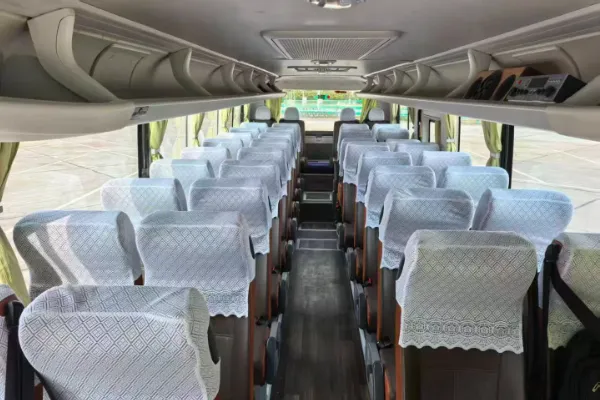
Most builds use 37+1+1 or 39+1+1 passenger layouts. CNG units typically seat 31+1, and a 27-seat 2+1 VIP layout is available on the Euro 6 variant. Luggage volume is approximately 4.0 m³.
- Route matching: choose the seat count against your real load.
- VIP option: wider 2+1 seating where fare structure allows.
03
Chassis, Suspension & Safety
The C-series carries air suspension, disc brakes, and ABS as standard on many builds, with ESP and AEBS available. Modern safety such as lane-departure warning and driver-fatigue monitoring is offered on current builds.
- Braking: disc brakes with ABS; ESP and AEBS optional.
- Safety package: confirm the exact list against your build sheet.
Get the Specification Sheet for Your Build
Send your seat count and destination port. Receive a configured offer, typically within about 24 hours.
Engine Options and Emission Standard
The YUTONG C9 is offered with a wider emission spread than most mid-size coaches. Match the engine to your fuel and registration rules rather than to a badge.
EURO V
01
Yuchai YC6A270-50
A 7.52-litre Euro V engine rated around 199 kW (roughly 270 hp) with 1,100 N·m of torque. This is the common export choice for markets running Euro V-compatible diesel.
EURO III
02
Yuchai YCK08280-30
A 7.698-litre Euro III engine around 206 kW (roughly 280 hp). It suits markets with looser emission rules and high-sulfur diesel, where an older standard is the more serviceable choice.
EURO VI
03
Yuchai YCK08280-60
The Euro VI build of the same engine, around 206 kW. It is the option for destinations that require the latest emission standard, and it needs the clean diesel that standard assumes.
CNG
04
Yuchai YC6G260N-50
A 7.8-litre CNG engine around 191 kW (roughly 260 hp), for operators with gas fueling infrastructure and a preference for lower fuel cost where gas is available.
EURO 5
05
Cummins ISD245 50
A Euro 5 engine around 245 hp, chosen where buyers want the parts availability that comes with the Cummins name.
CHOICE
06
Engine & Emission Are One Decision
A Euro VI unit with modern after-treatment assumes the fuel quality that standard requires. Run it on high-sulfur diesel and the after-treatment clogs and the engine derates. In that situation, a Euro III or Euro V build is the more reliable option.
This is exactly the market-specific decision covered in our vehicle customization guidance, and it is where a one-size-fits-all listing falls short.
YUTONG C9 vs ANKAI 6909 and the ZK6808 / ZK6107
Most importers choosing a mid-size Chinese coach are really deciding between a handful of units. The YUTONG C9 sits between the cross-brand ANKAI 6909 at the same 9-meter size, and the in-brand ZK6808 and ZK6107 one size down and one size up.
| Factor | YUTONG C9 ZK6947H · C-series | ANKAI 6909 Value mid-size | ZK6808 / ZK6107 8 m / 10 m |
|---|---|---|---|
| Class & Length | 9 m mid-size coach | 9 m mid-size coach | 8 m / 10 m coach |
| Seating | 37–39 (+1+1) | 24–40 | 35 / 44 |
| Platform | Current C-series | Coach-engineering heritage | ZK series |
| Safety Package | AEBS, LDW, fatigue monitoring on many builds | Basic, build-dependent | Basic, build-dependent |
| Parts Network | Deepest among Chinese coach brands | Thinner export parts picture | Strong, YUTONG network |
| Best For | Parts depth, modern safety, brand recognition | Budget-led mid-size fleets | Routes genuinely smaller or larger |
Platform & Generation
The C9 is the current mid-size platform. The C-series carries the newer safety package, and the model code — not the marketing name — is what appears on your order and inspection report.
Safety & Driver Support
AEBS, lane-departure warning, and driver-fatigue monitoring are standard on many builds — unusual flexibility for a 9-meter coach.
Parts Depth
YUTONG’s standing as the world’s largest bus manufacturer by volume is a parts argument: the global network is the deepest among Chinese coach brands.
Right-Sizing the Route
The ZK6808 is cheaper and lighter if your route rarely fills 37 seats. The ZK6107 is more profitable only when the route reliably fills 40-plus seats.
CONSIDER ANKAI 6909
When purchase price and genuine coach-engineering heritage lead the decision, and a thinner export parts picture is acceptable.
CONSIDER YUTONG C9
When parts depth, modern safety, and brand recognition are the deciding factors in African, Middle East, and Latin American markets.
Why a 9-Meter Coach Over a Minibus or a 12-Meter Bus?
The first decision is not brand — it is size. A 9-meter coach, a minibus, and a 12-meter coach are three different vehicles for three different jobs.
01
Fuel Consumption
A 9-meter C9 with a Yuchai or Cummins engine burns less diesel than a 12-meter coach on the same route.
- Route-level savings On a route that does not fill a 12-meter bus, that difference is pure operating cost saved.
- Right engine choice Match the engine to your fuel quality and route profile.
02
Turning Circle & Maneuverability
At around 9 meters with a 4,300 mm wheelbase, the C9 works city streets, feeder roads, and tight terminals that a 12-meter coach struggles with.
- Feeder routes Intercity feeder and urban access roads.
- Tight terminals Smaller footprint with full coach luggage and seating.
03
Gross Vehicle Weight & Fleet Fit
At about 12,900–13,500 kg GVW against 17,500 kg or more for a 12-meter coach, the C9 carries a lower registration, axle, and road-wear profile in many markets.
- Right-sized fleet A 37-to-39-seat coach matches routes that never need 45-plus seats.
- Step up when needed Choose a 12-meter YUTONG coach when a route genuinely fills 45–55 seats.
New, Used, and What You Are Actually Buying
The C9 is current production, so the buying decision is mostly a new-coach decision. Unlike the older ZK-series coaches, where the export market is dominated by used units.
-
New vs. Used
A new C9 is built to your specification and carries the current safety package. An emerging used market exists for low-mileage units, and the price follows age, mileage, engine, emission standard, and condition far more than the model name.
-
Engine & Emission Standard
Euro III, Euro V, Euro VI, and CNG builds carry different engine and after-treatment costs, and the standard has to match the fuel available in your market.
-
Seat Count & Layout
From 37+1+1 standard to 39+1+1 max, 31+1 CNG, and 27-seat 2+1 VIP builds. The right count depends on your route and fare structure.
-
Destination & Shipping
Destination port and shipping method affect the total landed cost. Compare the quoted scope and total landed cost, not just the vehicle price.
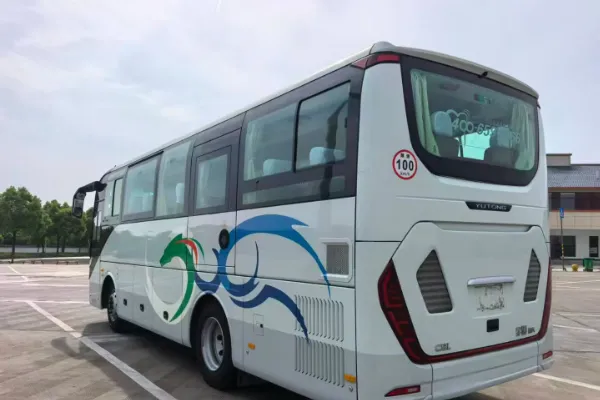
Price Is Quoted Per Configuration
There is no fixed price, because the engine, emission standard, seat count, and destination port all change the figure. Send your route, seat count, engine preference, and destination port.
Buying and Shipping a YUTONG C9 from China
Buying a passenger coach through a China-based exporter carries the same question as buying a truck: what exactly are you getting, and how do you know the unit in the shipment is the one you approved?
The Five-Stage Process
The answer is the same process we run on every vehicle.
- Consultation — route, seat count, engine, port
- Customized quotation for your build
- Pre-shipment inspection
- Customization & destination-market confirmation
- Shipping with tracking
You See the Unit Before You Pay
The single biggest fear in cross-border coach buying is receiving a different unit than the one you inspected — or a ZK6122 when you ordered a C9. That does not happen here, because every YUTONG C9 passes a pre-shipment inspection, and the evidence — photos, video, and a written report — is in your hands before the unit is sealed.
- Documents
- Commercial invoice, bill of lading, certificate of origin, packing list, and required compliance paperwork.
- Transit Time
- Route-dependent. The expected timeline is confirmed with your quotation.
Practical Support. From Specification to Delivery.
Get the right configuration, review your coach before shipment, and plan delivery with a clear scope.
Configured for Your Route
Match the engine, emission standard, seat count, and layout to your route, fuel, and destination registration rules.
Your application comes firstSee the Coach Before Shipping
Review photos, video, and an inspection report covering the engine, transmission, body, brakes, lighting, and ordered options.
Model code confirmed in the reportClear Export & Shipping Support
Confirm the shipping method, freight scope, expected timeline, and export paperwork for your port.
Plan delivery before orderingParts & Maintenance Planning
YUTONG’s global parts network is the deepest among Chinese coach brands. We advise on parts to stock for your operating conditions before you specify.
Support beyond the shipmentYUTONG C9 Bus FAQ
Answers to common questions about the C9’s price, specifications, emission standards, shipping, and spare parts. Need help with your configuration? Contact our team.
1 How much does a YUTONG C9 bus cost?
There is no fixed price, because the engine, emission standard, seat count, and destination port all change the figure. As a reference, a new C9 has been listed in the region of RUB 13.5 million in the Russian market, and used YUTONG export coaches range from roughly USD 5,688 to USD 32,800 depending on model and condition. Your quotation is prepared per configuration.
2 Is the YUTONG C9 the same as the YUTONG ZK6122?
No. The YUTONG C9 is a 9-meter mid-size coach on the current C-series platform, sold under model codes such as ZK6947H. The YUTONG ZK6122 is a full-size 12-meter coach on the older ZK platform. They are different classes and different generations — confirm the model code before you pay.
3 What engine does the YUTONG C9 use?
The YUTONG C9 is built with several engines, most commonly the Yuchai YC6A270-50 (Euro V), YCK08280-30 (Euro III), YCK08280-60 (Euro VI), YC6G260N-50 (CNG), and the Cummins ISD245 50 (Euro 5). The right engine depends on your route, fuel quality, and the parts network in your market.
4 How many seats does a YUTONG C9 coach have?
The YUTONG C9 is most commonly built with 37 seats plus driver and guide, or 39 plus driver and guide, with a 31-seat CNG layout and a 27-seat 2+1 VIP option also available. The right count depends on your route and fare structure.
5 Is the YUTONG C9 available in Euro III or Euro V?
Yes. The YUTONG C9 is offered in Euro III, Euro V, Euro VI, and CNG depending on the variant, which is unusual flexibility for a mid-size coach. The right standard depends on your local fuel quality — a Euro VI unit needs the cleaner diesel that standard assumes, so a Euro III or Euro V build is often the more serviceable choice.
6 Can I buy a YUTONG C9 coach from China and ship it to my port?
Yes. The YUTONG C9 is exported through China-based suppliers, and Amigo Truck supplies it new with full pre-shipment inspection, export documentation, and shipping by Ro-Ro or breakbulk through to your destination port. You review photos, video, and an inspection report before you pay the balance.
CONFIGURED FOR YOUR ROUTE
Request Your YUTONG C9 Quotation
Send your route, seat count, engine preference, destination port, and local fuel quality. Receive a configured quotation, typically within about 24 hours.
Review your coach on video before shipment,
with export paperwork prepared for your destination.
Request a Quotation
Start with your specification.