
Dump Truck Buying Guide: Choose the Right 6×4 or 8×4 Configuration
The right dump truck is decided by payload and road conditions before price. For construction and quarry work, a 6×4 unit suits roughly 18 to 25 tonnes of payload on tighter sites, while an 8×4 suits roughly 25 to 40 tonnes for high-volume hauling. Everything else in this dump truck buying guide follows from those two numbers.
Buyers usually start from the wrong end. They compare listings, then ask for the lowest price, then hope the truck survives the job. The better sequence is the reverse: define the payload and the haul road, choose the axle configuration and emission standard, and only then talk about price.
That is the difference between a truck that earns and a truck that sits in the workshop. This guide walks through the decisions in the order they should actually be made, and it explains how to verify the unit you are buying before you pay.
Start with the payload and the road, not the price
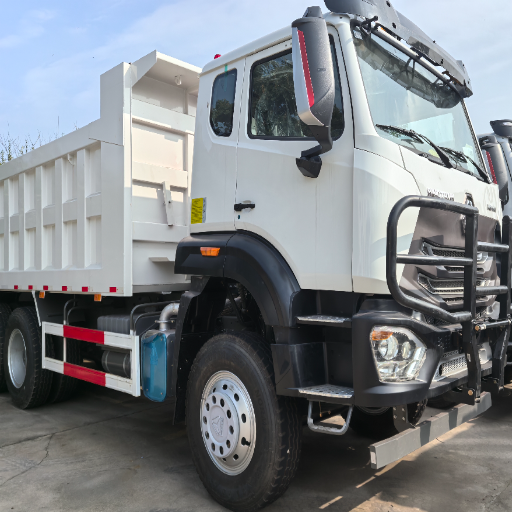
A dump truck has one job: move dense material over a specific road, repeatedly, without failing. The specification starts there.
Write down four numbers before you compare a single model. Peak payload per trip. Daily trips. The steepest grade on your haul road. The density of the material you haul. These four numbers decide more about the truck than any brochure.
A quarry operator in Ghana hauling granite over an unpaved pit ramp faces a different specification than a contractor moving loose fill across a sealed construction site in the Gulf. Same category of vehicle, different axle setup, body steel, and cooling package. That is why a generic export build so often fails, and why the specification has to be set against the site.
If you are not sure where your application sits, start with the dump trucks range and the guidance on construction trucks and mining trucks to see how different jobs are usually configured.
Payload versus body volume
Payload and body volume are not the same thing, and confusing them is one of the most expensive mistakes in a dump truck purchase.
Payload is weight, measured in tonnes. Body volume is capacity, measured in cubic metres. Light, loose material such as dry sand fills a body quickly without reaching the weight limit. Dense material such as wet sand, iron ore, or crushed rock reaches the weight limit long before the body looks full.
Get this wrong, and the truck is either under-loaded on every trip or overloaded on every trip. Overloading is the worst failure: it shortens chassis, suspension, and tire life, and it can put you outside the truck’s legal and engineering limits. Equipment guides such as BAS World’s dump truck buying guide recommend sizing the truck so your loading machine fills it in a few passes. Work out the weight limit for your material first, then size the body to carry it.
Choose the axle configuration first
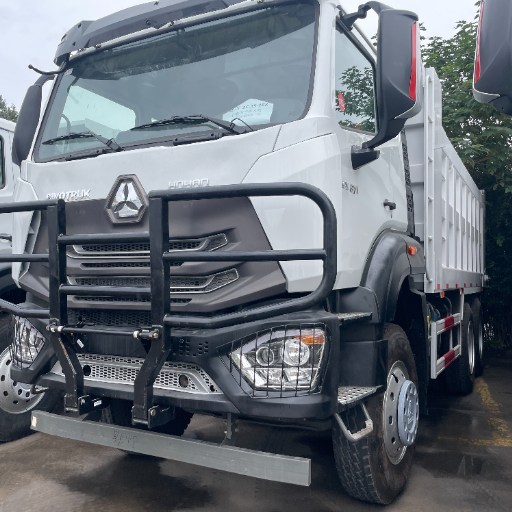
Axle configuration is the most consequential decision in a dump truck build. It sets the payload ceiling and the traction, and it is the first thing a competent supplier will ask you about.
| Configuration | Driven axles | Typical payload | Body volume | Best suited to |
|---|---|---|---|---|
| 4×2 | One rear drive axle | Roughly 10 to 15 tonnes | Smaller, ~8 to 12 m³ | Light site work, urban access, smaller loads on firm ground |
| 6×4 | Two rear drive axles | Roughly 18 to 25 tonnes | ~15 to 20 m³ | General construction, quarry, and mine haulage on mixed roads |
| 8×4 | Two rear drive axles plus a second steering axle | Roughly 25 to 40 tonnes | ~20 to 30 m³ | High-volume quarry and mining haulage, steep or soft ground |
These figures are typical, not fixed. Exact payload depends on the chassis, the body, and your country’s axle-load rules. FAW publishes drive-configuration guidance that maps 4×2, 6×4, and 8×4 layouts to gross vehicle weight, which is a useful cross-check when you narrow the choice. Confirm the precise rating against your order before you commit.
6×4 versus 8×4 for construction and quarry work
Neither the 6×4 nor the 8×4 is universally better. The right choice follows your payload target and the space you have to move in.
A 6×4 carries less but turns tighter and costs less to run. It suits sites with restricted access, mixed road and site work, and medium volumes. That is why it is the workhorse of general construction and quarry haulage.
An 8×4 carries more per trip because the extra steering axle spreads the weight across more ground and meets axle-load limits on heavier loads. It suits high-volume work on open sites and longer, better roads, where fewer trips matter more than a tighter turning circle.
The honest test is the smallest configuration that meets your payload target with a safety margin, not the largest one you can justify. A 6×4 that is correctly specified will outwork a cheap 4×2 that spends its week in the workshop.
Engine power, torque, and axle ratio
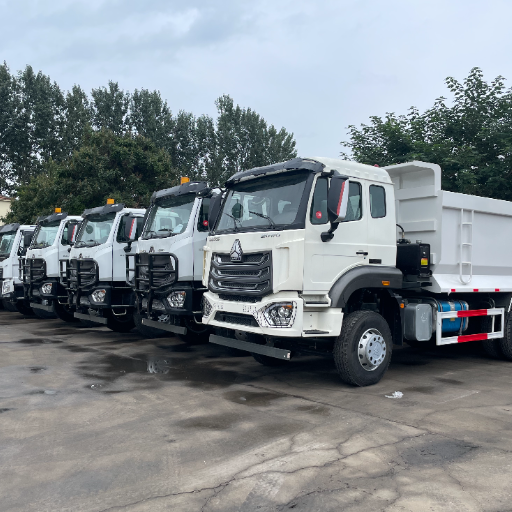
Once the axle configuration is set, the next decisions are how the truck pulls and how it handles a grade.
Horsepower gets the attention, but torque does the work. A loaded dump truck climbs on low-end torque, not on a high peak horsepower figure. For heavy, low-speed hauling, ask about torque and where in the rev range it arrives, not just the headline number.
The rear-axle ratio connects the engine to the ground. A ratio tuned for flat, high-speed hauling feels sluggish on a steep ramp. A ratio tuned for steep grades limits top speed on long flat runs. SINOTRUK and other manufacturers publish rear-axle ratio options for exactly this reason, and the choice should match the steepest grade you identified at the start.
These are precisely the details that should be adjusted for your site rather than taken from a standard export build. If you need the drivetrain matched to a specific route, that is a custom truck solution, and it is worth specifying up front rather than discovering the mismatch on site.
Emission standard and your market’s rules
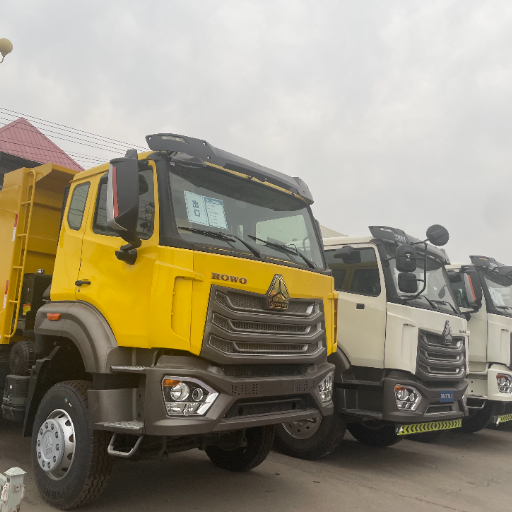
Emission standard is a compliance question and a fuel-quality question at the same time, and getting it wrong can stop the truck at the port.
Confirm two things before you order. First, the emission standard your destination country requires for an imported truck. Second, the fuel quality you can actually buy along your haul routes. A truck built to a higher emission standard may run poorly, or not at all, on the high-sulfur fuel still common in some markets. A lower-standard truck may not be permitted to register in a market with strict import rules.
The dump truck range covers SINOTRUK HOWO, SITRAK, HOHAN, SHACMAN, BEIBEN, XCMG, and FAW, and the emission configuration is set to the market, not to a single global default. If you are unsure what applies, tell your supplier which country the truck is going to before you commit, and confirm the requirement with your customs broker.
New versus used dump trucks
New and used both have a place, and the decision should be driven by your capital position and your maintenance capability, not by a blanket preference.
A new unit gives you a known history and a full working life ahead. It suits operations that run trucks hard and keep them for years. A used unit lowers the entry cost and can put more trucks on the road for the same budget, but it depends entirely on condition.
For a used truck, condition is the specification. Check the frame for rust and cracking, the hydraulic system for leaks, the body floor for wear, and the engine hours against the mileage. A used unit inspected to the same standard as a new one can be a sound buy; a used unit bought unseen is a gamble.
Amigo Truck supplies both new and used vehicles, and both go through the same pre-shipment inspection. The deciding factor should be total cost across the life of the truck, including parts and downtime, rather than purchase price alone.
Buying a dump truck from China: inspection, shipping, and landed cost
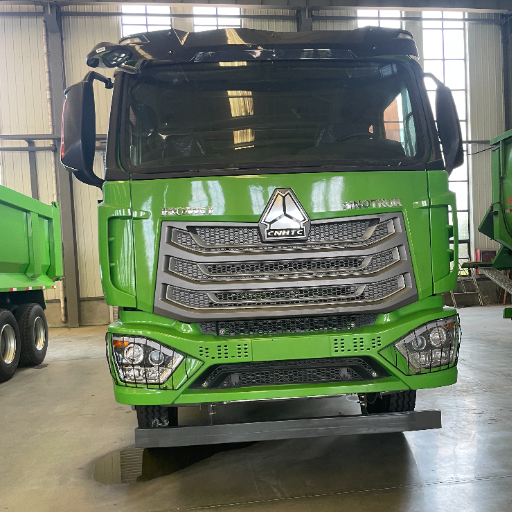
For most readers of this guide, the truck is not bought across town. It is bought across an ocean, from a supplier thousands of kilometres away. That changes what protects you.
The single biggest risk in cross-border buying is paying for a unit you have never seen, only to find it does not match the order. Inspection is what converts that risk into information.
Amigo Truck applies a 100% pre-shipment inspection to vehicles before they ship. The inspection covers the engine, transmission, axles, cab, dump body, brakes, lighting, ordered options, and documentation. Photos, videos, and a written report go to the buyer before shipment, so you review the actual unit rather than a stock image.
Use that evidence actively. Compare the photos against your order line by line. Confirm the axle configuration, the body type, and every option you asked for. Raise questions while the truck is still in the yard, because a change made before shipping is cheap, and a fix after the container has sailed is not.
How shipping and landed cost work
A quoted FOB price is not your final cost. Your landed cost is the vehicle plus options, preparation, freight, insurance, and your country’s duties and local clearance. Freight depends on the method and the route.
The three shipping methods are container, Ro-Ro, and breakbulk. Ro-Ro is the common choice for a complete, driveable dump truck, but the right method depends on the vehicle, the quantity, and whether the service calls at your destination port. Details sit on the shipping and delivery page.
Treat any single headline price with caution. Ask for a quotation that breaks the cost into components so you can see where the money goes. Amigo Truck aims to respond to a quotation request in approximately 24 hours, with the vehicle, options, preparation, and transportation set out in one offer.
Spare parts are part of the same decision. A truck with no local parts route is a truck that gets parked for months waiting for a component. Before you buy, confirm how you will get parts for the brand you choose, and look at after-sales service for how parts and support continue after delivery.
Frequently asked questions
How much does a dump truck cost?
There is no single dump truck price, because the figure is built from the model, the axle configuration, the engine, the emission standard, the body, and the destination. A 6×4 configured one way costs a different amount from an 8×4 configured another. Ask for a quotation that breaks the cost into vehicle, options, preparation, and transportation so you can compare offers honestly.
What is the difference between a dump truck and a tipper truck?
Mostly the name. Dump truck is the common term in North America and the Middle East, and tipper truck is the UK and Commonwealth variant for the same vehicle. The genuinely different machine is the dumper, which is a small off-road site vehicle rather than a road-going truck. In practice, the terms dump truck and tipper truck are interchangeable.
What is the payload capacity of a 6×4 dump truck?
A 6×4 dump truck typically carries roughly 18 to 25 tonnes, depending on the chassis, the body, and local axle-load rules. It is the standard configuration for general construction and quarry haulage, balancing payload, traction, and maneuverability.
Which dump truck brand is best for mining?
There is no single best brand, because the specification matters more than the badge. SINOTRUK HOWO and SHACMAN are both widely used in mining and quarrying, with HOWO valued for straightforward mechanicals and broad parts availability and SHACMAN for reinforced chassis construction. Match the brand to your load, your roads, and the parts support available in your market.
How long does it take to ship a dump truck from China?
Timelines depend on the vehicle, the customization work, the shipping method, the route, and the destination port. Treat any schedule as an estimate rather than a guarantee, because vessel schedules and port processing vary. Ask for an expected timeline with your quotation.
Can I buy a used dump truck from China?
Yes. Amigo Truck supplies new and used vehicles, and used units go through the same pre-shipment inspection as new ones. For a used purchase, condition is the deciding factor, so insist on inspection evidence and confirm the emission standard and any age restrictions that apply to your country before you order.