
ENCLOSED CARGO · GENERAL FREIGHT · DRY GOODS
Box Semi Trailers for Sale Enclosed Cargo Specs & Quotes
Rear, side, or both doors. Cubic capacity matched to your freight.
A box semi trailer is an enclosed dry-van trailer — walls, roof, and floor that keep cargo dry and secure — and it is the standard freight trailer for general, palletized, and dry goods.
- Dry Van Walls, roof, and floor
- Rear / Side Doors Matched to your loading method
- 20–45 ft Cubic capacity matched to freight
BOX SEMI TRAILER RANGE
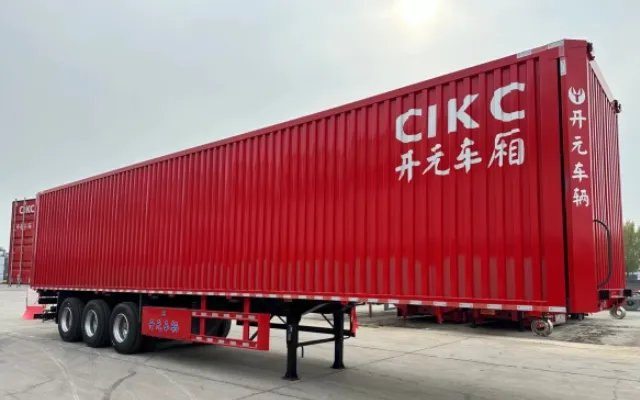
2-axle / 3-axle
Configured to your freight
Three Door Options
Rear, side, or both — matched to loading method
Enclosed Body
Walls, roof, and floor that keep cargo dry
Inspect Before Shipment
Photos, video, and report before balance payment
Each trailer is quoted by configuration. Confirm internal cubic capacity, door configuration, and axle layout in your offer.
What a Box Semi Trailer Is
A fully enclosed trailer with walls, a roof, and a floor, loaded through rear doors, side doors, or both — the standard choice for freight that has to stay dry, clean, and secure.
DRY VAN
ENCLOSED BODY
Walls, Roof, and Floor
A hard-walled box keeps cargo dry, clean, and secure — what a flatbed or a curtain side would leave exposed. The body is the point of the trailer.
- Best fit Palletized cargo, boxed goods, furniture, electronics.
- Consideration Loaded only through the doors, not from the side.
Body construction
Steel or composite
REAR / SIDE
LOADING METHOD
Doors Decide the Loading
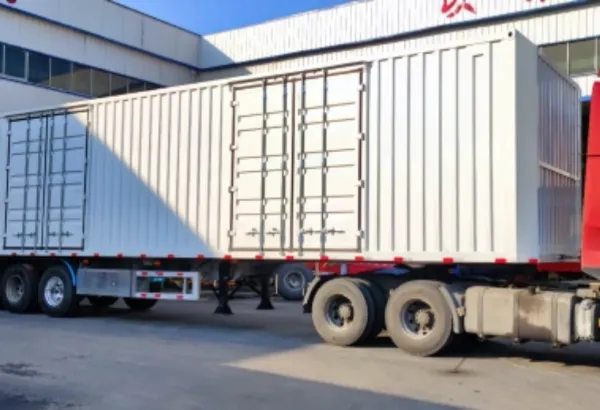
A rear-door box is loaded by forklift from the dock or the tail. Adding side doors gives side access for faster, curbside loading of long or awkward cargo.
- Rear doors Dock or tail loading for palletized freight.
- Side doors Curbside access and faster unloading.
Door configuration
Rear, side, or both
20–45 FT
CUBIC CAPACITY
Sizes and Cubic Capacity
The internal cubic capacity is the number that actually matters — a longer trailer with a lower roof can carry less than a shorter one with a higher roof.
- Length Roughly 20 ft to 45 ft.
- Capacity Cubic metres, not length alone, decide the freight moved.
Typical length range
20–45 ft
Configuration Comparison at a Glance
| Specification | Typical Range | What to Confirm |
|---|---|---|
| Length | Roughly 20 ft to 45 ft | Internal cubic capacity, not length alone |
| Axles | 2- or 3-axle | Matched to the loaded weight and tractor unit |
| Doors | Rear, side, or both | Matched to the loading method |
| Body | Enclosed steel or composite | Walls, roof, floor, and door seals |
Trailers are configured to order, so the table above gives typical ranges confirmed per unit rather than a fixed sheet. The length, door configuration, and axle layout are matched to your freight and your tractor unit.
Choosing the Right Box Semi Trailer
The first decision is the cubic capacity, and the door and axle decisions follow from it.
Confirm Cubic Capacity
The internal cubic capacity, not just the length, decides how much freight the trailer moves. A longer trailer with a low roof can carry less than a shorter one with a high roof.
Size the trailer to the freight, not the badge.Match Doors and Axles
Rear doors for dock work, side doors for curbside access, and both where either is needed. The loaded weight sets the axle layout.
Choose the trailer and the tractor together.Check the Body Before Ordering
Walls, roof, floor, and door seals are the highest-stakes items on a used box. Confirm the body is weather-tight and the hardware latches.
A box that leaks delivers wet freight.Which Box Fits Your Freight?
| Application | Consider When |
|---|---|
| Light General Freight ~20–30 ft | Rear door, 2-axle. Mixed loads where a weather-tight box is the priority. |
| Palletized Cargo ~40 ft | Rear and side doors, 2- or 3-axle. Dock work with a solid floor for the pallets. |
| High-Volume Dry Goods ~45 ft | Rear and side doors, 3-axle. Furniture, electronics, and boxed stock on a long haul. |
The pairing point buyers miss: the loaded weight decides the axle layout, and the loaded weight decides the tractor unit that pulls it. Choose the trailer and the tractor together.
Explore Tractor UnitsBox Semi Trailer Specifications
Trailers are configured to order, so the range below is confirmed per unit rather than a fixed sheet.
-
Length & Cubic Capacity
Roughly 20 ft to 45 ft. The internal cubic capacity, not just the length, decides how much freight the trailer moves.
-
Axle Layout
2- or 3-axle, matched to the load. A light 20 ft box runs on a 2-axle trailer; a fully loaded 40–45 ft box needs a 3-axle trailer.
-
Door Configuration
Rear, side, or both. The doors decide how the trailer is loaded — rear for dock work, side for curbside access.
-
Body Construction
Enclosed steel or composite walls, roof, and floor rated for the load. The body is what keeps the cargo dry and secure.
-
Lashing & Tie-Down Points
Confirm the tie-down points and seals match the freight and are rated for the load. A weak seal or missing point is a small part but a serious failure.
Get a Spec for Your Configuration
Send your length, cubic capacity, and destination port. Receive a detailed trailer and transport quotation, typically within about 24 hours.
Buying a Used Box Semi Trailer — Check the Structure and Door Seals First
On a box trailer, the structure and the door seals are the first things to verify, not the last. The box’s entire job is keeping cargo dry and secure.
Walls, Roof, Floor, and Door Seals
The walls and roof keep weather out, the floor carries the pallets, and the door seals close the box. Check all four before you commit.
- Walls, roof, and floor for dents, cracks, rust
- Frame for repair welds and signs of an overload
- Door seals intact and compress evenly
- Door hardware and locks close and latch properly
- Serial number on plate, frame, and documents
Your inspection evidence
Photos, video, and an inspection report sent before balance payment and shipment.
Running Gear & Documentation
The axles, brakes, suspension, and tyres keep the whole assembly safe at speed. The documents close the export file.
- Axles
- Brakes
- Suspension
- Tyres
Documents for your customs broker
Commercial invoice, bill of lading, certificate of origin, and packing list — complete before anything ships.
-
Confirm the Configuration
Agree on the length, doors, and axles.
-
Review Inspection Evidence
Check photos, video, and the report.
-
Arrange Export & Shipping
Confirm transport and paperwork for your port.
Buying a Box Semi Trailer from China — Verification, Inspection, and Export
A car carrier is bought and shipped like any other semi-trailer: serial-number verification, structure-and-seal inspection, export documentation, and delivery to your port.
Configure for Your Freight
Match the length, cubic capacity, door configuration, and axle layout to your freight and your tractor unit.
Your cargo comes firstSee the Trailer Before Shipping
Review photos, video, and an inspection report covering the body, door seals, running gear, and ordered options.
Review the unit being suppliedClear Export & Shipping Support
Confirm the shipping method, freight scope, expected timeline, and export paperwork for your port.
Plan delivery before orderingParts & Maintenance Planning
Arrange original spare parts and consumables, and check local service support before you buy.
Support beyond the shipment
YOUR QUESTIONS, ANSWERED
Frequently Asked Questions
Answers about box semi trailers, door configurations, cubic capacity, and buying from China.
Discuss Your Requirements1 What is a box semi trailer?
A box semi trailer is an enclosed dry-van trailer with walls, a roof, and a floor, loaded through rear or side doors. It is the standard freight trailer for general, palletized, and dry cargo that must stay dry, clean, and secure.
2 What is the difference between a box semi trailer and a curtain side trailer?
A box semi trailer has hard walls, so it wins on security and weather but loads only through the doors. A curtain side trailer has soft, openable sides, so it wins on side access and fast loading but protects the cargo less.
3 How long is a box semi trailer?
Roughly 20 ft to 45 ft. The internal cubic capacity, not just the length, is the number that matters — it is what decides how much freight the trailer actually carries.
4 What axle configuration does a box semi trailer need?
Match the axles to the loaded weight. A light 20 ft box runs on a 2-axle trailer; a fully loaded 40–45 ft box needs a 3-axle trailer and a matching tractor unit. Choose the trailer and the tractor together.
5 What should I check before buying a used box semi trailer?
Check the walls, roof, and floor for dents, cracks, and rust, then confirm the door seals are intact and the hardware latches. Finish on the running gear — axles, brakes, suspension, and tyres — and the serial number against the documentation.
6 Can I buy a box semi trailer from China?
Yes. Amigo Truck supplies new and used box semi trailers with serial-number verification, a structure-and-seal pre-shipment inspection, export documentation, shipping to your destination port, and genuine-parts support after delivery. Start with a quotation request and your length and cubic capacity.
CONFIGURED TO YOUR FREIGHT
Get Your Box Semi Trailer Configured
Start with the freight. Share your operating requirements and we’ll recommend the right length, door configuration, and axle layout for your job.
- Length & Cubic Capacity
- Door Configuration
- Application
- Destination Port
YOUR CONFIGURED OFFER
REAR DOOR
SIDE DOOR
BOTH
2-axle or 3-axle · Matched to your freight
Request a QuotationTypically within about 24 hours
Review photos, video, and inspection evidence
before shipment.