
Yutong ZK6128 Intercity Coach
A 12-meter coach for long-distance passenger transport and tourism.
The Yutong ZK6128 is a 12-meter-class intercity coach from Yutong — the world’s largest bus manufacturer. In the export market it is almost always sourced as a used machine.
Two things to get straight: the “12” in the model is the 12-meter class, not a seat count. On a used coach, the body and the air-conditioning system decide the real value more than the odometer.
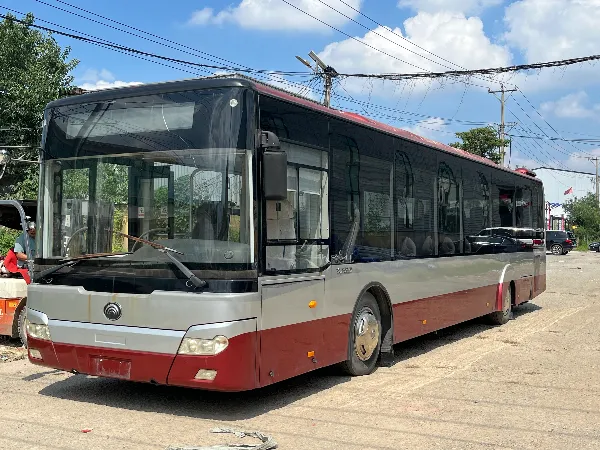
- 12-Meter Class
- Model designation, not seat count
- Yutong
- World’s largest bus manufacturer
- Body & A/C
- Decides a used coach’s real value
- Intercity
- Long-distance & tourism work
Whether you call it a 12-meter coach, an intercity bus, or a tourist coach, the machine is the same — and so is the rule: see the body, the engine, and the A/C before you pay.
Yutong ZK6128 Bus Specifications
Representative specifications for the 12-meter class. Used coaches vary with age, mileage, and maintenance, so the exact figures are confirmed per unit against the coach you are buying, not ordered from a fixed sheet.
| Specification | 12-Meter Class (confirm per unit) |
|---|---|
| Length | ~12,000 mm |
| Width | ~2,500–2,550 mm |
| Height | ~3,500–3,700 mm |
| Seating | ~45–55 (configurable) |
| Engine |
Rear-mounted diesel ~245–340 HP (Weichai / Yuchai / Cummins) |
| Suspension | Air suspension (typical for a coach) |
| A/C | Roof-mounted |
| Luggage | Underfloor compartments |
Typical values only. Confirm the final configuration, seating layout, and condition in your quotation.
01
Length, Engine & Seating
The ZK6128 runs roughly 12,000 mm long, which puts it in the full-size coach class and gives it the underfloor luggage space that shorter buses lack. The engine is a rear-mounted diesel in the 245 to 340 HP range — Weichai, Yuchai, or Cummins depending on the market and build — and the rear layout keeps cabin noise low and frees the full floor for seats and luggage.
- Seating: typically ~45–55, the single biggest configuration decision on the coach.
- Layout fit: long intercity service with luggage wants fewer, wider seats; high-volume commuter or staff runs want more.
02
Suspension & Ride Quality
Air suspension is standard thinking for a coach of this size, and it is what turns a long, rough-road route from a passenger complaint into a saleable service. On poor roads the difference between air and leaf suspension is felt in every seat, so the suspension type is a real specification, not a comfort footnote.
- Suspension type: air, typical for a 12-meter coach.
- Ride check: inspect air bags, levelling, and bushings on a used unit before you buy.
03
A/C & Underfloor Luggage
The roof-mounted A/C is the other system that defines the coach, and in a hot market it is not optional. A failed A/C on a 12-meter coach is one of the most expensive repairs you can buy, because the compressor, condenser, and the length of ducting all scale with the vehicle.
- Luggage: underfloor compartments — the reason this is a coach for intercity and tourism rather than a city bus.
- Condition matters: luggage bay condition is part of what you are paying for.
Get the Specification Sheet for Your Coach
Send your route, seating requirement, and destination port. Receive a unit-specific offer, typically within about 24 hours.
Buying a Used Yutong ZK6128
This is the section most listings leave out, and on a coach it matters more than on a truck. A bus is mostly body: the structure, the paneling, and the glazing are the largest part of the vehicle, and the body’s condition drives the real value. Check the body first, then the engine and A/C.
| Check Area | What to Look At On the actual unit | Why It Matters The cost you can miss |
|---|---|---|
| Body & Structure | Corrosion at wheel arches, floor, and lower panels; crash damage; previous repairs; glazing and door seals; roof water damage | Biggest cost you can miss — the body is the largest part of a coach |
| Engine & Drivetrain | Service records; turbo, cooling system, and belts for overheating; gearbox and rear axle for noise and play | A low-mileage coach with no records is a bigger risk than a high-mileage one with a documented history |
| Air Conditioning | Run the system; check compressor and evaporator for leaks; confirm the roof unit actually cools | A failed A/C sidelines the coach as surely as a failed engine on a hot route |
| Interior & Seating | Seats, trim, and overhead bins for wear; confirm seat count and layout match what you are buying | Cheapest thing to get wrong — a re-seated coach is not the vehicle you were quoted |
| Documentation | Seating certification and homologation; engine serial number matches the plate and paperwork | Passenger service requires it — missing documents can strand the coach at the port |
Body, Structure & Corrosion
Look at the structure and the paneling for corrosion, crash damage, and previous repairs — a coach that has run coastal or humid routes will show rust at the wheel arches, the floor, and the lower body panels first. Check the glazing and the doors seal properly, and the roof for water damage that a failing A/C or poor seal can hide.
Engine, Drivetrain & Overheating
Check the engine against the service records and look at the turbo, the cooling system, and the belts for signs of overheating and poor maintenance. Check the gearbox and the rear axle for noise and play, and the brakes and tires — on a passenger vehicle these are a safety matter, not a cost matter.
Air Conditioning
The A/C gets its own inspection: run the system, check the compressor and the evaporator for leaks, and confirm the roof unit actually cools before the coach leaves. On a hot route, a failed A/C sidelines the coach as surely as a failed engine.
Interior, Seating & Documentation
Check the seats, the trim, and the overhead bins for wear, and confirm the seat count and layout match what you are buying. Verify the engine serial number and the seating certification and homologation your market requires — a unit without the right documents can sit at the port instead of earning.
WATCH: COASTAL OR HUMID ROUTES
Rust shows at the wheel arches, the floor, and the lower body panels first — check there before you trust the paint.
WATCH: HIGHWAY VS URBAN DUTY
A tourist coach on long, fast highway routes ages differently from a stop-start staff shuttle — the difference shows in the body and suspension before the odometer.
ZK6128 vs ZK6122 vs ZK6127
Yutong sells three 12-meter coaches in this line. The answer is seating and role, not size — all three are 12-meter vehicles.
01
Yutong ZK6128
The configurable coach for intercity and tourism, where the seat count changes with the route.
- Class 12-meter coach.
- Seating ~45–55, configurable.
- Best fit Flexible route plus tourism.
02
Yutong ZK6122
The higher-density intercity coach with a fixed 55-seat layout — predictable capacity on a set route.
- Class 12-meter coach.
- Seating 55 seats.
- Best fit Fixed 55-seat intercity service.
03
Yutong ZK6127
The high-roof coach for maximum seats on a high-volume run — 67 seats on the same 12-meter footprint.
- Class 12-meter high-roof coach.
- Seating 67 seats.
- Best fit Maximum seats on a route.
Why Yutong — The Parts-Availability Argument
The strongest reason to buy a Yutong over another Chinese coach is parts availability, and it is not a small point. Yutong is the world’s largest bus manufacturer by units.
-
Parts Availability
Yutong is the world’s largest bus manufacturer by units, so the parts network behind it is broader than almost any rival — the one thing that keeps a coach earning instead of sitting idle waiting for a component.
-
Value vs Premium European Coaches
Set the ZK6128 against a Mercedes-Benz, Volvo, or Scania and the decision is value versus premium. The ZK6128 does the same intercity and tourism work for a lower purchase price, with parts you can actually source in your market.
-
Resale Value vs Upfront Cost
Premium coaches hold higher resale value and a deeper local dealer network, but they cost substantially more up front — and that premium only returns if you can support them where you operate.
-
Buy What You Can Verify and Keep Running
Buy the coach you can verify and keep running, not the nameplate — a Yutong with parts on the ground will outwork a premium coach that waits weeks for a component.
Compare the ZK6128 with a Premium Coach
Send your route, seating requirement, and destination port. Your offer will detail the coach, condition report, parts support, and transportation on the same basis as a premium European coach.
Buying and Shipping a Yutong ZK6128 from China
A used coach makes the cross-border purchase more important, not less — and on a passenger vehicle, the body and the documentation are the first things to verify, not the last.
See the Coach Before You Pay
The unit you pay for has to be a genuine Yutong, it has to be the unit that arrives at your port, and its condition has to be what you were told. Every unit receives a serial-number check and a 100% pre-shipment inspection — with the body and the A/C inspected first.
- Body & structure, glazing, doors
- Engine & drivetrain
- Air conditioning
- Suspension, brakes & tires
- Interior, seating & electrical system
- Seating certification & export paperwork
Shipping & Export Paperwork
A 12-meter coach ships as an oversize unit, so the route and the loading plan are confirmed before the coach moves. Shipping is coordinated by Ro-Ro or container to your destination port.
- Documents
- Commercial invoice, bill of lading, certificate of origin, packing list, and the seating certification your market requires.
- Before Loading
- You receive photos, videos, and an inspection report of the actual unit — so you raise any question while it is still in the yard.
Where the ZK6128 Earns Its Keep
Match the coach to the route and the passenger load. Intercity, tourism, and shuttle work each ask something different from a 12-meter coach.
Intercity & Long-Distance
This is the ZK6128’s genuine home. On intercity and long-distance routes the coach runs highway speeds with passengers and luggage, and the air suspension, the rear engine, and the underfloor luggage are what make the service work.
Highway service with passengers and bagsTourism & Charter
For tourism and charter work, the configurable seating and the luggage capacity matter most. A tour group travels with bags, and the coach has to carry both the people and their luggage comfortably.
One coach for tourism and quieter intercity periodsStaff & Shuttle
For staff and shuttle work, the 12-meter size earns its keep when the passenger volume is high, and the coach does the run without standing passengers. The seating is set toward the higher end of the range, and the A/C is the system that decides whether the service is usable in a hot climate.
High volume, no standing passengersYutong ZK6128 Bus FAQ
Answers to common questions about the 12-meter class, seating, used pricing, the ZK6122 comparison, used-coach checks, and buying from China. Need help with your route? Contact our team.
1 What is the Yutong ZK6128 bus?
The Yutong ZK6128 bus is a 12-meter-class intercity and tourist coach from Yutong, the world’s largest bus manufacturer, with configurable seating of roughly 45 to 55. The “12” in the model is the 12-meter class — it is not a seat count.
2 How much does a Yutong ZK6128 bus cost?
There is no fixed price, because a used coach is priced by its age, mileage, body condition, engine and A/C condition, seating configuration, and preparation, plus freight to your destination port — and a Yutong is priced below a premium European coach of the same class. Request a quotation with your route, seat count, and destination, and we will come back with a concrete figure.
3 What is the difference between the Yutong ZK6128 and the ZK6122?
Both are 12-meter coaches, but the ZK6122 is a fixed 55-seat intercity coach while the ZK6128 has configurable seating of roughly 45 to 55. Choose the ZK6128 for a flexible route plus tourism, and the ZK6122 for a fixed 55-seat service.
4 What should I check on a used coach before buying?
Check the body first — the structure, paneling, glazing, and doors for corrosion and damage — because a coach is mostly body and the body drives its real value. Then check the engine and drivetrain, the A/C system, the interior and seating, the brakes and tires, and the serial number and seating documentation.
5 How many seats does a Yutong ZK6128 bus have?
The seating is configurable in the 45-to-55 range, so there is no single fixed number. The seat count you want depends on your route and whether you carry luggage — confirm the configuration per unit against what you are buying.
6 Can I buy a Yutong ZK6128 bus from China?
Yes. Amigo Truck supplies the Yutong ZK6128 as a used coach with serial-number verification, body-first inspection, export documentation including seating certification, shipping to your destination port, and genuine-parts support after delivery. Start with a quotation request and your route details.
CONFIGURED FOR YOUR ROUTE
Request Your Yutong ZK6128 Quotation
Send your route, required seat count (45–55), destination port, and market requirements. Receive a unit-specific quotation, typically within about 24 hours.
Review the body and A/C on video before shipment,
with seating certification and export paperwork
prepared for your market.
Request a Quotation
Start with your route.