
YUTONG ZK6859 Bus 8.5 m Coach
One model number, two different vehicles.
An 8.5 m passenger coach with 24 to 37 seats and a 4,100 mm wheelbase. Power comes from a rear-mounted 5.2 to 6.75 litre Yuchai, Weichai or FAW diesel.
A legacy Yutong platform: coach versions are out of current production and most export units are used. The same model number also covers a separate ZK6859 school bus family, so two buyers can search the same phrase and mean a 35-seat intercity coach or a 47-seat school bus limited to 80 km/h.
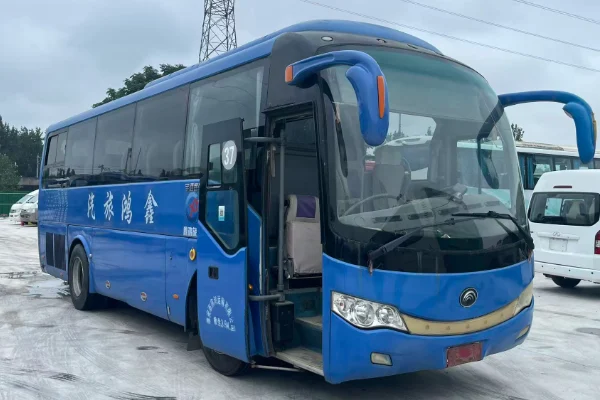
- 8.5 m
- Overall length
- 24–37
- Seat count
- 4,100 mm
- Wheelbase
- 5.2–6.75 L
- Rear-mounted diesel
Legacy Yutong platform: coach versions are out of current production and most export units are used. The same model number also covers a separate school bus family. Confirm the exact variant and condition before you buy.
YUTONG ZK6859 Bus Specifications
Figures from Chinese type-approval records and published catalogue data. Where sources disagree, the range is shown — verify the individual unit.
| Specification | Coach | School Bus |
|---|---|---|
| Length | 8,470–8,540 mm | 8,530 mm |
| Width | 2,450 mm | 2,500 mm |
| Height | 3,130–3,230 mm | 3,040–3,190 mm |
| Wheelbase | 4,100 mm | 4,750 mm |
| Kerb Weight | 8,200–8,570 kg | Varies by seat count |
| Gross Vehicle Weight | 11,180–11,300 kg | Varies by variant |
| Axle Load, Front / Rear | ~3,500–3,760 / 7,540–7,680 kg | Varies by variant |
| Tyres | 8.25R20 · 9R22.5 · 255/70R22.5 | School bus specification |
| Top Speed | 100–110 km/h | 80 km/h limited |
At about 11.3 t gross weight, the bus is designed for passengers and hand luggage, not heavy cargo. Do not plan to use the luggage hold as a freight compartment.
01
Engine & Driveline
Coach engines run from 5.2 to 6.75 litres and roughly 190 to 220 hp, from Yuchai, Weichai, FAW or Cummins. Transmission is a six-speed manual with remote cable shift; no factory automatic and no standard retarder appear in the approval data.
- YC4G200 / YC4G220: 5.2 L four-cylinder — lowest cost, least suited to loaded hill work.
- YC6J200 / YC6J220: 6.5 L six-cylinder — better for grades, heat and steady loaded running.
- WP5.200 / WP6.220: strong parts support in many export markets.
- Fuel use: commonly quoted at 16–19 L/100 km; load, gradient and driving style move it further.
02
Seating, Body & Luggage
Rated capacity is 24 to 37 seats including the driver. The common export layout is 33+1. A second passenger door reduces the maximum to 35; a single-door body can reach 37.
- Seat pitch: a 2+2 layout with 33 seats gives reasonable legroom — squeezing 37 into the same shell does not.
- Longer routes: above about two hours, specify 33+1 and accept the lower seat count.
- Luggage: 2.5–3.0 m³ — hand luggage and school bags, not a touring group with large suitcases.
03
Suspension, Brakes & Tyres
Multi-leaf springs are standard, commonly nine leaves at the front and eleven at the rear, with double-acting telescopic shock absorbers. Air suspension appears as an option on some variants, particularly the HK9 — sources conflict on how often it was fitted, so verify per unit.
- Brakes: air-assisted throughout the range.
- Tyres: 8.25R20, 9R22.5 or 255/70R22.5 depending on build; size affects ride height, gearing and replacement cost.
- Before you buy: confirm the fitted tyre size is available locally in your market.
Get the Specification Sheet for the Unit You Are Considering
Send the variant and destination port. Receive a confirmed offer, typically within about 24 hours.
Two Different Vehicles on the Same Model Number
The ZK6859 coach and school bus share a model number, not a design. The coach is a regional passenger vehicle; the school bus is a separate build with its own safety equipment and speed limiter. Choose the wrong one and it will not register for the job.
| Factor | Coach H, HB, HE, HK9, HM9 | School Bus DX, NX |
|---|---|---|
| Length | 8,470–8,540 mm | 8,530 mm |
| Seats | 24–37 (35 with second door) | 24–47 |
| Engine | YC4G / YC6J / WP5 / WP6 / CA4DL1 | YC4EG160-50 diesel or YC4G180N-50 CNG |
| Emission | China III or China IV | China V |
| Top Speed | 100–110 km/h | 80 km/h limited |
| Typical Use | Regional coach, staff transport, charter | Pupil transport |
Emission & Registration
Emission tier decides whether the bus can be registered at your port. Coach variants span China III and China IV; school bus variants are China V. Confirm the tier your market accepts before choosing a variant.
Engine & Grade Performance
Engine choice decides whether the bus climbs a loaded grade in third gear or fifth. The four- cylinder YC4G is the lowest-cost option; the six-cylinder YC6J and WP6 suit grades, heat and steady loaded running.
Seats & Doors
Coach seating runs 24 to 37. A second passenger door reduces the maximum to 35; a single-door body can reach 37. School bus variants seat 24 to 47 on a longer 4,750 mm wheelbase.
Safety Equipment & Limiter
The school bus body carries safety equipment and an 80 km/h limiter that a coach does not. A coach painted yellow is not a school bus. If the job is pupil transport, specify DX or NX.
CONSIDER THE COACH
Paying passengers on regional, intercity, staff or charter routes, where 100–110 km/h running and 33+1 seating matter.
CONSIDER THE SCHOOL BUS
Pupil transport, where the 80 km/h limiter and school-bus safety equipment are required for registration and insurance.
Where the YUTONG ZK6859 Bus Works Best
The ZK6859 is a route tool. It earns its place where a larger coach is too big, too expensive, or too thirsty.
01
Regional & Intercity Routes
At 8.5 m and 33 to 35 seats, it suits secondary intercity routes, feeder services and town-to-city connections.
- Access Fits terminals and streets a 12 m coach cannot use.
- Running cost Cheaper to buy and to run than a full-size coach.
- Layout 33+1 is the common export seating plan.
02
Staff & Site Transport
Construction, mining and industrial operations need to move workers on shift changes. The ZK6859 handles that duty well on maintained roads.
- Maintained roads Well suited to paved site and camp routes.
- Unmaintained roads Specify heavier suspension and the six-cylinder engine.
- Be realistic It is not a rough-road vehicle.
03
School & Institutional Transport
Use the DX or NX school bus variant, not a converted coach. The school bus body carries the safety equipment and the 80 km/h limiter regulators expect.
- Correct variant DX or NX school bus, 24 to 47 seats.
- Safety equipment School-bus body and 80 km/h limiter as standard.
- Not a coach A coach painted yellow is not a school bus.
04
Tourism & Charter
The ZK6859 can handle small-group charter and short tours. Luggage volume is the constraint.
- Short tours Suited to day trips and small-group charter.
- Luggage limit 2.5 to 3.0 m³ — hand luggage and small bags.
- Multi-day touring A larger coach with a deeper hold is the better tool.
What Drives the Price of a YUTONG ZK6859 Bus?
There is no published price for this model, because the honest answer depends on the unit. These are the factors that move the figure.
-
Year, Condition & Variant
A late China IV coach with documented service history is a different asset from an early China III unit with an unknown odometer. Coach and school bus bodies do not price alike, and neither do single-door and two-door coaches.
-
Engine, Emission & Interior
Six-cylinder and China IV versions cost more and are worth more where emission rules apply. 33+1 with decent trim is worth more than 37 seats with worn fabric.
-
Options & Conversion
Right-hand-drive conversion, air conditioning, retarder and air suspension each add cost, and each narrows the stock pool you can choose from.
-
Shipping & Documentation
Ro-Ro, container and flat-rack shipments carry different costs and different damage risks. A unit with a full inspection report, verified odometer and clean paperwork is worth paying for.
Get a Quote for the Unit You Are Considering
Used examples of this class trade at a fraction of a new 8.5 m coach, but the spread between a good unit and a poor one is wide. The number that matters is purchase price plus the cost of the faults you did not see.
Buying and Shipping a YUTONG ZK6859 from China
Confirm the unit before shipment, agree the document set before the order is placed, then plan transport for your destination.
Pre-Shipment Inspection
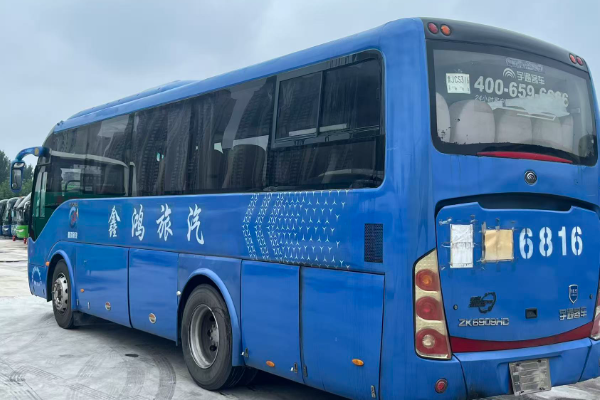
Every unit we supply is inspected before shipment. Photos, video and a written report reach you before the balance is due. If the unit does not match the agreed specification, it does not ship.
- Engine & turbocharger
- Transmission & clutch
- Axles, differential, brakes & air system
- Body corrosion, accident repair, tyres & wheels
- Electrical, A/C, odometer consistency & ordered options
Documentation & Shipping
An 8.5 m bus can move by Ro-Ro, by container in knock-down form, or on a flat rack. Ro-Ro is usually simplest for a complete vehicle and avoids disassembly damage. Container shipping can reduce freight cost but requires partial dismantling and reassembly.
- Documents
- Commercial invoice, packing list, bill of lading, certificate of origin, and the emission or conformity documents your market requires. Confirm the set before the order is placed, not after the vessel sails.
- Shipping & Transit
- The right choice depends on route, current freight rate, and whether your market charges duty on a complete vehicle or a kit. Transit time is route-dependent and confirmed with your quotation.
Keep the Bus Working, Not Waiting for a Windscreen.
Engine and drivetrain parts are widely stocked. Body parts are the long-lead risk. Plan both before you buy.
Engine & Drivetrain Parts
Yuchai and Weichai engine parts are widely stocked across Africa, the Middle East, Latin America and Southeast Asia. Filters, belts, injectors, water pumps, clutches and brake components are usually available locally or within a short lead time.
Serviceable in most export marketsBody Parts: The Long-Lead Risk
Glass, panels, lights and interior trim are the long-lead items. A windscreen that takes three months to arrive can park a working vehicle longer than an engine fault.
Plan body spares before they are neededOrder a Spares Kit With the Bus
Ship a recommended spares package alongside the vehicle. Consumables, filters, belts and the most exposed body items arrive with the bus rather than three months later.
Avoid a parked bus waiting on one partConfirmed for Your Market
We confirm parts availability for your market before you specify, and can include a recommended spares package in the quotation. See after-sales support for what is covered.
Checked before you commitYUTONG ZK6859 Bus FAQ
Answers to common questions about seating, production status, engines, coach versus school bus, pricing, fuel use, right-hand drive and spare parts. Need help with a specific unit? Contact our team.
1 How many seats does a YUTONG ZK6859 have?
In coach form, 24 to 37 seats including the driver. The common export layout is 33+1. Fitting a second passenger door reduces the maximum to 35. School bus variants seat 24 to 47 depending on the model.
2 Is the YUTONG ZK6859 still in production?
The coach versions are out of current production. Yutong introduced the platform around 2006, and Chinese type-approval records for related models show withdrawn status. Most coaches in export channels are used. The school bus variants are a separate, later family.
3 What engine is in a YUTONG ZK6859?
Coach variants use 5.2 to 6.75 litre diesels from Yuchai, Weichai, FAW or Cummins, rated at roughly 190 to 220 hp. Common codes include YC4G200, YC6J200, YC6J220, WP5.200, WP6.220 and CA4DL1. The school bus uses the YC4EG160-50 diesel or the YC4G180N-50 CNG engine.
4 What is the difference between the ZK6859 coach and school bus?
They are different vehicles on the same model number. The coach is 8.47 to 8.54 m with 24 to 37 seats and a 110 km/h top speed. The school bus is 8.53 m with 24 to 47 seats, school-bus safety equipment and an 80 km/h limiter.
5 How much does a YUTONG ZK6859 bus cost?
There is no single price. Year, condition, variant, engine, emission tier, seat count and shipping method all move the figure. Request a quotation per unit after we confirm the specification and inspect the vehicle.
6 What is the fuel consumption of a YUTONG ZK6859?
Published figures are about 16 to 19 litres per 100 km. Real consumption depends on load, gradient, ambient temperature, air-conditioning use and driving style. A loaded route with grades will sit at the top of that range or above it.
7 Can I get a right-hand-drive ZK6859?
Right-hand drive depends on available stock or conversion. It is not a standard factory option across every variant. Tell us the requirement before we search, and we will confirm what can be supplied rather than assume it.
8 Are spare parts available for the ZK6859?
Engine and drivetrain parts are widely available because Yuchai and Weichai are common in export markets. Body panels, glass, lights and trim are the long-lead items. Order a spares kit with the vehicle to avoid a parked bus waiting on a windscreen.
VARIANT, ENGINE, CONDITION
Request Your YUTONG ZK6859 Quotation
Send your route, seat count, drive side and destination port. We will tell you which variant fits, what is available, and what it will cost to put it at your port.
Get the variant, the engine or the unit condition wrong
and the low purchase price disappears into repairs.
If the ZK6859 is not the right bus for the job, we will
say so and offer the alternative.
Request a Quotation
Start with your route and seat count.