
Shipping a Dump Truck from China: Ro-Ro vs Container
Shipping a dump truck from China comes down to two decisions. The first is the method that fits the unit: Ro-Ro, container, or breakbulk. The second is the sequence of records you should hold before the truck sails.
Start with the unit itself. Its length, width and height decide whether it rolls onto a Ro-Ro deck, fits inside a container, or needs to be lifted. Everything after that, from the export papers to the transit time, follows the method you book.
In the United States, “shipping a dump truck” is a freight query. Shows you brokers, haulage companies, and firms that deliver sand and gravel. The results are about moving material by road. There is no vessel and no export declaration anywhere in them.
This guide serves a different reader: the importer who has bought, or is about to buy, a used or new tipper in China and needs it delivered to a port abroad. It covers the method decision, the five stages, the documents, the delivery terms that decide what your quote includes, and why transit time is a range. The cost question gets a structure and a dated band, not a made-up number.
Key Takeaways
- Ro-Ro, container and breakbulk are selected by the unit, not by preference. Measure it before you request a quote.
- A 40 ft high-cube container gives you about 2,350 mm of internal width and a 2,585 mm door height. Many full-size tippers exceed one or both.
- AMIGO TRUCK’s published process runs in five stages, and each stage produces a document you can keep: photos and a report, export papers, loading photos, tracking, and an arrival notice.
- EXW, FOB and CIF allocate cost and risk differently. A lower number with a narrower basis is often the more expensive order.
- Transit is a range because vessels roll, ports congest, and Ro-Ro sailings are less frequent than container ones.
What “shipping a dump truck” means when it leaves China
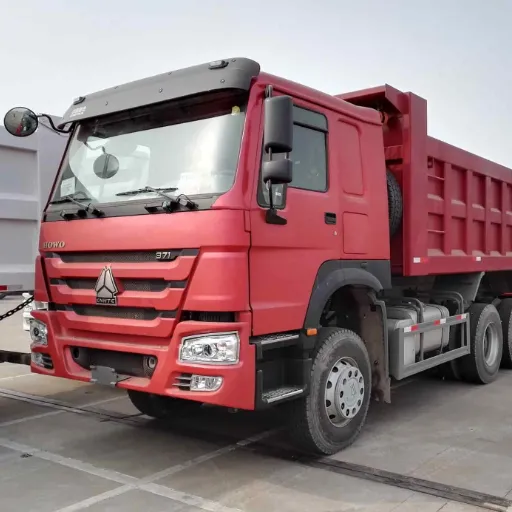
The phrase has three readings, and they need different answers.
| Reading | Who searches it | What they need |
|---|---|---|
| Domestic haulage | US and UK contractors, freight brokers | A truck, driver or broker to move material or equipment by road |
| Land transport inside one country | Dealers and buyers moving a unit between yards | A flatbed or lowboy, permits, straps, and a route |
| Ocean export from China | Importers buying a tipper for a market abroad | A vessel method, export documents, delivery terms, and a port of arrival |
This article covers the third. If you’re in Texas and need a tipper to deliver stone this afternoon, the first two readings are the ones you want, and the freight brokers at the top of that search are your answer. If you have just bought a used dump truck for sale in Shandong and it needs to reach Apapa or Mombasa, you’re in the right place.
The distinction matters because the wrong method is expensive to correct. A truck measured without its exhaust stack can be booked onto a Ro-Ro vessel and turned away at the port. One assumed to fit a container can be refused at the loading bay after you’ve paid for the box.
So the page starts with measurement, then the method, then the sequence.
The method follows the unit: Ro-Ro, container, or breakbulk
AMIGO TRUCK’s truck shipping options page states the rule plainly: the method is decided by the unit’s dimensions and weight, not by the buyer’s preference. Three methods cover almost every dump truck export.
| Method | Best for | What the unit must be | What decides it | Main risk |
|---|---|---|---|---|
| Ro-Ro | Running tippers, buses and towed trailers | Driveable or towable, within deck height and weight limits | Deck clearance, sailing schedule, port handling | A non-running unit cannot roll on |
| Container or flat rack | Standard trucks, smaller units, combined loads with parts | Fits the internal or between-post dimensions | Internal width, door height, payload | Full-size tippers often exceed the door height |
| Breakbulk | Oversize or non-standard units, damaged or non-running trucks | Liftable, with defined lifting points | Lashing plan, vessel space and gear | Fewer sailings, slower consolidation |
Ro-Ro shipping
On a Ro-Ro vessel the truck is driven onto a vehicle deck under its own power, lashed, and driven off at the destination port. The unit stays intact. Nothing gets dismantled and nothing gets craned.
That’s why Ro-Ro shipping, also written RORO shipping on carrier schedules, is the usual answer for a running 6×4 or 8×4 tipper on a mainstream route. It’s also why a non-running unit can’t use it. AMIGO TRUCK’s shipping page is direct on this point: “A non-running unit cannot roll onto a Ro-Ro vessel.”
The constraint to check before booking is deck clearance and weight. Ro-Ro carriers publish generous limits for high-and-heavy cargo. Wallenius Wilhelmsen, for example, states capacity for cargo up to 6.1 metres high, 12 metres wide and 400 tonnes.
A standard tipper sits well inside those figures. The variable is the route and the vessel, not the truck class.
One more thing decides whether Ro-Ro works for your order: sailing frequency. Ro-Ro services to West and East Africa are fewer than container services, and a missed vessel means a month, not a week. Confirm the sailing before you confirm the method.
Container and flat rack
A container seals the truck inside a steel box. It protects the unit from weather and handling, it’s easy to track, and it can reach ports that have no Ro-Ro berth. The constraint is size.
Use the carrier’s published figures rather than an assumption. These are from Ocean Network Express, retrieved on 25 November 2026, and individual containers vary:
| Container | Internal length | Internal width | Internal height | Door width | Door height | Payload |
|---|---|---|---|---|---|---|
| 20 ft dry | 5,898 mm | 2,350 mm | 2,390 mm | 2,340 mm | 2,280 mm | 28,330 kg |
| 40 ft dry | 12,032 mm | 2,350 mm | 2,390 mm | 2,340 mm | 2,280 mm | 26,840 kg |
| 40 ft high cube | 12,032 mm | 2,350 mm | 2,695 mm | 2,340 mm | 2,585 mm | 28,800 kg |
| 40 ft flat rack | 11,652 mm between posts | 2,208 mm between rails | open | open | open | 38,800 kg |
Read the door height column first. A standard dry container gives you 2,280 mm of clear opening. A high cube gives 2,585 mm. Neither is generous for a tipper with a raised body, a crane, or a sleeper extension.
This is the same warning the reviewed Europe-to-Africa guide gives: most full-size trucks are too tall or too heavy for a standard container. A flat rack removes the height ceiling, because the unit is lashed to a platform with no roof and no sides, but the width between the side rails, 2,208 mm on the 40 ft flat rack above, becomes the constraint.
A flat rack or an open-top container is also how many non-running units travel. The truck is craned or winched in rather than driven.
Breakbulk shipping
Breakbulk handles what the other two can’t: oversize machines, very heavy units, low-bed trailers, and trucks that neither roll nor fit. The unit is lifted or rolled onto a vessel deck or flat rack and lashed down.
It’s the most flexible method and the slowest to consolidate, because it waits for a vessel with the space and the lifting gear. The commercial trade-off is straightforward. You gain the ability to ship almost anything, and you give up schedule predictability.
The measurement sheet that decides the method
Before you request a quote, measure the unit and write the figures down. This is the list to send with the enquiry.
- Overall length, including any rear overhang or body extension.
- Overall width, at the widest point, including mirrors folded or removed.
- Overall height, with the body down and any exhaust stack, beacon or crane in the position it will travel in.
- Operating weight, from the plate where possible, not an estimate.
- Whether the unit runs, steers and brakes under its own power.
- Body type, hoist type, and any attachments fitted.
- Destination port and the final inland destination.
Two of those seven items cause most of the corrections. The height usually gets measured with the stack off or the body up, and the weight usually gets guessed. A supplier who can’t give you a measured height and a plated weight is asking you to book a method on an assumption.
Consider what happens when the assumption is wrong. A buyer measures a used tipper with the exhaust stack removed to squeeze under a local height limit. The yard refits the stack before loading.
At the port the unit is a few centimetres over the Ro-Ro deck clearance for that sailing, so the booking moves to breakbulk. Two weeks are lost and the freight basis changes. That example is illustrative, and it’s the reason the measurement sheet exists.
Shipping a dump truck: the five stages, and the record you receive at each
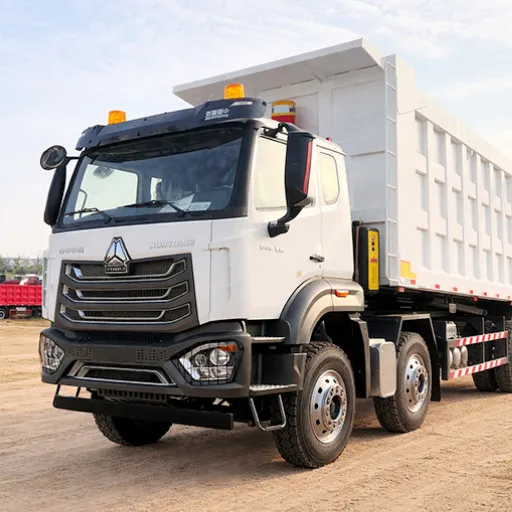
AMIGO TRUCK’s published shipping process runs in five stages. Each one leaves a record the buyer can check, which is what separates a shipping service from a booking.
| Stage | What happens | What you receive |
|---|---|---|
| Inspection | The unit is checked and its serial number verified before loading | Photos, video, and the inspection report |
| Documentation | Export papers are prepared and checked against the unit | Commercial invoice, bill of lading, certificate of origin, packing list |
| Loading and lashing | The unit is loaded and secured by the method that fits it | Loading photos and lashing confirmation |
| Transit | The vessel sails to your destination port | Shipment tracking |
| Delivery to port | The unit is cleared for collection | Arrival notice and collection details |
Inspection comes first, and that order is deliberate. A problem found in the yard is a repair. The same problem found at the destination port is a dispute with a vessel already at sea, and the buyer has usually paid the balance by then.
Serial-number verification is the part buyers underestimate. The inspection has to confirm that the truck in the photographs is the truck on the invoice and the truck on the bill of lading. If those three documents describe different units, nothing downstream repairs it.
Loading photographs are the second record worth keeping. They show the unit lashed, on the correct vessel, in the condition it left in. If damage appears on arrival, the loading photographs are your evidence of the condition at handover.
Preparing a used dump truck for loading
Preparation is practical and unglamorous, and it’s where avoidable delays come from.
Clear the cab and the body of loose items, tools and personal effects. Secure or remove anything that could move in transit, including the spare wheel carrier, mud flaps and any removable body panels. Set fluids to the levels the carrier requires. Secure or disconnect the battery, because a flat battery at the destination turns a drivable unit into a recovery job.
Fuel level matters more than most buyers expect. Carriers cap it, and the figure differs between carriers and routes, so check the booking instructions rather than filling the tank.
The unit also has to be clean enough for customs inspection. Mud, plant material and loose soil in the body can create a question at the loading port that costs a day.
Finally, you’ll need the keys, any spare keys and the original documents, plus a fresh set of photographs at handover. These photographs are the baseline for everything that follows.
One preparation point is specific to tippers: the body and hoist. A body that isn’t fully down and locked, or a hoist with a leak, changes both the measured height and the loading risk. Deal with it in the yard, not on the ramp.
Export documents for a dump truck shipment
The document set for a truck is small and standard. What varies is who issues each paper and what it proves.
| Document | What it proves | Who issues it |
|---|---|---|
| Commercial invoice | What is being shipped, to whom, and at what declared value | The seller |
| Bill of lading | The carrier has the cargo and where it is going; it is the title document | The carrier or forwarder |
| Certificate of origin | Where the goods were made, which the destination customs may use to assess duty | For China, CCPIT and its branches |
| Packing list | What is in the shipment and how it is packed | The seller |
| Export licence, where applicable | That the exporter may ship the goods | The Chinese authorities, through the exporter |
A dump truck is a goods vehicle, so it falls under heading 87.04 of the that your broker will use for classification. The China Customs side handles the export declaration, while your destination broker handles import.
The most common cause of a port delay isn’t a missing document. It’s a mismatch between documents that all exist: a chassis number spelled one way on the invoice and another way on the bill of lading, a consignee name that differs from the company collecting the truck, or a weight that contradicts the packing list. Check the spelling of names and numbers across the whole set before the vessel sails.
Some markets require additional certificates. Those are destination rules, they change, and they’re your clearing agent’s job rather than your supplier’s. AMIGO TRUCK’s truck export FAQ lists the standard package and notes that additional requirements are confirmed per vehicle and destination.
What the shipping quote includes, and what it doesn’t
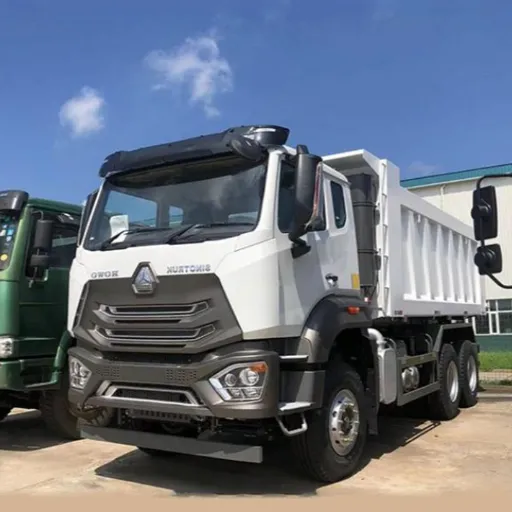
Two quotes for the same truck on the same route can differ by thousands of dollars without either being dishonest. Dump truck shipping cost has three parts: the freight, the term it’s quoted on, and the lines it leaves out. The gap between two quotes is usually the term.
| Term | What the seller arranges | Where risk passes to you | What the number covers |
|---|---|---|---|
| EXW (ex works) | Makes the unit available at the named place | At the seller’s premises | The truck only. You arrange inland transport, export clearance and freight |
| FOB (free on board) | Delivers the unit on board the vessel at the named port | When the goods are on board | Truck, inland transport and export clearance, up to the ship’s rail |
| CIF (cost, insurance and freight) | Arranges carriage and insurance to the named destination port | When the goods are on board | Truck, export clearance, freight and marine insurance to the port |
The ICC’s Incoterms 2020 rules define these allocations, and the definitions are what a dispute will fall back on. Under CIF, the seller arranges insurance, but the default cover level is Institute Cargo Clauses (C), which is narrower than most buyers assume. If you need broader cover, you’ll have to agree it explicitly rather than assume it.
None of the three terms includes duty, VAT, port handling at the destination, clearance agent fees, or inland transport to your site. Those lines are yours, and they can change which quote is cheaper. If you want the full picture, including the vehicle price, how much a used dump truck costs breaks the landed cost into four separate lines.
A buyer once accepted the lowest of three quotes. It was EXW, so export clearance and port charges were his to arrange, and the “cheap” number grew before the truck sailed. Read line by line, the FOB quote was the lower delivered cost. That example is illustrative, and the lesson is to compare the basis before the total.
For heavy trucks to West and East Africa, AMIGO TRUCK’s published indicative freight bands, dated 17 November 2026, are about USD 1,800 to 3,800 per unit by Ro-Ro and about USD 4,500 to 8,000 by container or flat-rack, including disassembly where required. They are indicative only. Freight moves with fuel, vessel capacity and season, so treat your own quotation as the number that matters.
If you want that structure priced for your route, request a shipping quote with the vehicle and the destination port.
How long does shipping a dump truck from China take
There’s no single transit time for shipping a dump truck, and any supplier who gives you one is guessing or quoting a best case.
AMIGO TRUCK publishes two sets of planning figures, and both are labelled indicative. The order-level ranges are 15 to 45 days for production or preparation, 28 to 35 days for sea freight, and roughly 45 to 90 days from order to arrival. The port-to-port examples are Lagos and Tema at 28 to 38 days, Durban and Dar es Salaam at 30 to 42 days, and Mombasa at 25 to 35 days. Those port figures exclude inland transport and customs clearance, which can add a week or more. If you’re shipping a dump truck to Africa, those are the ranges to plan against.
The ranges move for four reasons. Vessels get rolled to a later sailing when a service is full. Ports get congested at either end.
Transshipment through a hub adds days and a second vessel. The method also matters: Ro-Ro services are less frequent than container services, so you’ll wait longer for the next sailing.
Preparation is the line buyers forget. A unit that needs body work, tyres or a hydraulic repair spends the 15 to 45 days in the yard, and that time sits in front of the sea transit, not beside it.
Here is how the cheapest sailing can cost more than a faster one. A buyer chooses a low-cost service with a distant sailing date to save on freight. The truck is ready weeks before the vessel, so it sits at the port paying storage.
The arrival lands after the site mobilisation date. The freight saving is real, but the storage and the delay are larger. That example is illustrative.
What to check before you approve a shipping quote
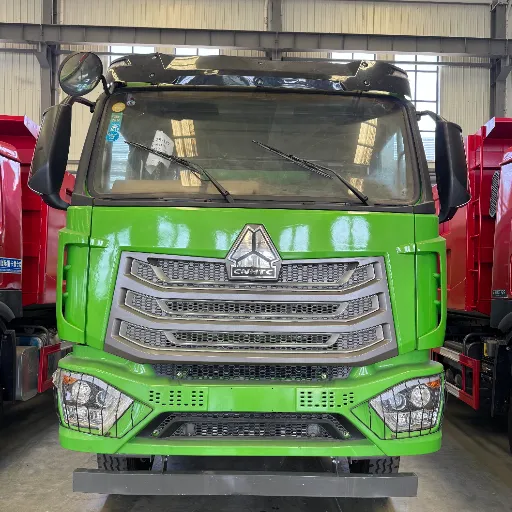
Work through these seven items before you accept a quote. Each one is a line in the document, not a conversation.
- The method, stated by name, with the reason it fits the measured unit.
- The delivery term (EXW, FOB or CIF), and the named port.
- The freight basis: per unit or per shipment, and whether it includes inland transport to the port.
- The insurance line, who arranges it, and the cover level.
- The document set included, and which documents are extra.
- The indicative transit range for that route and method, dated.
- What is excluded: duty, VAT, destination port handling, clearance and inland delivery.
For the destination side of that list, covers the documents, duty and compliance questions that belong to the arrival country rather than the vessel. Those rules change, and they need a primary source for your market.
If a quote has no method, no term and no exclusions, it’s a price rather than an offer. Ask for the missing lines before you compare it with anything.
Shipping a dump truck: frequently asked questions
How much does it cost to ship a dump truck from China?
There’s no fixed rate. The cost follows the unit’s dimensions and weight, the method, the route and destination port, and the documents your market requires. For heavy trucks to West and East Africa, AMIGO TRUCK’s published indicative bands, dated 17 November 2026, are about USD 1,800 to 3,800 per unit by Ro-Ro and USD 4,500 to 8,000 by container or flat-rack. Confirm the number in your own quotation.
Is Ro-Ro or container better for a dump truck?
It depends on the unit. Ro-Ro suits a running tipper that fits the deck limits and sails on a route with regular Ro-Ro service. Container or flat rack suits a unit that fits the dimensions, a combined load with parts, or a destination without Ro-Ro berths. Breakbulk suits what fits neither.
Can a dump truck fit in a 40 ft container?
Sometimes. A 40 ft high cube gives about 2,350 mm of internal width and a 2,585 mm of door height, according to carrier specifications. A standard tipper may exceed the door height with its body, stack or attachments fitted. Measure the unit with everything in its travelling position before you assume it fits.
What documents do I need to ship a dump truck from China?
The standard package is a commercial invoice, bill of lading, certificate of origin, and packing list, plus an export licence where applicable. Your destination market may require additional certificates. Confirm the full list with your clearing agent before the vessel sails.
How long does shipping a dump truck take?
Plan on roughly 45 to 90 days from order to arrival for a typical order: 15 to 45 days for preparation, then 28 to 35 days at sea. Port-to-port transit to West and East Africa runs about 25 to 42 days depending on the route. Customs clearance and inland transport are additional.
Can a non-running dump truck be shipped?
Yes, but not by Ro-Ro. A unit that can’t roll has to travel in a container, on a flat rack, or by breakbulk, where it can be lifted or winched aboard. The method change affects both cost and preparation.
Next step
Shipping a dump truck is a process decision before it is a price decision. Measure the unit, let the measurements choose the method, then confirm the term, the documents and the transit range.
The video below shows 70-tonne dump trucks being loaded and lashed for a voyage from the UK to Africa, published by the Science Channel. It’s third-party editorial footage, not AMIGO TRUCK’s, and the route isn’t the China route, but the loading and lashing sequence is the same discipline your unit will go through.
Send us the vehicle, the destination port and the measurements, and we will confirm the method and the documents before you book. Go straight to a truck shipping quote and include the seven measurement lines above.
Conclusion
Shipping a dump truck from China is decided by the unit, not by the quote. Measure it, let the measurements pick the method, and then read every line of the offer.
Ro-Ro is the usual answer for a running tipper on a mainstream route. Container or flat rack handles the units that fit, protect a high-value truck, or need a port without Ro-Ro service. Breakbulk exists for everything else, at the cost of sailing frequency. Vehicle shipping to Africa adds distance and paperwork, but it doesn’t change the order of decisions.
Whichever method you book for shipping a dump truck, the record matters as much as the rate. Photos and an inspection report before loading, a bill of lading that matches the invoice, loading photographs, and transit tracking. A supplier who provides those is shipping your truck. A supplier who provides a price and nothing else is booking space.