
BEIBEN 4×2 Dump Truck
Single-drive-axle tipper on the Mercedes-derived NG80 platform.
A lean North Benz tipper for light haulage, urban site work, and jobs where a 6×4 or 8×4 is more truck than the work needs. Typically powered by a 280 HP WEICHAI engine with a FAST 9-speed gearbox and a ~20-ton-class legal load.
Lower purchase cost, lower fuel burn, and fewer tires than a twin-axle unit. Every unit is inspected before shipment and quoted per configuration.
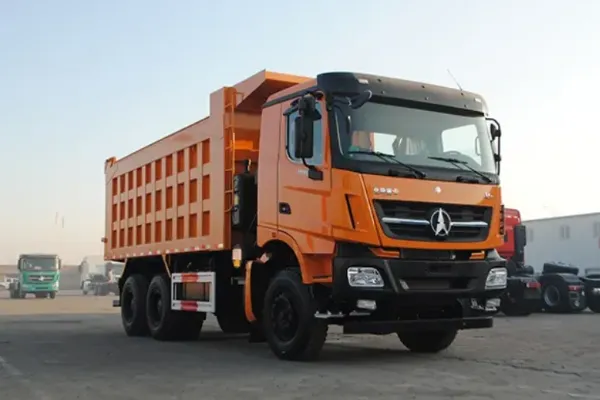
- 280 HP
- WEICHAI WD615.50
- FAST 9-speed
- Manual gearbox
- 4×2
- Single driven rear axle
- ~20 t GVW
- 9–10 t legal payload
Typical export build on the NG80B / North Benz 1628 reference. Specifications vary by engine, body, and destination market. Confirm local axle limits and fuel quality before ordering.
BEIBEN 4×2 Dump Truck Specifications
The figures below describe a typical export build on the NG80B / North Benz 1628 reference. Individual units vary by engine, body, and destination-market requirement — which is why every quotation is prepared per configuration.
| Specification | Typical Export Build |
|---|---|
| Drive Type | 4×2 — single driven rear axle |
| Platform | BEIBEN NG80B (Mercedes-derived) |
| Cab | BEIBEN NG80 cab, two seats |
| Engine |
WEICHAI WD615.50 — 280 HP 9.726 L inline-six, turbo, direct injection 300–380 HP variants available |
| Emission Standard | Euro II / Euro III, matched to destination market |
| Transmission | FAST 9-speed manual (9 forward + 1 reverse) |
| Lifting System | Mid-lift hydraulic (HYVA-type) |
| Cargo Body |
Q235 steel, ~4,800 × 2,300 × 1,350 mm Floor 8 mm, sides 6 mm |
| Gross Vehicle Weight | ~20-ton class |
| Curb Weight | ~10,110 kg |
| Wheelbase | ~4,100 mm |
| Overall Dimensions | ~7,880 × 2,500 × 3,430 mm |
| Tires | 12.00R20 |
| Fuel Tank | 300 L |
| Max Speed | ~85 km/h |
Typical values only. Confirm the final configuration, legal payload, and compliance in your quotation.
01
Mercedes-Derived Axles
The rear axle on the NG80 platform is a double-reduction, Mercedes-technology unit designed for load-bearing and slow-speed grunt rather than highway speed. For a dump truck that spends its day on unpaved site roads, that is the right trade — it is why a BEIBEN holds up where a lighter commercial axle would wear out.
02
Built for Rough-Road Markets
The NG80 series was engineered for off-road and military-grade duty, then adapted for construction and mining. The result is a chassis and drivetrain that tolerate poor roads, high dust, and heavy loads. If your operation runs where the road is the weakest link, the NG80 platform is one of the more forgiving foundations in this class.
03
Body, Lift & Material Match
The cargo box is typically Q235 steel around 4,800 × 2,300 × 1,350 mm, with an 8 mm floor and 6 mm sides. Floor and side-wall thickness is the specification to watch — it decides whether the body survives a season of rock impact or dents on the first load.
- Lift system: mid-lift hydraulic, HYVA-type, selected for the body size.
- Volume vs. weight: sand and gravel load to volume, rock and ore load to weight.
Get the Specification Sheet for Your Build
Send your payload and destination port. Receive a configured offer, typically within about 24 hours.
The Mercedes-Benz NG80 Drivetrain Explained
BEIBEN’s “North Benz” name is not a coincidence. The company’s truck line descends from a Mercedes-Benz technology transfer, and the NG80 platform that underlies this 4×2 dump truck carries that lineage in its axles and drivetrain. That heritage matters in a practical way for a buyer: the NG80 design is proven, widely serviced, and built for rough roads.
What Mercedes-Derived Axles Mean for Durability
The rear axle on the NG80 platform is a double-reduction, Mercedes-technology unit designed for load-bearing and slow-speed grunt rather than highway speed. For a dump truck that spends its day on unpaved site roads and loose ground, that is the right trade. It is the reason a BEIBEN holds up where a lighter commercial axle would wear out.
Why the NG80 Design Suits Rough-Road Markets
The NG80 series was engineered for off-road and military-grade duty, then adapted for construction and mining. The result is a chassis and drivetrain that tolerate poor roads, high dust, and heavy loads. If your operation runs in conditions where the road is the weakest link, the NG80 platform is one of the more forgiving foundations available in this class.
Engine and Gearbox Options
The standard engine is a mechanical, widely understood unit — which matters in markets where a highly tuned electronic engine would be a service liability. Higher-output variants and the emission standard are the two choices that move the most.
WEICHAI WD615.50 (280 HP)
The standard BEIBEN 4×2 ships with a WEICHAI WD615.50 inline-six rated at 280 HP — a 9.726-litre, turbocharged, direct-injection diesel. For light haulage and urban cycles, 280 HP is enough to move a full load without burning the fuel a larger engine would.
Higher-Horsepower Variants (300–380 HP)
For buyers whose 4×2 works harder than average — longer grades, heavier stone, or sustained loaded runs — BEIBEN offers higher-output WEICHAI variants in the 300–380 HP range. More power is not automatically better; it is better when the route demands it.
Emission Standard & Your Fuel Quality
The emission standard you choose has to match the diesel available in your market. A late-model engine with SCR and DPF needs low-sulfur fuel; run it on high-sulfur diesel and the after-treatment clogs and the engine derates. In high-sulfur regions, an earlier Euro II or Euro III build with simpler mechanical injection is often the more serviceable choice.
Dump Body and Hydraulic Options
The tipper body is not a one-size part. On a BEIBEN 4×2, the cargo box is typically Q235 steel around 4,800 × 2,300 × 1,350 mm, with an 8 mm floor and 6 mm sides. Floor and side-wall thickness is the specification to watch, because it decides whether the body survives a season of rock impact or dents on the first load.
Lifting runs through a mid-lift hydraulic system — a HYVA-type setup is the common choice, and HYVA is a hydraulic brand buyers ask for by name. The right body volume depends on your material: sand and gravel load to volume, while rock and ore load to weight. On a lighter 4×2, matching the box to your densest material keeps you legal rather than overloading the single driven axle.
- Floor & side-wall thickness Decides whether the body survives rock impact or dents on the first load.
- Body volume Match to the densest material you haul, not the lightest.
- Lift system Mid-lift HYVA-type hydraulic, sized to the body.
- Axle limit A lighter 4×2 stays legal only when the box is matched to the legal axle load.
BEIBEN 4×2 vs 6×4 — Which Fits Your Work
The 4×2 and 6×4 differ in one practical way: how much each can legally carry and how they behave off-road. Choose by payload and road conditions, not by body volume alone. Browse the full dump trucks for sale range to compare both.
| Factor | BEIBEN 4×2 Single Driven Axle | BEIBEN 6×4 Dual Driven Axle |
|---|---|---|
| Payload Class | ~20 t GVW class, ~9–10 t legal load | Higher GVW and legal payload |
| Traction | One driven rear axle, firm roads | Two driven rear axles, loose or graded roads |
| Purchase Cost | Lower upfront cost | Higher upfront cost |
| Fuel & Tires | Lower fuel burn, fewer tires | Higher fuel burn, more tires |
| Best Use | Tight roads, urban work, light haul cycles | Heavy stone, grades, unpaved haul roads |
When 4×2 Wins
Light loads, firm roads, and tight sites where a heavier truck is restricted or simply unnecessary.
When 6×4 Wins
Heavy stone, sustained grades, and unpaved haul roads where a second driven axle earns its cost.
How to Decide
Match legal payload to the job, then confirm the drivetrain for the ground the truck will actually see.
Applications: Light Haulage, Construction, and Municipal Work
Configure the 4×2 for the material, road conditions, and destination — not just the model name.
01
Construction and Site Hauling
For contractors moving aggregate, backfill, and demolition waste around a smaller site, the BEIBEN 4×2 is a lean, economical option. It handles unpaved site roads and keeps a useful payload, while costing less to buy and run than a 6×4 that never leaves the project boundary.
- Site roads Single driven axle suits firm unpaved ground.
- Body sizing Matched to the densest material you haul.
- Operating cost Lower fuel burn and fewer tires than a 6×4.
02
Municipal and Urban Work
Towns and cities are where the 4×2 earns its keep. Tighter roads, weight restrictions, and shorter haul cycles all favour a lighter single-drive-axle truck over a twin-axle unit.
- Road repair Shorter cycles, tighter streets, smaller sites.
- Drainage work Useful payload without a heavier chassis.
- Short-haul delivery Light material where a 6×4 is wasted.
03
Light Haulage & Market Fit
Confirm destination requirements and fuel quality early. Engine and aftertreatment choices affect registration and operating support in your market.
- Emission standard Euro II or Euro III matched to fuel quality.
- Payload limits Checked against local axle weight rules.
- Parts planning Confirm local WEICHAI and FAST service support.
What Affects the Price of a BEIBEN 4×2 Dump Truck
There is no single fixed price. Your configuration and destination determine the final quotation.
-
Engine & Horsepower
A 380 HP build costs more than a 280 HP build. More power is worth paying for only when the route demands it.
-
Emission Standard
The required standard changes the engine, and often the after-treatment package — Euro II and Euro III remain common in high-sulfur markets.
-
Body, Hydraulics & Drivetrain
Body volume, floor and side-wall thickness, the hydraulic lift system, and reinforced axle options all move the final figure.
-
Trade Term & Destination
EXW, FOB, CFR, and CIF quote different scopes. Comparing FOB to CIF creates a false price gap. Distance, shipping method, and documentation all land in the final figure.
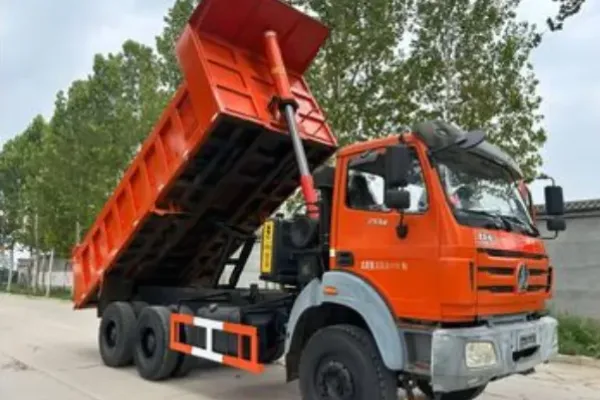
Get a Quote for Your Configuration
Send your payload, road conditions, fuel quality, and destination port. Your offer will detail the vehicle, options, preparation, and transportation — with no hidden line items.
Pre-Shipment Inspection and After-Sales Support
Buying a heavy truck thousands of kilometres away is a risk decision. We remove the parts of the risk we can control.
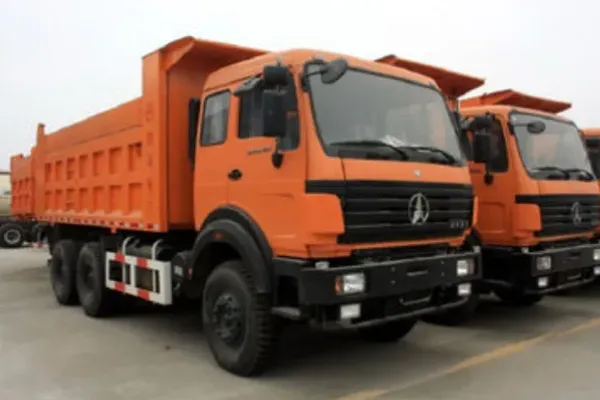
See Your Truck Before You Pay
Every BEIBEN 4×2 passes a 100% pre-shipment inspection covering the engine, transmission, axles, cab, dump body, brakes, lighting, ordered options, and documentation. You receive photos, video, and an inspection report before the unit ships — you see the engine, the axles, and the cab on video before the container is sealed.
- Engine & transmission
- Axles & brakes
- Cab & dump body
- Lighting & ordered options
- Export documentation
Shipping, Parts & Export Paperwork
Ro-Ro is commonly used for heavy dump trucks. Container or breakbulk shipping may suit other vehicles and ports. After delivery, spare parts and after-sales support keep the truck running. BEIBEN’s parts network is narrower than HOWO or SHACMAN in some markets, so we plan for it — we advise on which parts to stock before you specify.
- Documents
- Commercial invoice, bill of lading, certificate of origin, packing list, and required compliance paperwork.
- Transit Time
- Route-dependent. The expected timeline is confirmed with your quotation.
Practical Support. From Specification to Delivery.
Get the right configuration, review your truck before shipment, and plan delivery with a clear scope.
Configured for Your Job
Match the engine, axle ratio, body, and emission standard to your payload, roads, and destination.
Your application comes firstSee the Truck Before Shipping
Review photos, video, and an inspection report covering the drivetrain, brakes, cab, body, and ordered options.
Review the unit being suppliedClear Export & Shipping Support
Confirm the shipping method, freight scope, expected timeline, and export paperwork for your port.
Plan delivery before orderingParts & Maintenance Planning
Arrange original spare parts and consumables, and check local WEICHAI and FAST service support before you buy.
Support beyond the shipmentFrequently Asked Questions
Answers to common questions about payload, engine, shipping, and spare parts. Need help with your configuration? Contact our team.
1 How much does a BEIBEN 4×2 dump truck cost?
The price depends on engine, emission standard, body specification, hydraulic system, trade term, and destination — there is no single figure. A used 4×2 costs less than a new higher-spec build. Send your specification and destination port for a configured quotation, typically within about 24 hours.
2 What is the payload capacity of a BEIBEN 4×2 dump truck?
The BEIBEN 4×2 is a ~20-ton gross vehicle weight (GVW) class truck, which puts legal payload roughly in the 9–10 tonne range depending on the GVW rating and body spec you order. The exact figure is confirmed per configuration, not assumed.
3 What is the difference between a BEIBEN 4×2 and a 6×4 dump truck?
The 4×2 has one driven axle and suits lighter loads, tighter roads, and lower purchase and fuel cost. The 6×4 adds a second driven axle for more traction and a higher legal payload on rough or unpaved haul roads. Choose by payload and road conditions, not by body volume alone.
4 What does the Mercedes-Benz NG80 technology mean in a BEIBEN truck?
BEIBEN’s NG80 platform descends from a Mercedes-Benz technology transfer, which carries into the double-reduction rear axle, cab, and drivetrain. In practice it means a proven, widely serviced design built for load-bearing and rough-road duty.
5 Which engine does a BEIBEN 1628 use?
The BEIBEN 1628 reference uses a WEICHAI WD615.50 inline-six rated at 280 HP, a 9.726-litre turbocharged diesel, paired with a FAST 9-speed gearbox. Higher-output WEICHAI variants in the 300–380 HP range are available.
6 Can I see the truck before I pay?
Yes. Every BEIBEN 4×2 passes a 100% pre-shipment inspection, and you receive photos, video, and an inspection report covering the engine, transmission, axles, cab, body, brakes, lighting, ordered options, and documentation before it ships.
CONFIGURED FOR YOUR JOB
Get Your BEIBEN 4×2 Quotation
The BEIBEN 4×2 is a lean, capable tipper — but only when the specification matches the job. Tell us your payload, your roads, your fuel quality, and your destination port, and we will quote a configuration that fits, with the inspection report in front of you before anything ships.
Review your truck on video before shipment,
with export paperwork prepared for your destination.
Request a Quotation
Start with your specification.